

How State Budgets Work
State budgets affect the quality of life for individuals, families, and communities across the nation ― they decide the fate of roads, schools, health care, public transportation, clean air and water, and much more. Every year, state policymakers make important decisions about how to provide these key services and how to ensure that state revenues are adequate to fund them.
State budget decisions matter to all of us. They shape the quality of life for families and communities across the nation ― they decide the fate of investments in roads, schools, health care, public transportation, clean air and water, and much more. Every year, state policymakers make critical choices about how to provide these public services and how to ensure that states have adequate revenues to fund them.
A state’s budget shows policymakers’ priorities and plays a crucial role in creating opportunities for families and communities to thrive. For state budgets to truly serve all residents, state budget processes must be inclusive and transparent.

How Are State Budgets Created?
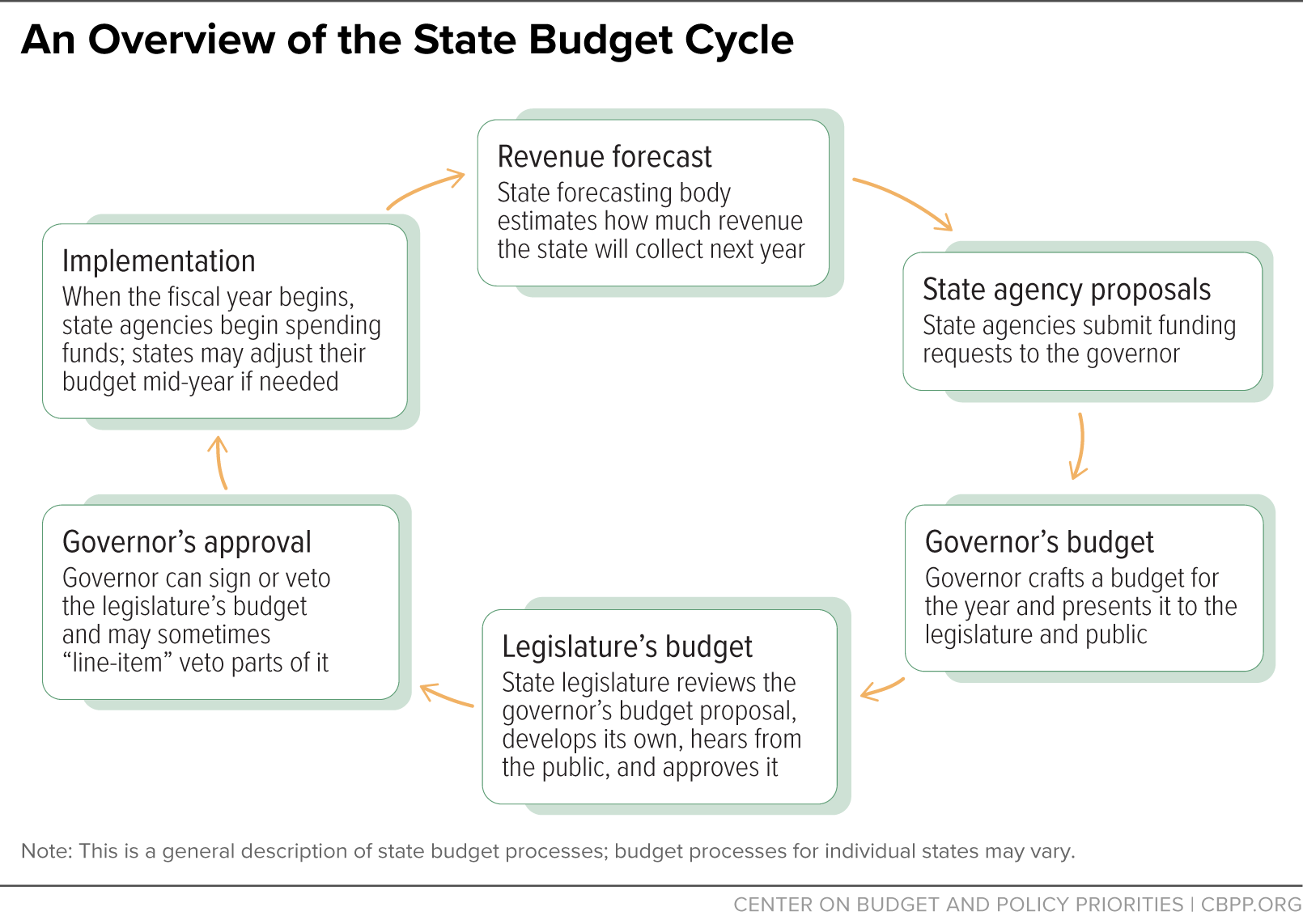
States enact a budget either every year or every other year (“biennial” budget). Most states begin their fiscal year on July 1. Most states that adopt biennial budgets revisit and adjust them in the off year. See the graphic below for an overview of the stages of state budget cycles.

How Do States Raise Funds for Their Budgets?
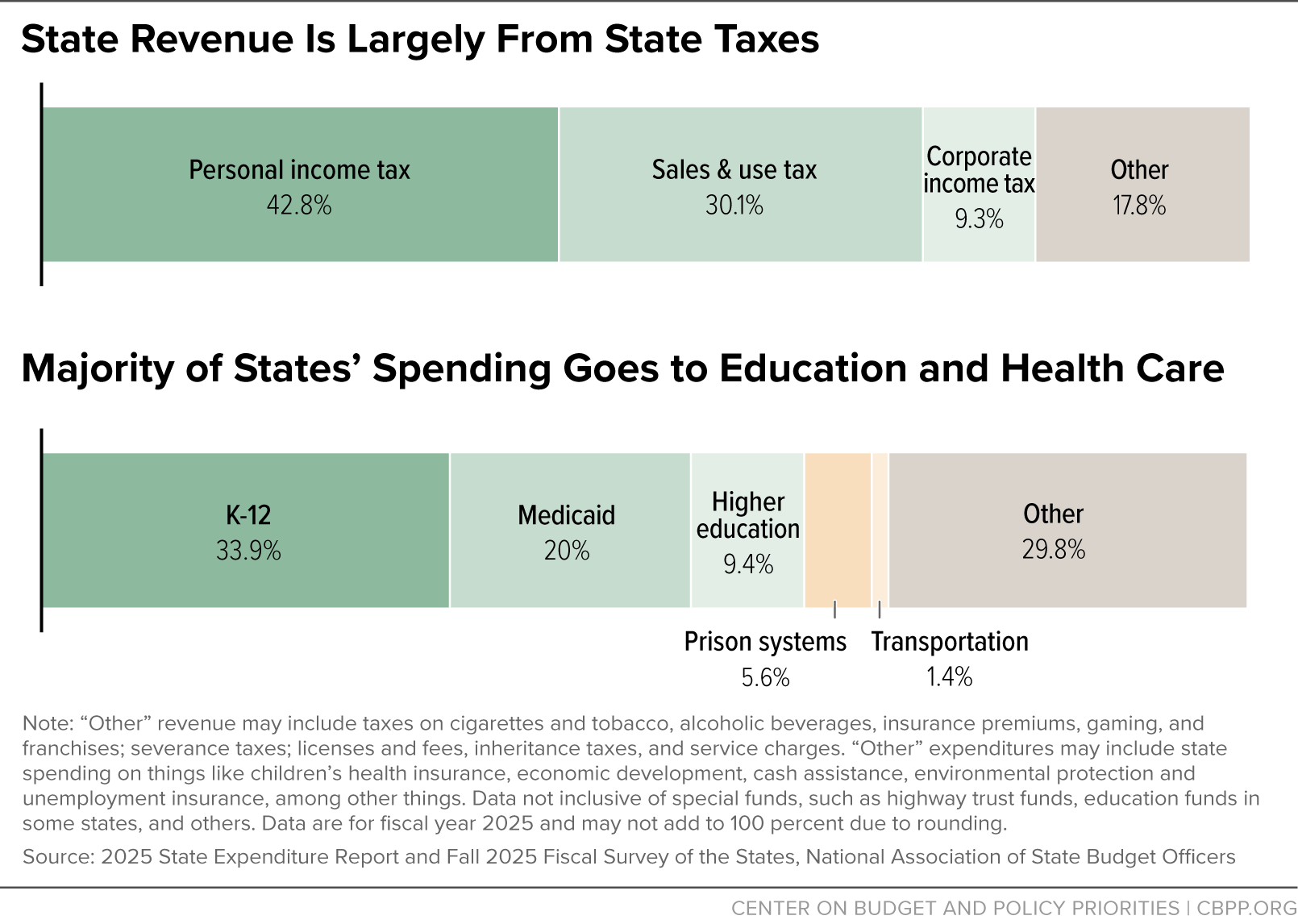
Unlike the federal government, states must balance their budgets each year and must have revenues to cover all spending. The main source of state revenue is state taxes — primarily personal income taxes and general sales taxes, though the mix varies significantly by state. States also collect smaller portions of revenue through taxes on corporate income, “selective” sales taxes on items such as motor fuel and tobacco, and fines and fees (see chart, below).
Most state and local tax systems are upside down: households with high incomes pay a smaller share of their income in taxes, on average, than people with low and middle incomes do, even though the wealthy are best able to afford to pay more. This means that states’ tax structures also worsen racial and ethnic inequities because households of color are more likely to have lower incomes and less wealth than white households due to historical and ongoing discrimination and bias.

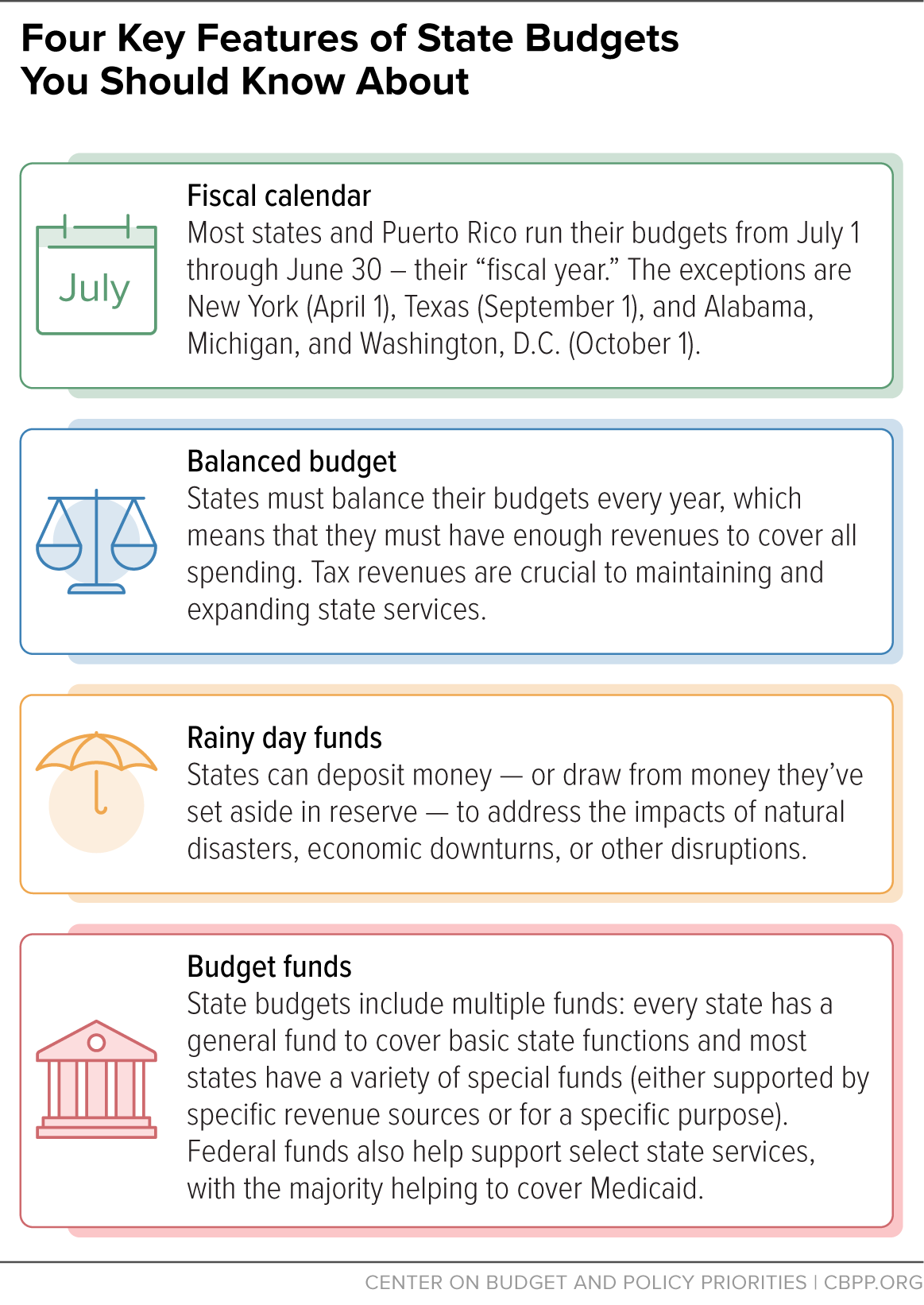
If states face a revenue decline (such as an economic downturn) or significantly higher spending needs (such as the fallout from a natural disaster), states can draw on reserve funds, often called “rainy day funds,” though rules governing how much is saved in these funds and when they can be accessed vary considerably state-to-state. States can also vote to increase taxes temporarily, or permanently, to cover higher spending needs, including new investments.
How Do States Spend Their Budgets?
Across the nation, over half of what states spend goes to education (K-12 and college) and health care (see chart, above). That funding pays for teachers and other staff, classroom technology and supplies, and after-school activities. A significant portion of state budgets also goes toward providing affordable, quality health insurance to workers, children, and families who might otherwise go without or be forced to rely on costly emergency care.
States also fund a wide variety of other services, such as transportation, prison systems, pensions and health benefits for public employees, care for people with mental health conditions and developmental disabilities, assistance to families with low incomes, economic development, environmental protection, state police, parks and recreation, and aid to local governments.
How Can States Make Their Budget Processes Transparent?
State residents can and should work to influence state budgets — they can testify, speak to lawmakers, and organize larger advocacy efforts around their budget priorities.
States should take the following steps to make their budget processes more transparent and accessible:
Make all budget documentation publicly available. Budget documents should be easy to find and understand, and easy to follow through the budget process.
Ensure budget analysis is accurate. A nonpartisan legislative fiscal office should guarantee that revenue forecasts and other budget analyses are professional, credible, and prepared without political influence.
Provide comprehensive, long-term budget data. Budget data should provide a full picture of a state’s fiscal health, now and into the future. That means projecting the costs and savings of a budget beyond the current year, ideally at least four to five years out.
Provide open and accessible public participation opportunities. Activities should include holding hearings in-person and virtually, ensuring adequate time for members of the public to see and review budget information and materials, and guaranteeing a set of days for debate on the budget each year.