

BEYOND THE NUMBERS
States Can Make Property Taxes Fairer Without Shortchanging Local Services
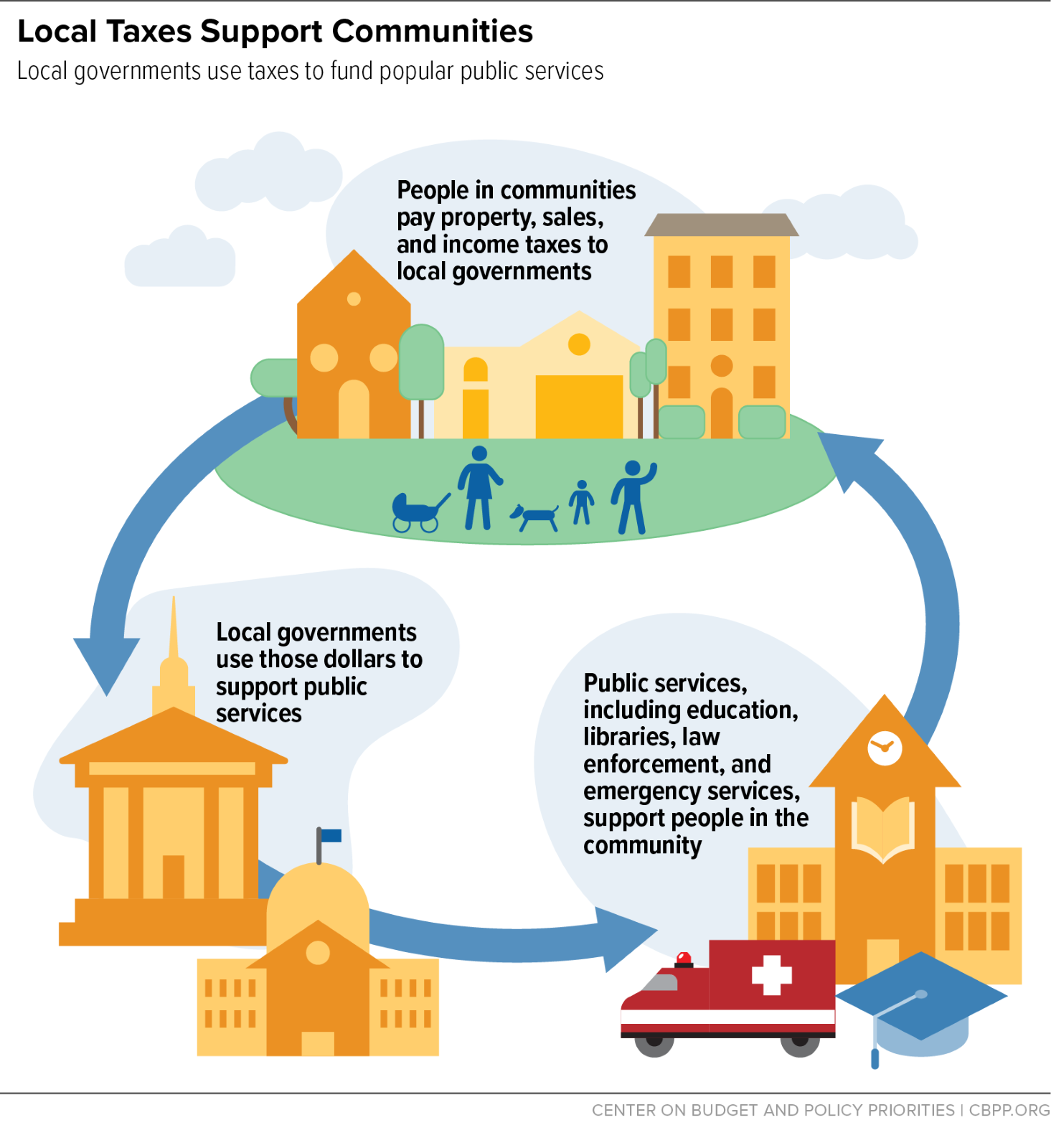
Public services, like properly maintained sidewalks, well-resourced public schools, and responsive emergency services are critical to the well-being of our communities. But these services share something else in common: they are funded and administered primarily at the local level. Local governments provide nearly half of K-12 public education funding, roughly 9 in 10 dollars spent on policing, and a majority of funding for libraries and emergency medical services. Funding for local governments, in turn, relies heavily on property taxes, which are the primary revenue source for over 90 percent of local governments and account for nearly three-quarters of local government tax revenue nationwide.
But this critical source of revenue is under threat as state legislatures across the country restrict the ability of local officials to raise the revenue they need to support their communities. Legislators in at least 23 states have introduced bills this year that would cut or limit property taxes in some way.
Some of these proposals, particularly those that create or expand property tax “circuit breakers,” would reform property taxes in equitable, fiscally responsible ways. But many others would enact across-the-board cuts or limits that would fail to meaningfully assist households with low incomes or address housing affordability, threaten the fiscal stability of local governments, and make states’ tax codes even more regressive. In some states (including Florida, Indiana, Kansas, Missouri, Nebraska, North Dakota, Oklahoma, Pennsylvania, and Texas), legislators or governors have even considered eliminating some or all property taxes in their states outright, which would have devastating impacts on local communities.

These cuts and limits, proposed and enacted at the state level but targeted at the local level, come in the context of a decades-long decline in state and federal support for local governments. They also occur alongside deep, state-enacted cuts to personal and corporate income taxes, costly private school voucher programs that threaten to defund public schools, and incoming federal budget cuts that will shift the cost of paying for health care, food assistance, education, and other investments further onto state and local governments.
Local governments are experiencing fiscal crises of their own, grappling with significantly higher costs in health care, pensions, construction, and infrastructure improvements related to climate change. Faced with higher costs and reduced support from state and federal governments, local administrators have little choice but to turn to property taxes to meet their communities’ needs.
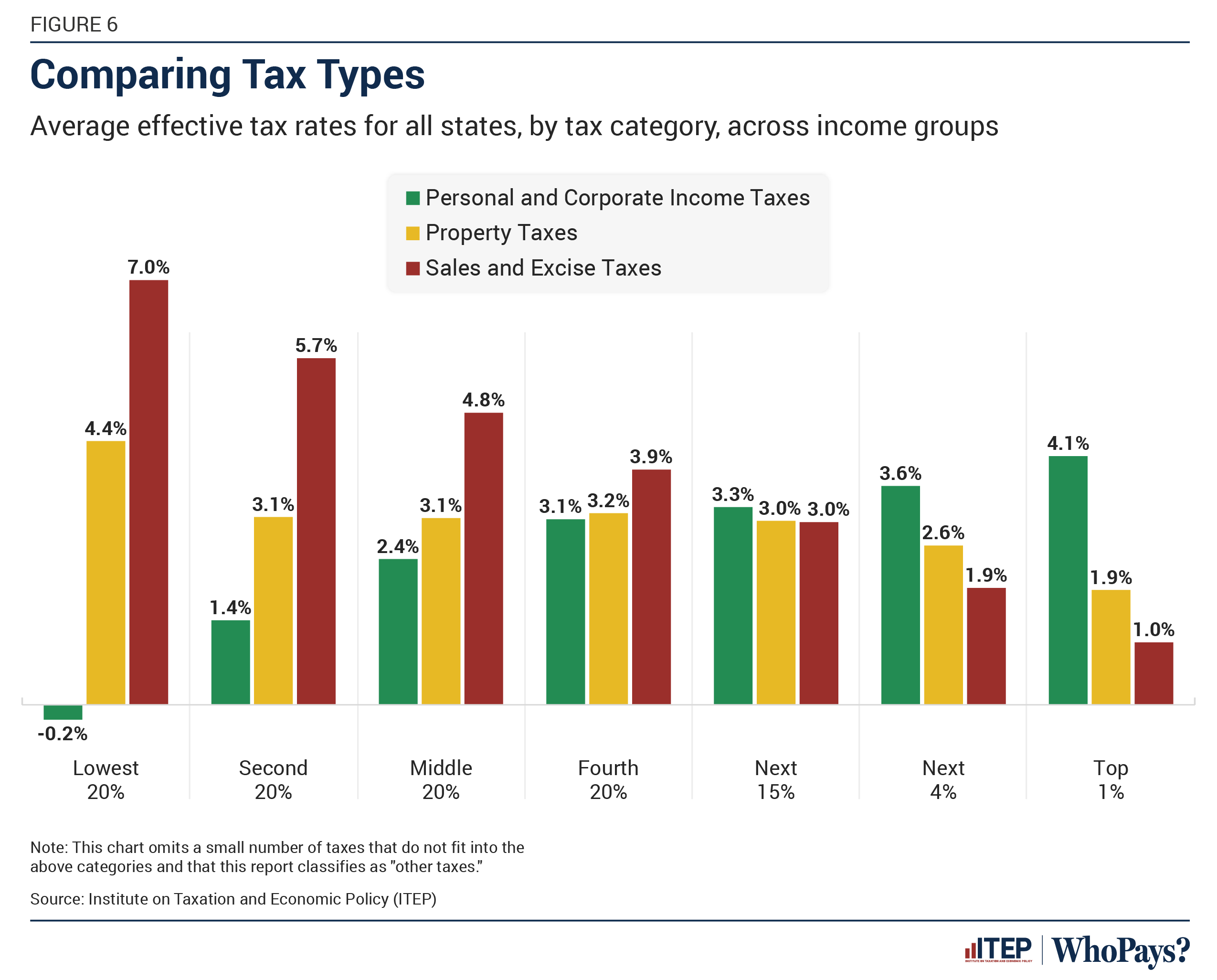
While the property tax has many advantages relative to other types of taxes — it is more stable, transparent, and difficult to avoid than sales or income taxes — it has its flaws, many of which fall most harshly on people of color and people with low incomes. Among these flaws is that property taxes are regressive, meaning they require a greater percentage of income from people with less ability to pay. Unexpected increases in property tax bills can be unaffordable for people with low or fixed incomes (such as retirees or some people with disabilities) and can force long-time residents out of rapidly gentrifying areas.
Unexpected and sometimes dramatic property tax increases have become more common since the beginning of the COVID-19 pandemic as home prices have skyrocketed and commercial property values have declined in many major cities, leaving homeowners and renters on the hook for a greater share of property tax revenue. This is why policies that tie property taxes to people’s ability to pay them, like circuit breaker credits, are critical for ensuring that nobody is forced out of their home due to their property tax bill.
Property taxes also play a role in worsening racial and economic inequality. Studies have shown that homes owned by Black and Latino households are routinely overvalued for property tax purposes, meaning they face higher tax bills than similarly situated white homeowners. Property assessments across the country have also been shown to be regressive on average, meaning that higher value homes are likely to be under assessed for property tax purposes while lower value homes are likely to be over assessed. This pattern of biased assessments makes property taxes less affordable for homeowners with low incomes and allows wealthier homeowners to avoid paying their fair share to support local services.
All of these factors mean that for many people, especially people of color, property tax assessments can be outright predatory. Investing in computer-assisted assessment technology can reduce this bias and better ensure that assessments fairly reflect the value of the properties to which they apply. But the vast majority of the property tax proposals do not address these flaws and could instead deepen the inequity of state tax codes and jeopardize funding that enables people to stay safely housed.
To address affordability issues for people struggling to pay their property tax bills, state lawmakers should create or expand circuit breakers, which tie property taxes to people’s ability to pay, rather than pushing deep and broad-based property tax cuts. Legislators can also standardize property assessment practices to reduce volatility alongside racial and economic bias. Finally, states can reverse course on the deeply harmful cuts to their income taxes, freeing up more revenue that can then support local communities. Through equity-oriented, fiscally responsible policies, legislators can make property taxes fairer and more affordable without harming the local services people rely on and enjoy.