BEYOND THE NUMBERS
More Frequent Medicaid Renewals Would Increase Errors and Lead Eligible People to Lose Health Coverage
One part of congressional Republicans’ plan to take Medicaid away from people in the House Energy & Commerce Committee bill is an ill-advised and unnecessary proposal requiring Medicaid enrollees in the expansion population to renew their coverage twice a year, rather than the current annual cycle. However, requiring enrollees to jump through bureaucratic hoops more frequently would create more costs for states and cause eligible individuals to lose coverage.
Here’s are three reasons why the proposal is misguided.
1. Many eligible people lose coverage at renewal; more frequent renewals would lead to more eligible people losing coverage.
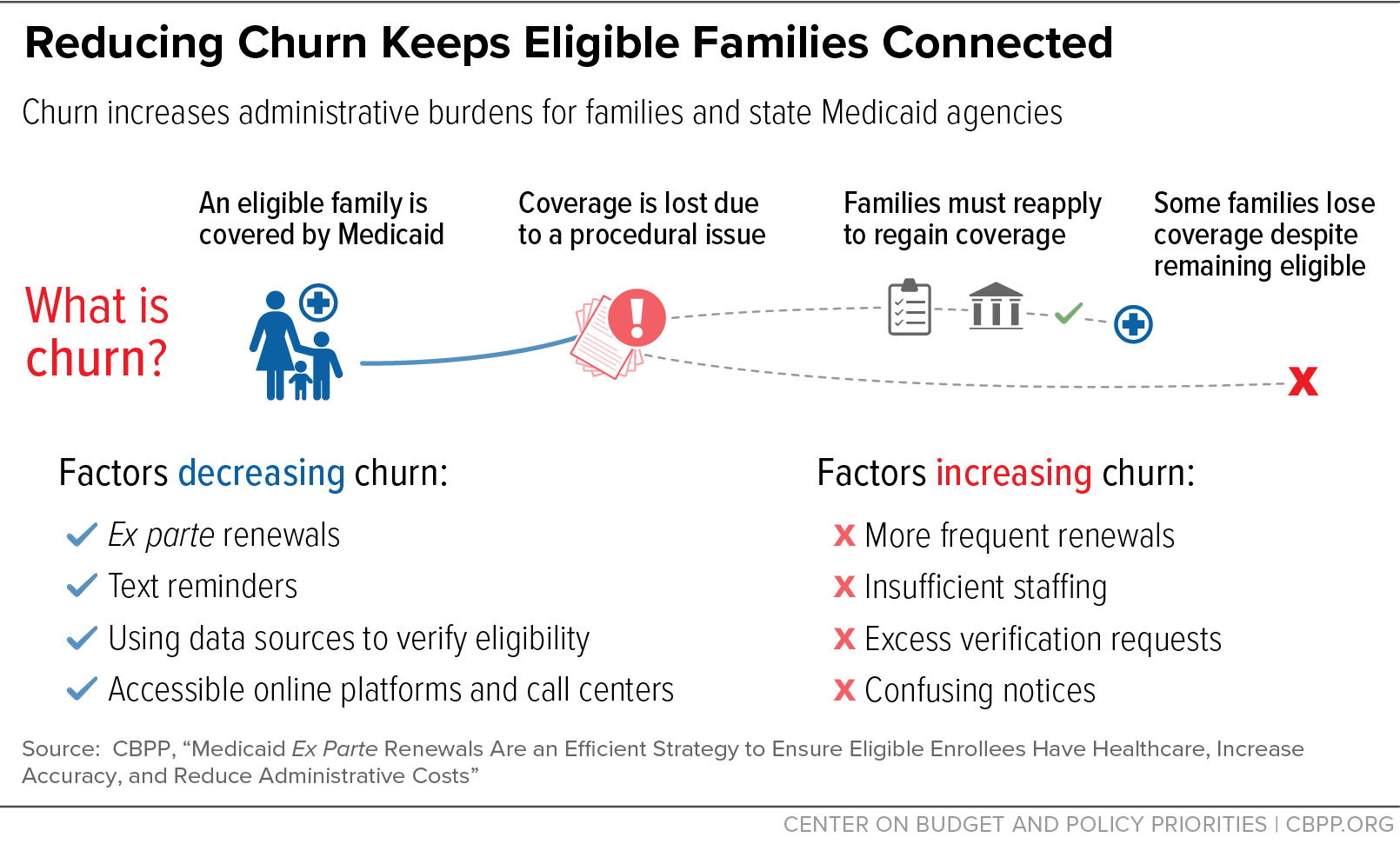
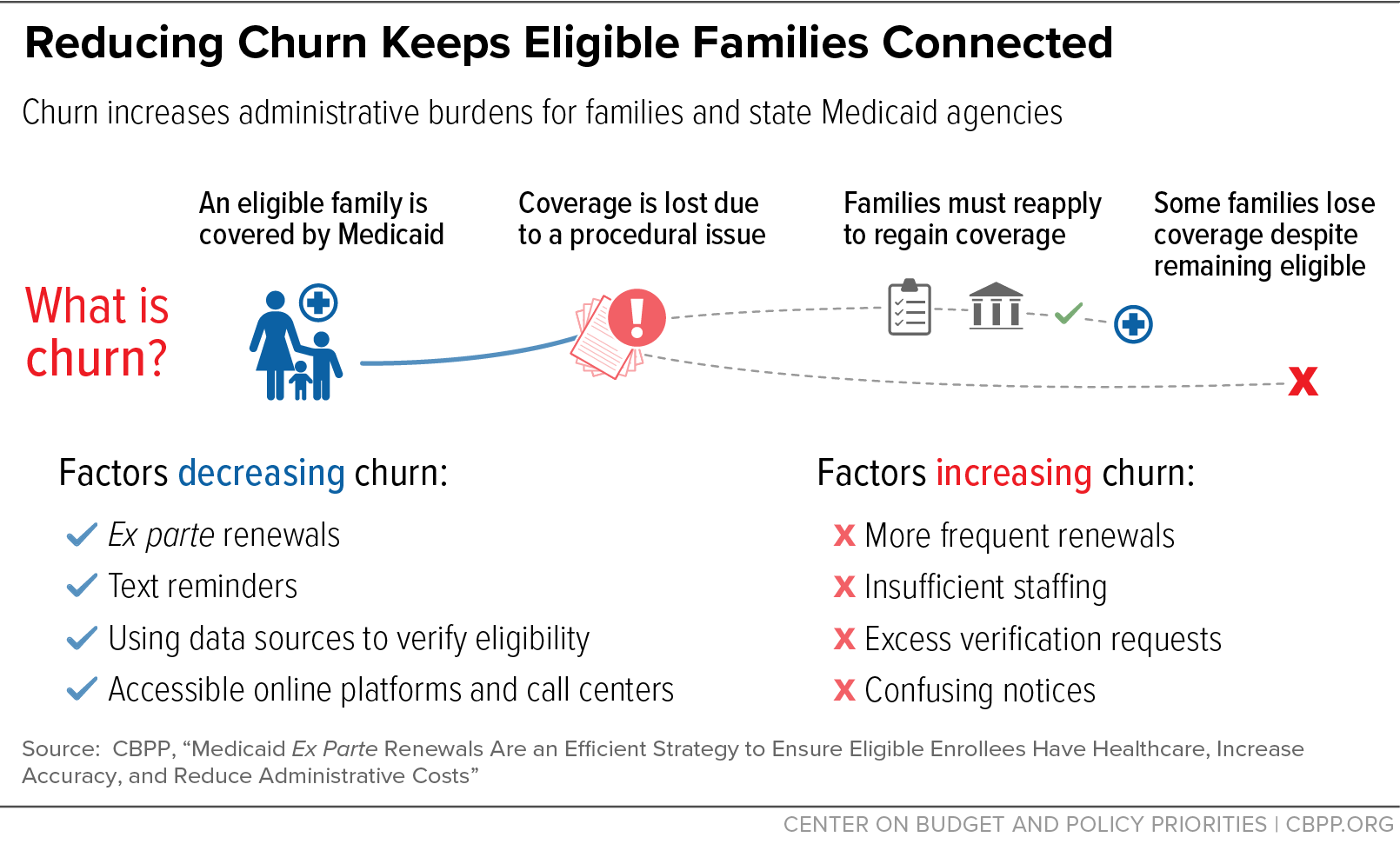
Even after improvements to the renewal process made during the unwinding of the COVID-era continuous coverage provision, many enrollees still lose coverage at renewal for procedural reasons — not because they’re determined to no longer qualify for Medicaid, but because they didn’t receive a renewal form, didn’t submit all of the required forms, or the agency didn’t process their renewal in a timely manner.
The average nationwide rate of procedural denial at renewal is over 10 percent, though a dozen states have rates of 20 percent or higher. Loss of coverage may lead people to skip appointments and procedures and delay filling their prescriptions. Many of the people who lose coverage at renewal due to red tape (including many parents and workers) are in fact eligible; making this happen more often would violate the Republican pledge to protect Medicaid for eligible people.
2. Mechanisms already exist to identify possible eligibility changes between renewals.
Unlike children who have continuous eligibility between renewals, adults are required to report changes in between renewals that may affect their eligibility, such as increases in income. And states regularly check data sources to identify changes in income or other relevant circumstances, including the Social Security Administration database, state quarterly wage data, and information from other programs, like SNAP. If the state finds an indication someone is no longer eligible for Medicaid in between renewals, the enrollee must prove they’re still eligible or they lose coverage.
3. More frequent renewals would increase state costs.
Many eligible people who lose Medicaid at renewal reapply for the program, known as churn. Increasing the workload of Medicaid agencies by requiring more frequent renewals, plus an increase in re-applications as enrollees churn off the program, would increase administrative costs for states — each episode of churn can cost a state hundreds of dollars. And if states that are already struggling with workforce shortages don’t get additional staff, the increased workload from more frequent renewals (along with burdensome work requirements, which are also in the Committee bill) will mean all Medicaid enrollees will suffer from delayed processing of applications, longer call center wait times, and more errors. Further, the gaps in coverage people experience during churn episodes leads to higher health care costs due to interruptions in access to medications and treatment.