

BEYOND THE NUMBERS
HHS Halts Pilots Aimed at Helping Low-Income Parents Boost Employment, Earnings, and Their Family’s Well-Being
In a move that will significantly stymie state innovation in helping low-income families address barriers affecting their employment and earnings, the Department of Health and Human Services (HHS) has rescinded pilot projects awarded to five states to improve their Temporary Assistance for Needy Families (TANF) programs, indicating they will need to reapply under a future process. Establishing another process to select states for the pilot program, which Congress required on a bipartisan basis in 2023, will delay — and possibly derail — reforms to make TANF more effective in helping families support themselves.
Under TANF, the federal government provides a fixed block grant to states, which use these funds to provide, among other things, income assistance and employment-related services to families with very low incomes. States are subject to “work participation rates,” which measure the share of work-eligible individuals who demonstrate their participation in a limited, federally defined list of work activities for a certain number of hours per week.
Under the pilots, in contrast, states’ performance would be measured by TANF recipients’ gains in employment, earnings, and family well-being, not by their time spent in limited work activities and complying with the paperwork and red tape that goes with them. Toward this goal, pilot states would be given the flexibility to tailor employment, training, and other activities to the needs of TANF families. These states would then be held accountable for improving specific employment and earnings outcomes for individuals exiting TANF, as well as for family well-being indicators that states would have some flexibility in defining.
Consistent with the 2023 Fiscal Responsibility Act, which required the pilots, HHS went through a deliberate process to select the five pilot states, including a full public comment period on design and implementation issues and a detailed request for proposals from the states. HHS highlighted it was “interested in maximizing job placement, retention, and career pathways because of the importance of family economic stability through employment.” A panel considered the state applications, judging their strength and quality while also selecting states of varying demographics, size, and TANF program structure. This diversity would allow lessons learned through the pilots to be potentially applicable to all, or nearly all, states.
Twenty-two states applied for the pilots, illustrating states’ widespread frustration with the current TANF work reporting requirements and their focus on documenting hours spent in a narrow set of activities rather than successful outcomes for families. Applications from the five states selected — California, Kentucky, Maine, Minnesota, and Ohio — all highlighted their proposed strategies to improve outcomes for families.
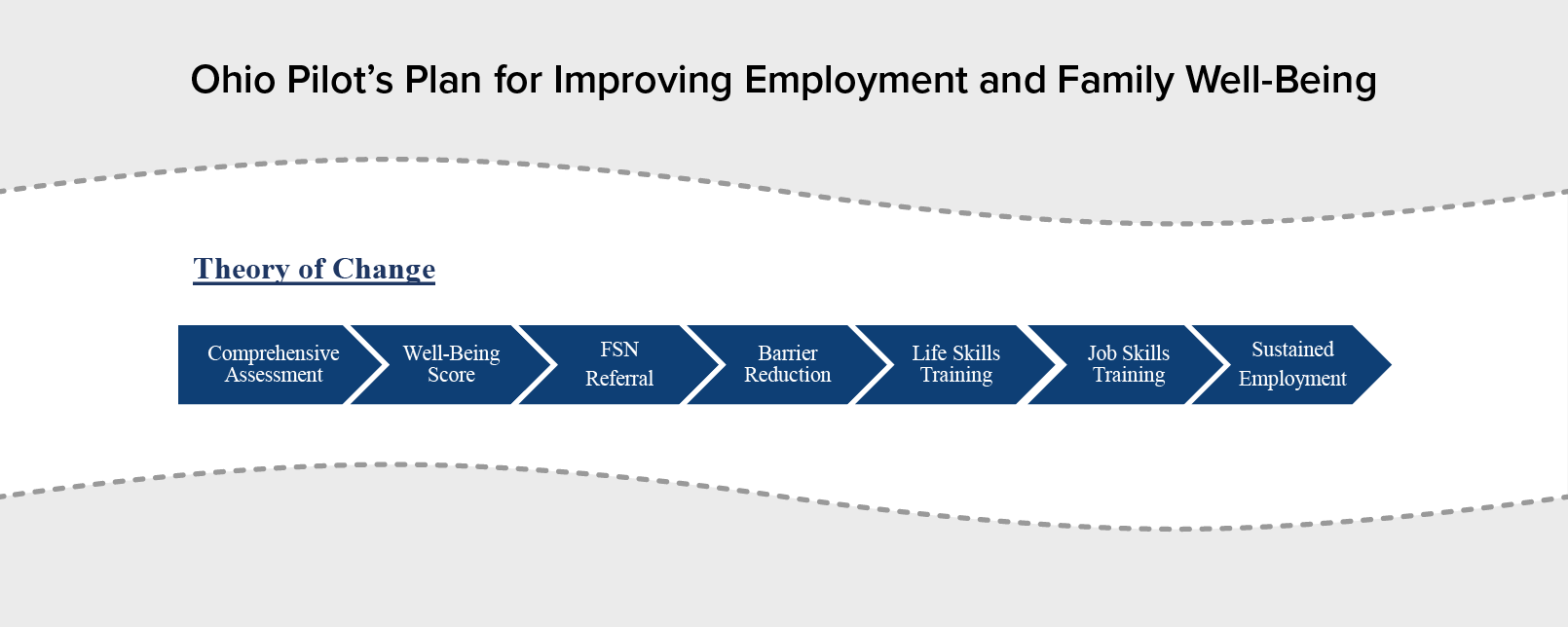
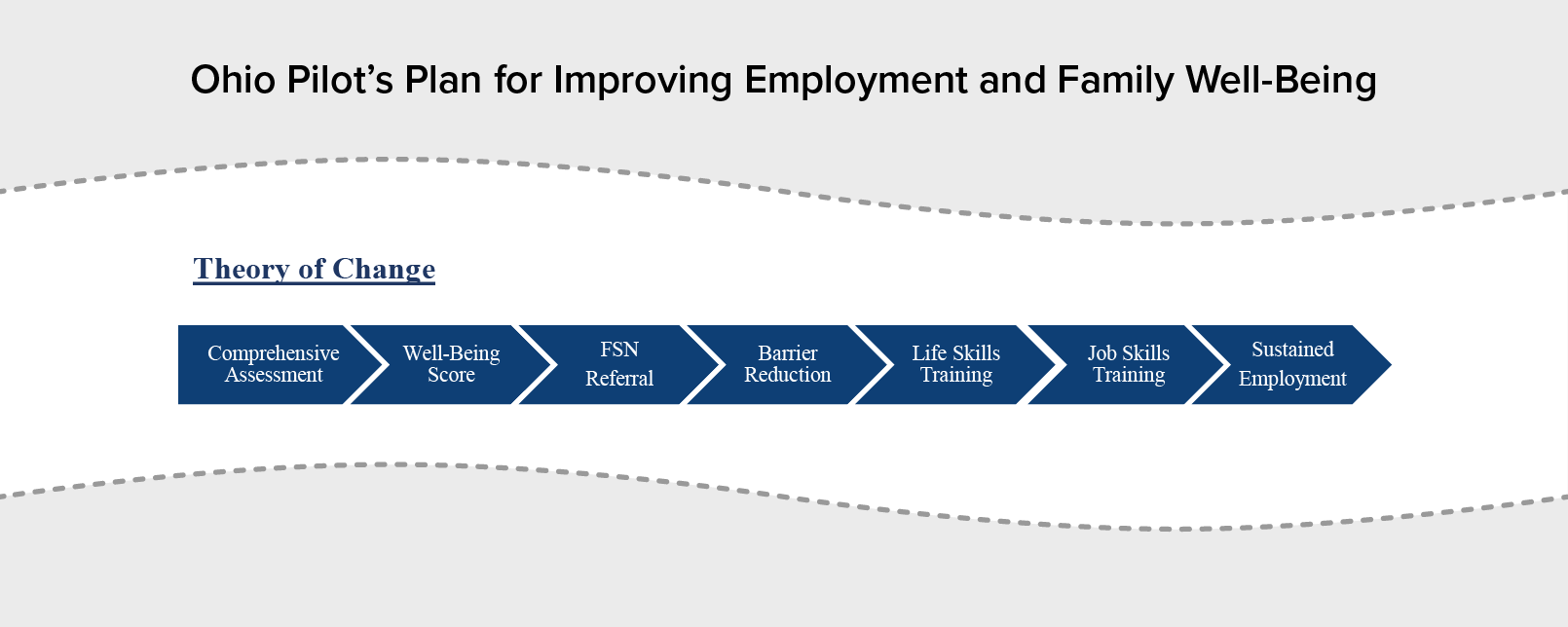
Ohio said its pilot would “meet the individual where they are and move away from only core hour activities and focus on barrier removal,” ultimately enabling participants to obtain sustained employment. California explained that, “While this pilot continues to emphasize securing employment, and doing so quickly, importantly it also builds in a greater focus on participant support, barrier removal, and skill development to achieve stable and meaningful employment for long-term employability.” Minnesota called for moving away from a system in which “employment counselors spent a little more than half their time on program documentation requirements” and toward one where they engage more holistically with clients. Maine explained that “Coaches will work with each parent to identify a customized path forward towards economic mobility and family well-being” while also looking to reduce families’ involvement in the child welfare system. And Kentucky planned to focus on “implementing and scaling up an Integrated Case Management model” and assessing the needs of TANF recipients, “rather than pushing a certain number of hours in a limited variety of activities.”
The Trump Administration’s backsliding on TANF innovation is particularly concerning given that House Republicans are considering cutting TANF’s block grant funding (which has been frozen since TANF’s creation in 1996) and making its process-oriented work requirements even stricter, which would further limit TANF’s ability to help families become self-sufficient. TANF now provides income assistance to only about 1 in 5 families living in poverty, leaving many millions of children without needed help for food, rent, diapers, and other necessities. And its very modest cash benefits ($549 a month in the median state in 2023) are at or below 60 percent of the poverty line in every state.
Preventing the five selected states from continuing their pilot programs is both contrary to the law Congress passed and against the interests of low-income families in those states, and ultimately across the nation. The Trump Administration should support innovation to promote employment and improve family well-being, not stand in its way.