

BEYOND THE NUMBERS
The Latest on State Budgets
Our new analysis of state budget shortfalls shows that states’ problems are far from over:
- In states’ current fiscal year (2011, which started July 1 in most states), 46 states have had to address budget gaps totaling $130 billion, or 20 percent of their cumulative budgets. This total shortfall will likely grow over the course of the year as mid-year gaps open in some states.
- Some 40 states have already projected gaps for fiscal year 2012 that total $113 billion, or 19 percent of state budgets. This total will likely grow to roughly $140 billion once all states have prepared estimates.
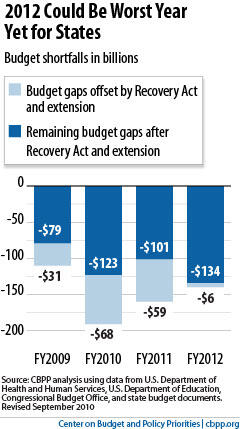
Why are states still in such bad shape? As my colleague Nicholas Johnson explained, state revenues remain well below pre-recession levels even with the current signs of improvement. At the same time, the need for state services — which rises in a recession as residents lose jobs, income, and job-based health coverage — remains high.
The bottom line? State revenues are not nearly adequate right now to sustain the level of services that states must provide.
That’s why states need to take a balanced approach to closing their shortfalls, one that includes new revenues and not just severe cuts to services. States can’t count on a swift economic recovery to close the gap between rising needs and shrunken revenues. Those problems are likely to linger for some time to come, based on available evidence and past experience. Instead, states should minimize the damage that their budget shortfalls inflict both on the economy and on their most vulnerable residents.