

Looking Across the Landscape: State Opportunities to Increase Access to SNAP, Medicaid, and WIC
The State Landscape is a comprehensive set of eligibility criteria, waivers, operations metrics, and other data collected by various entities and available across the 50 states and Washington, D.C. for the Supplemental Nutrition Assistance Program (SNAP), Medicaid, and WIC.[2] It provides a single place for state officials and advocates to look across states and use data to identify areas in need of improvement.
The Landscape provides information on opportunities to improve access to economic and health security programs — whether broadly or for specific populations such as children, seniors and people with disabilities, and pregnant people. The Landscape reveals where eligibility levels are set, what waivers and options a state has chosen, and how those choices are affecting outcomes ranging from food insecurity and uninsurance rates to timely processing of applications. Advocates and state officials can compare their state to others to identify where they might be behind the curve. The Landscape can also surface ways to improve efficiency, accuracy, and compliance with federal requirements around timely processing.
While the Landscape provides a useful starting point, additional exploration at the state level may be needed to get a full picture of the changes that could improve access. Many factors affect whether states operate an accurate and efficient program that gets benefits to eligible people, including agency leadership; the adequacy of staffing levels; and characteristics of the state’s IT system such as its usability, the number of workarounds eligibility workers must use, and the backlog of needed changes. Operational details matter too, such as how an agency schedules SNAP interviews and the local office culture around requesting verification documents.
Advocates and state agencies can use data in the Landscape to identify opportunities to improve access and areas where further discovery is needed. Key opportunities by program include:
Medicaid
- Raise income limits so more people qualify.
- Improve timeliness.
- Increase ex parte renewal rates.
- Expand coverage for seniors and people with disabilities.
- Reduce the uninsurance rate.
SNAP
- Lengthen certification periods.
- Adopt broad-based categorical eligibility (BBCE).
- Minimize work requirements.
- Reduce churn.
WIC
- Focus on improving access for pregnant people and children.
- Use data from other programs to increase coverage rates.
- Adopt presumptive eligibility for pregnant people and automatically enroll newborns.
- Adopt digital tools that make applying and participating easier.
Service Delivery
- Develop a mobile-responsive website.
- Improve usability of online renewals.
- Ensure access to online applications in multiple languages.
- Implement SNAP phone applications.
- Minimize barriers from knowledge-based verification or biometrics.
Below we provide details about these opportunities for each program, followed by recommendations for cross-program service delivery improvements.
Medicaid
Raise income limits so more people qualify. States can, within certain constraints, set their own Medicaid income limits. Higher limits create affordable coverage options for more state residents, while low limits create coverage gaps and leave many without an affordable option.
- For children, the national median eligibility threshold is 255 percent of the federal poverty line, either through Medicaid or a separate Children’s Health Insurance Program (CHIP). It ranges from 190 to 405 percent, depending on the state.
- For parents and caretaker relatives, as well as childless adults, it matters whether states have expanded Medicaid under the Affordable Care Act (ACA). The median limit for parents and caretaker relatives in non-expansion states is 34 percent of the federal poverty line, with some states having thresholds under 20 percent. In most non-expansion states, childless adults aren’t eligible at any income level.
- For pregnant people, the median maximum eligibility threshold for full Medicaid is 201 percent of the federal poverty line, and it ranges from 138 to 380 percent. Twenty-six states also provide limited pregnancy-related care for people with higher incomes and those who don’t qualify for full Medicaid coverage due to their immigration status.

Improve timeliness. Getting Medicaid benefits to applicants in a timely manner allows them to access the medical care and prescriptions they need to get or stay healthy. The federal Medicaid agency releases monthly data on state timeliness, and in the latest data, 22 states processed 50 percent or more of their applications within seven days, indicating efficient ways to verify eligibility without sending follow-up requests to applicants for additional information.[3] On the other hand, six states processed 25 percent or more of their applications in more than 45 days, exceeding the maximum amount of time states are permitted to process an application.[4] (See Figure 1.) This suggests issues that need to be addressed around verification procedures, IT systems, and staffing.

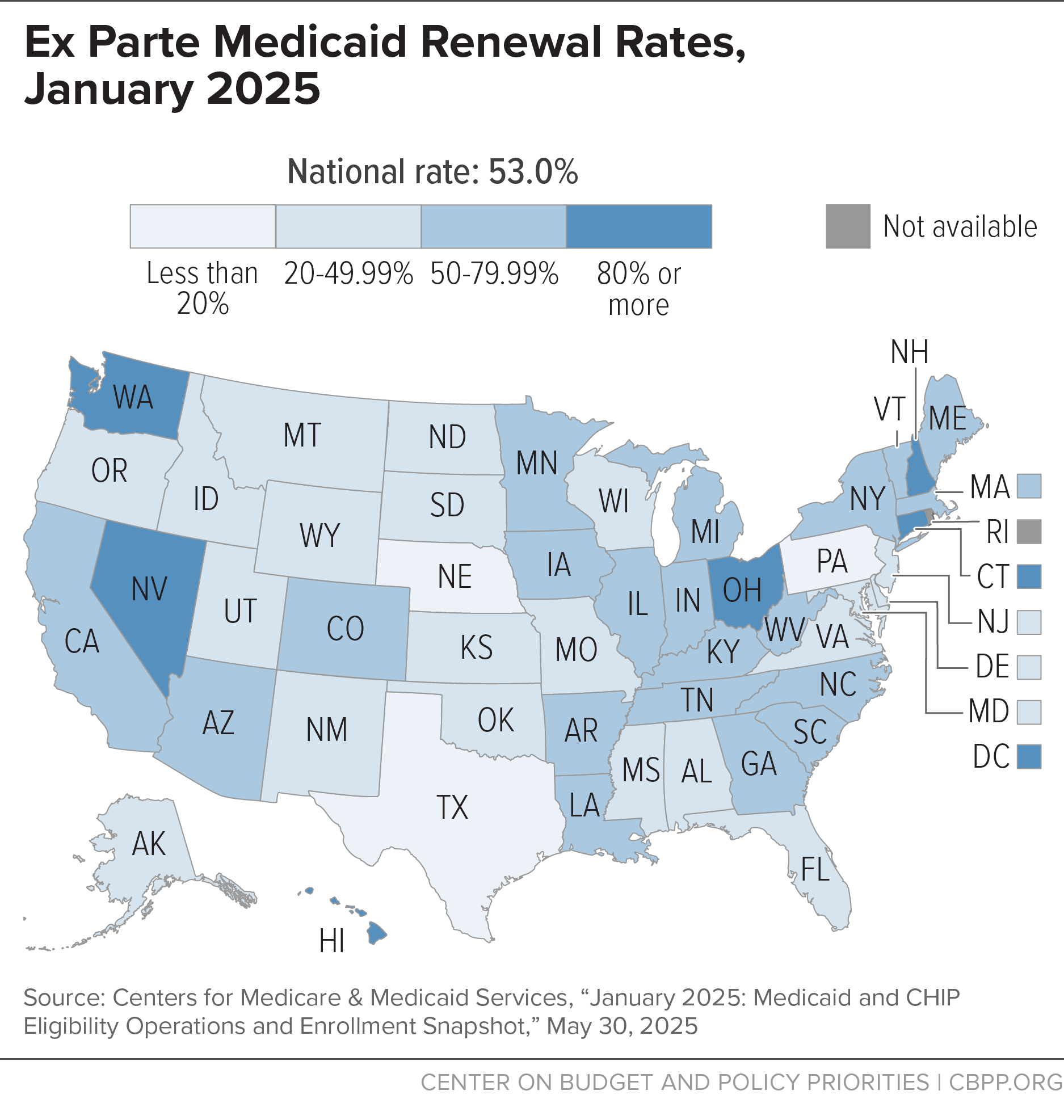
Increase ex parte renewal rates. Agencies are required to attempt an ex parte renewal for all enrollees. The ex parte process renews coverage using available data sources without requiring action by the enrollee.[5]A high rate of successful ex parte renewals keeps eligible people connected to coverage and reduces administrative burden for enrollees and eligibility workers alike. Many states made significant strides in increasing their ex parte renewal rates during the Medicaid “unwinding” following the end of COVID-era protections from disenrollment. The national average rose from around 30 percent to over 55 percent by the end of unwinding.[6]In the latest available data, 27 states had ex parte renewal rates at 50 percent or above while three states had rates under 20 percent.[7](See Figure 2.) Maintaining those high ex parte renewal rates in some states and improving them in others will improve the accuracy and efficiency of Medicaid.
Expand coverage for seniors and people with disabilities. States have significant flexibility in setting eligibility limits and processes for seniors and people with disabilities. This is often referred to as the non-MAGI population, whose eligibility is determined using different methods than children, parents, and expansion adults. Yet seniors and people with disabilities are often overlooked in discussions around streamlining access to benefits. States can broaden access for this population by:
- Covering people with significant medical needs. Forty-seven states offer working people with disabilities the option to pay to enroll in Medicaid, and 34 states offer a “medically needy” pathway for individuals with high medical expenses who would not otherwise qualify.
- Raising income and asset limits. This increases access and simplifies eligibility determinations. Fifteen states have eliminated the asset test for their Medicare Savings Programs (MSPs) — which cover premiums (and sometimes co-pays) for people enrolled in both Medicare and Medicaid — significantly simplifying enrollment. Seven states offer Qualified Medicare Beneficiary (QMB) coverage, the most comprehensive MSP, to individuals with income over the federal floor of 100 percent of the poverty line.
- Streamlining enrollment and renewal processes. Most non-MAGI categories have an asset test, which can lead to applicants and enrollees having to submit substantial amounts of additional verification at application and renewal. States can increase reliance on their asset verification system (AVS) and not re-verify certain assets at renewal to reduce the amount of paperwork people must submit.[8]
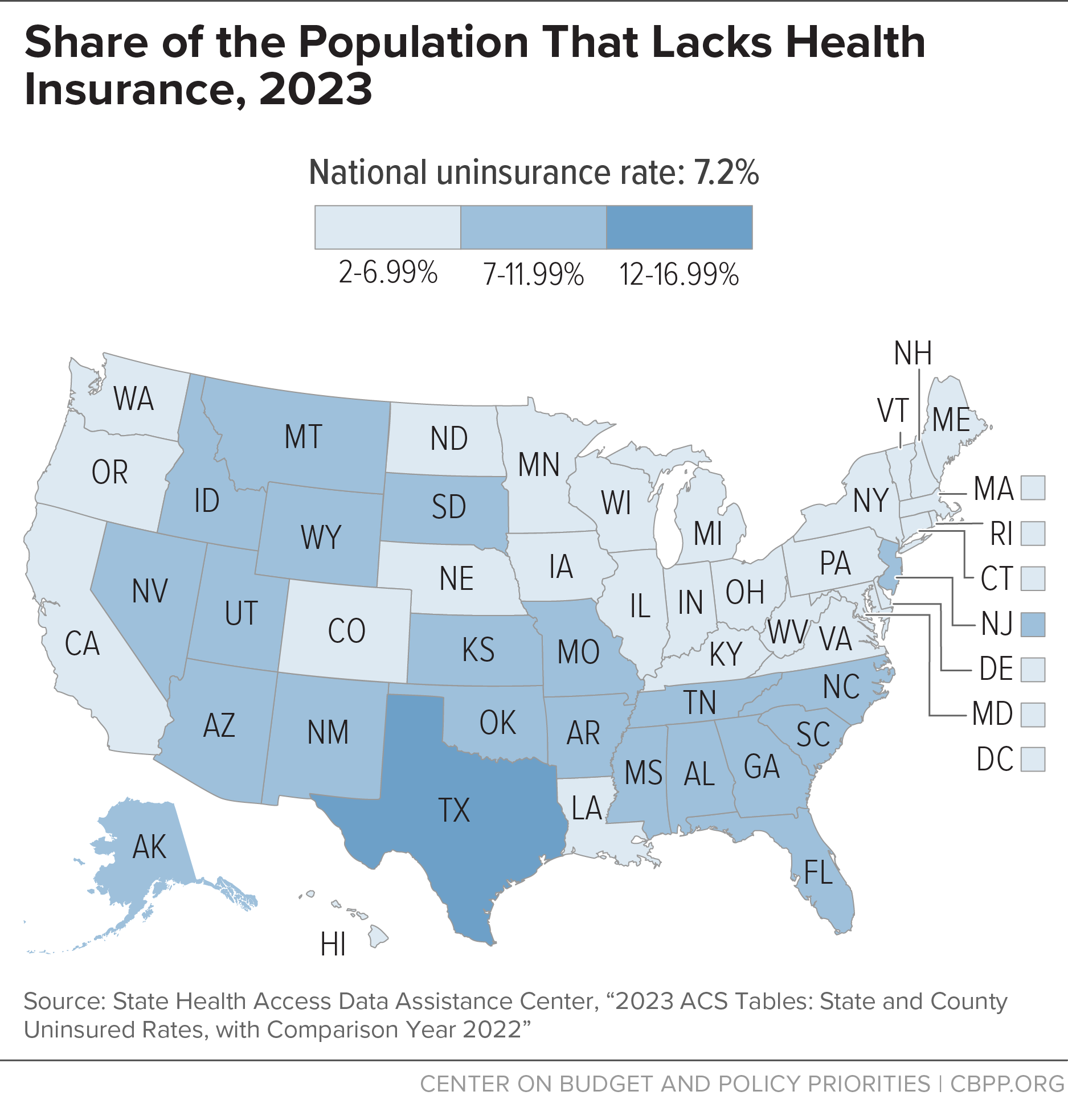
Reduce the uninsurance rate. One of the most important Medicaid outcomes metrics is the state’s uninsurance rate, which is the share of the population that lacks health insurance. The national median rate is 7 percent, which reflects a range from 3 percent to 16 percent. While the uninsurance rate is impacted by many factors, one of the dominant factors is who is eligible for Medicaid and whether they can enroll in and stay on Medicaid. Policy levers to reduce the uninsurance rate include expanding eligibility for Medicaid to adults without children in their home, raising income limits, and simplifying enrollment processes.

SNAP
Lengthen certification periods. States have some flexibility in how long to certify individual households to receive SNAP. After the certification period ends, SNAP households must reapply and be reinterviewed by an eligibility worker, even when their circumstances have not changed. Longer certification periods provide more stability for recipients and less administrative work for agencies. They do so without harming program integrity, since households must still report an increase in income if it takes them above the eligibility limit of 130 percent of the poverty line.
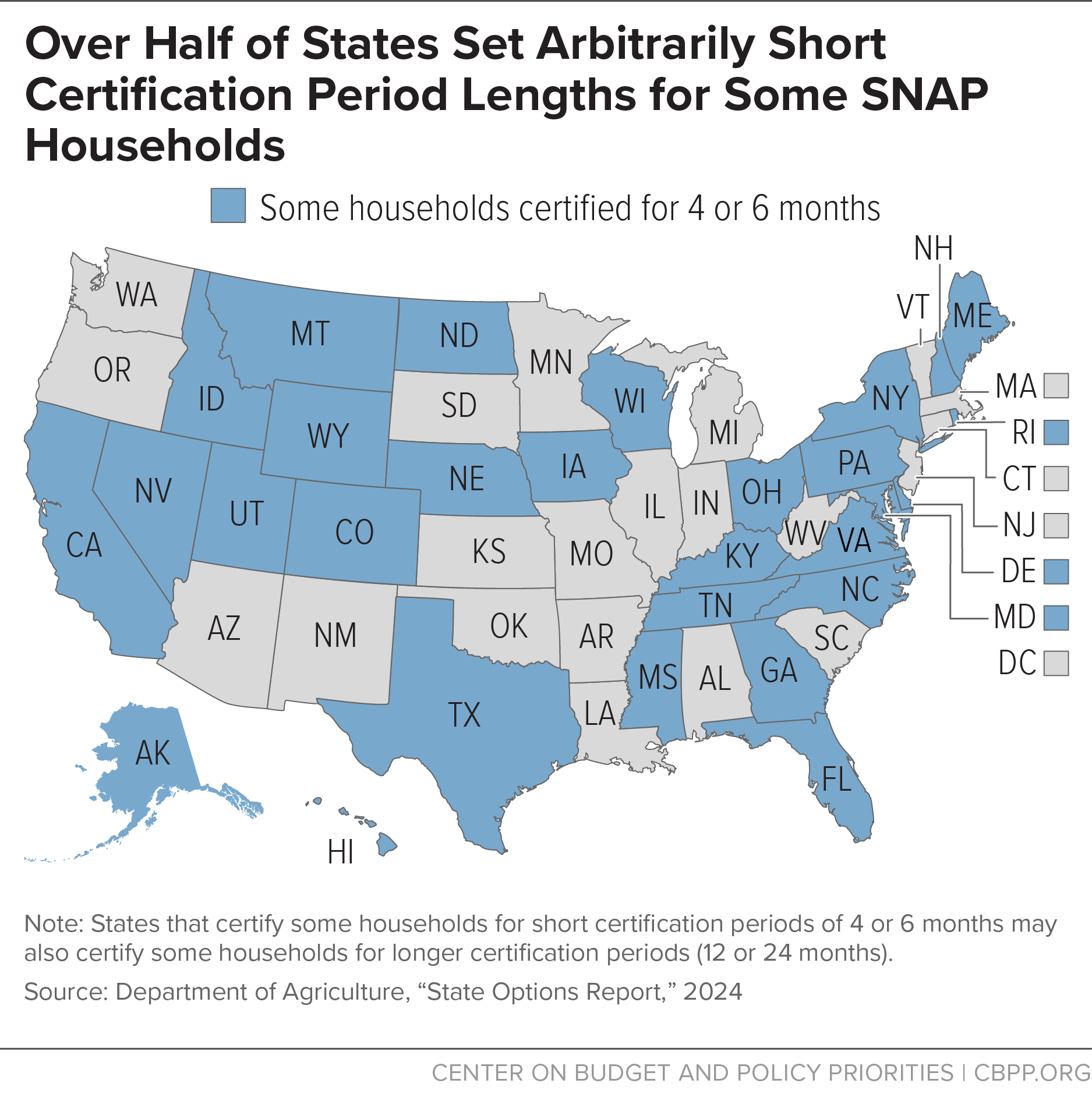
Most states assign households to 12-month certification periods, with a six-month interim report required in between. States can provide longer certification periods (24 or 36 months) for elderly and/or disabled households without earned income and can request federal permission to waive the interim report requirement for these households. States should maximize these certification options, as 11 states already do.[9] Conversely, 29 states set arbitrarily low certification periods (four or six months), including for individuals subject to work requirements and those who are unstably housed.[10] (See Figure 4.) Doing so unnecessarily increases administrative burdens on both states and households.

Adopt broad-based categorical eligibility (BBCE). BBCE is a long-standing state option that allows states to reduce the so-called benefits cliff to help working families. BBCE allows states to (1) raise or eliminate the federal asset test and/or (2) raise the gross income limit up to 200 percent of the federal poverty line. At least 44 states and territories across the political spectrum currently exercise one or both options.[11] (See Figure 5.) BBCE also improves the efficiency of SNAP application processing, because it reduces the number of verification documents states must collect.

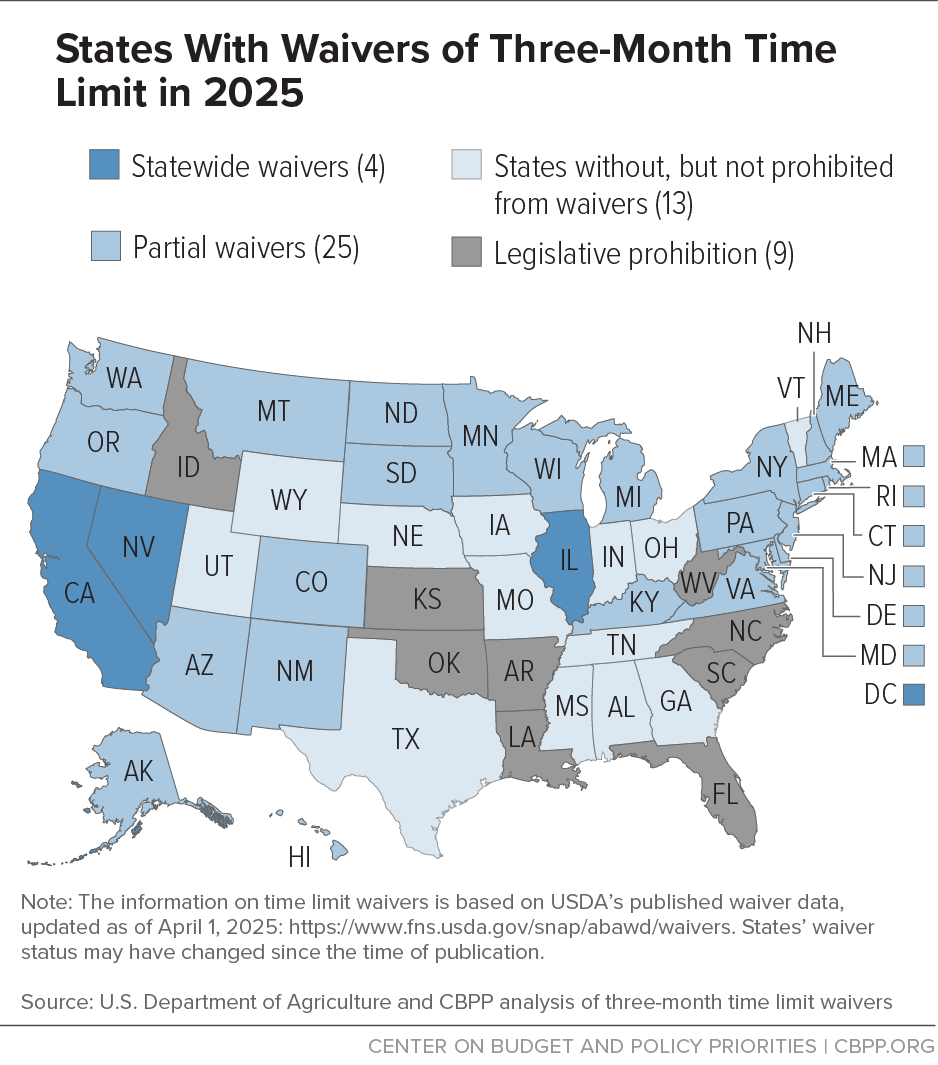
Minimize work requirements. Existing federal law includes harsh work reporting requirements for non-disabled adults, aged 18 through 54, who do not live with children under 18. This group is known in federal law as “Able-Bodied Adults Without Dependents,” or ABAWDs. States also have the option to mandate additional work and training requirements for most SNAP participants, aged 16 through 59, including parents with children. Extensive research shows these requirements do not increase labor market participation or wages; in some instances, they actually decrease work. They do, however, increase hardship and the risk of food insecurity.[12] To minimize this harm, states should:
- maximize the use of geographic waivers and discretionary exemptions for ABAWDs, as 31 states and territories currently do (see Figure 6);[13] and
- operate voluntary SNAP Employment and Training programs, as 45 states and territories currently do.[14]

Reduce churn. The most common reason for the persistent gap between households eligible for SNAP and those actually getting SNAP benefits is not program awareness but churn. Churn is when a SNAP case closes for procedural reasons, such as not receiving or returning a form, even when the household remains eligible, forcing the household to reapply.[15] Churn harms eligible households who miss out on benefits and administering agencies that must spend resources processing an unnecessarily high volume of new applications each month. States options to minimize procedural case closures and reduce churn include:
- implementing simplified reporting — instead of change reporting — for all households, as 31 states do;[16] and
- opting into the reinstatement waiver, which allows states to suspend, rather than close, a SNAP case when information is missing at interim report or recertification. This gives households extra time to return missing forms or verification, rather than having their SNAP case close altogether, which then requires them to reapply from scratch. Twenty-three states and territories have opted into this waiver.[17]
WIC
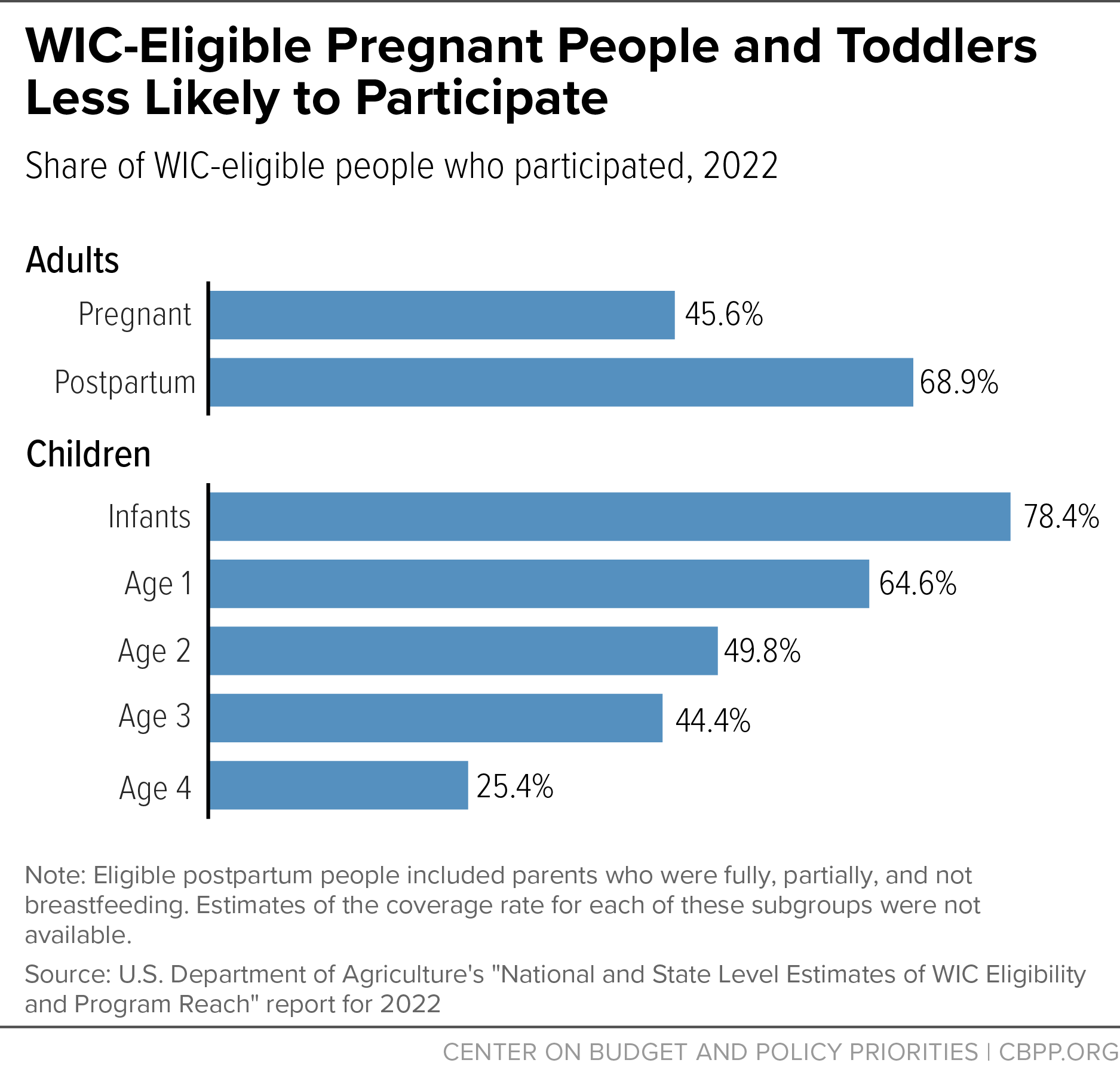
Focus on improving access for pregnant people and children. Only about half (53.5 percent) of all eligible people participate in WIC. This is referred to as the coverage rate.[18] Coverage rates are lowest among pregnant people and children aged 1 through 4, at around 46 percent nationally for each population.[19] (See Figure 7.) There is wide variation among states, from a low of 30 percent to a high of 60 percent among pregnant people and from a low of 24 percent to a high of 69 percent among children aged 1 through 4.[20]
State agencies can design targeted outreach and retention strategies to maximize enrollment during these critical life stages. Early enrollment during pregnancy ensures that expectant parents and newborns receive crucial prenatal care and access to healthy foods early in life and contributes to improved pregnancy outcomes, better infant development, and positive long-term health benefits.[21] Similarly, sustained enrollment for children contributes to better diet quality, more access to preventative health care, improved cognitive development, and better academic performance.[22]

Use data from other programs to increase coverage rates. Despite being automatically income-eligible for WIC, known as “adjunctive eligibility,” more than half of WIC-eligible Medicaid and/or SNAP enrollees do not participate in WIC.[23] Medicaid and SNAP state agencies can share enrollment data with WIC agencies to identify gaps and conduct outreach to WIC-eligible families who aren’t participating, an approach that has been shown to increase the coverage rate.[24] Thirty-five WIC state agencies report that they or their local agencies periodically receive data on program enrollees from Medicaid and/or SNAP.[25] (See Figure 8.) By working together, state Medicaid agencies and WIC programs can improve the health of pregnant and postpartum people and very young children, setting them on a path to better lifelong health.[26]

Adopt presumptive eligibility for pregnant people and automatically enroll newborns. States have the option to allow pregnant individuals to enroll as soon as they are determined to be income-eligible — this is known as “presumptive eligibility” — with a nutrition assessment completed within 60 days. A two-step process may make it easier for pregnant applicants, especially if presumptive eligibility is determined via telephone. In addition to increasing access to healthy food, participating in WIC earlier in pregnancy is associated with improved access to prenatal care, improved pregnancy outcomes, and better infant development.[27] Twenty-nine states currently utilize this option. In addition, states can automatically enroll newborns as “adjunctively eligible” based on their parent’s enrollment in Medicaid or SNAP or family enrollment in TANF, without additional income documentation. This automatic enrollment helps infants receive critical food and nutrition benefits right away, including breastfeeding support. Forty-three states have either adopted or are in the process of implementing this option.
Adopt digital tools that make applying and participating easier. Digital tools can improve access to WIC by removing common barriers to participation. For example, WIC staff can use information gathered through online contact request forms to follow up with applicants and begin the process of certification, rather than requiring applicants to call or visit the WIC office to initiate certification. WIC agencies can make participant portals and mobile apps interactive, enabling participants to update demographic or health information; request or change appointments; and view information such as available food benefits, upcoming appointments, and locations of WIC offices and grocery stores that accept WIC. Accepting eligibility documentation not only on paper but also through digital channels such as email, text, upload, or video is another way states can improve access. While the vast majority of states offer at least one digital mechanism for document transmission, offering a multitude of user-friendly options is best to meet the needs of a population with varying levels of access to and comfort with digital technologies.
Service Delivery
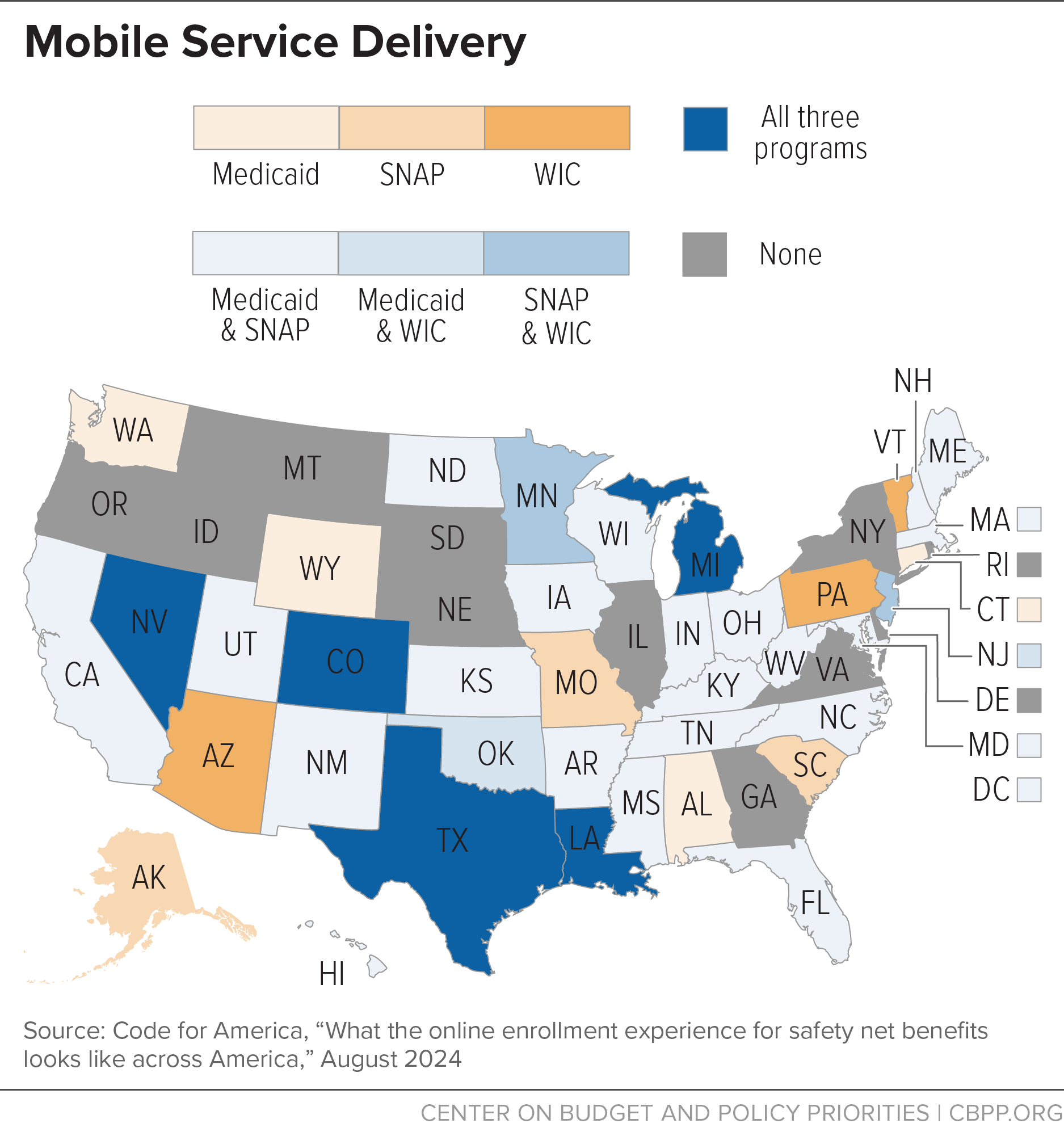
Develop a mobile-responsive website. Cell phones provide a crucial means of internet access for people with low incomes. Over 90 percent of adults with incomes below $30,000 own a cellphone, and over 30 percent exclusively use a cell phone for internet access.[28]A mobile-responsive website can adapt its layout and functionality to work across a number of devices, including cell phones and laptops. By ensuring that people can use the website from a variety of devices, mobile responsiveness increases accessibility and improves access to benefits. Mobile-responsive websites are available for Medicaid in 32 states, for SNAP in 32 states, and for WIC in 11 states. (See Figure 9.)
Improve usability of online renewals. People typically find it easier to manage their renewals when there is an online option, according to U.S. Digital Response.[29] Most states have some form of online renewals; 47 offer them for Medicaid and 45 for SNAP. States that do not have online renewals should implement them immediately. States that have already implemented online renewals should review the user experience and make improvements as needed. Renewals should be easy to find on the state’s online portal, accessible in multiple languages, and allow for simple uploading of supporting documents.

Ensure access to online applications in multiple languages. Providing online applications in multiple languages is necessary to create equitable access for eligible applicants with limited English proficiency.[30] However, even when a state offers multiple language access, it can be challenging to determine which languages are available, and translations are not always reliable. Some states still only offer phone translation services or a translated paper application. And many states use Google Translate, which can create a confusing translation if not verified first by a human translator. States implementing language access improvements should ensure that online and paper applications are available in a variety of languages and check the translations for readability and usability.
Implement SNAP phone applications. Applying by phone is a requirement for Medicaid but optional for SNAP. Phone applications help ensure access, since not all applicants are comfortable or able to apply for benefits online and many face barriers applying in person. Only 18 states provide the option to apply for SNAP over the phone. Adding a phone application option can increase participation and ensure that more eligible people receive benefits.




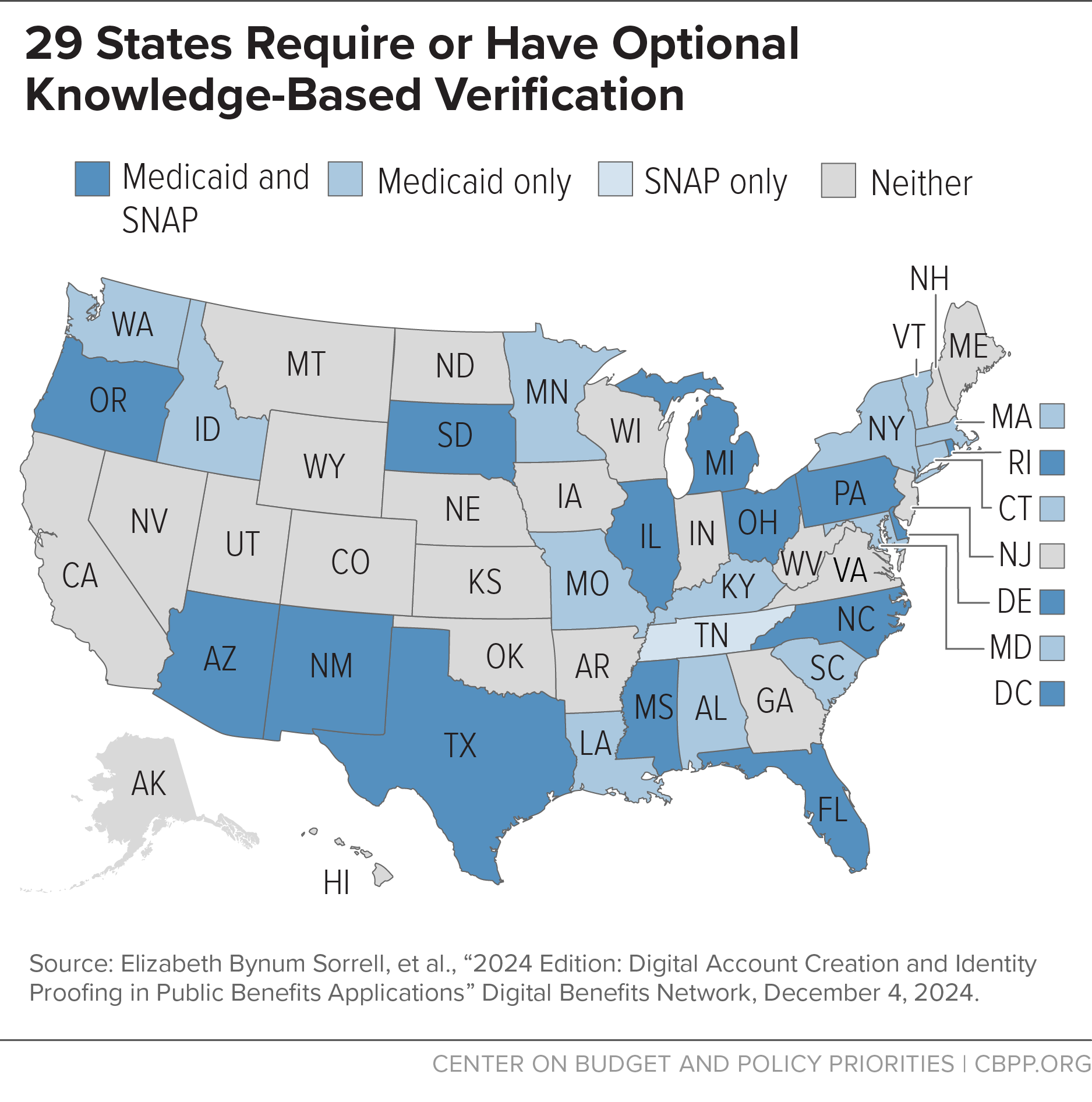
Minimize barriers from knowledge-based verification or biometrics. Knowledge-based verification (KBV) and biometrics are often used to prove the identity of a program applicant. However, they are usually unnecessary and can create significant barriers to access. Even when optional, individuals may not know there is an alternative path and may choose not to apply due to the complexity of the process.
- Identity proofing is more common in Medicaid, but unnecessary. In most cases there are no federal requirements for state Medicaid agencies to use identity proofing.[31] Eleven states require KBV or biometrics for Medicaid, and 16 states have optional KBV or biometrics.
- SNAP maintains the federal requirement of being able to apply with only a name, address, and signature, which effectively prohibits states from requiring identity proofing. While only one state requires KBV or biometrics for SNAP, 14 states have optional KBV or biometrics.
- For WIC, only one state uses KBV or biometrics, and it is optional. (See Figure 10.)
An agency that decides to use KBV or biometrics for security reasons should make it optional and provide alternative forms of identity proofing.
End Notes
[1] Rachel Cahill is an anti-hunger policy advocate and owner and principal consultant for Rachel Cahill Consulting, which works with organizations to design and implement projects that increase SNAP advocacy capacity.
[2] The State Landscape can be found at https://www.cbpp.org/node/30090. While the Landscape also includes TANF, this report focuses on SNAP, Medicaid, and WIC.
[3] Centers for Medicare & Medicaid Services (CMS), U.S. Department of Health and Human Services, “January 2025 Medicaid/CHIP Eligibility Operations & Enrollment Snapshot,” May 30, 2025, https://www.medicaid.gov/resources-for-states/downloads/eligib-oper-and-enrol-snap-january2025.pdf. The data only show processing times for MAGI applications; there is no national data available for non-MAGI application processing times.
[4] CMS.
[5] Jennifer Wagner, “Medicaid Ex Parte Renewals Are an Efficient Strategy to Ensure Eligible Enrollees Have Health Care, Increase Accuracy, and Reduce Administrative Costs,” CBPP, February 25, 2025, https://www.cbpp.org/blog/medicaid-ex-parte-renewals-are-an-efficient-strategy-to-ensure-eligible-enrollees-have-health.
[6] CMS.
[7] CMS.
[8] Farah Erzouki and Jennifer Wagner, “Using Asset Verification Systems to Streamline Medicaid Determinations,” CBPP, June 23, 2021, https://www.cbpp.org/research/health/using-asset-verification-systems-to-streamline-medicaid-determinations.
[9] Casey McConnell et al., “State Options Report,” Food and Nutrition Service, U.S. Department of Agriculture, June 2024, https://fns-prod.azureedge.us/sites/default/files/resource-files/snap-16th-state-options-report-june24.pdf.
[10] McConnell et al.
[11] Food and Nutrition Service, U.S. Department of Agriculture, “Broad-Based Categorical Eligibility,” October 2024, https://fns-prod.azureedge.us/sites/default/files/resource-files/snap-bbce-states-oct2024.pdf.
[12] Nick Gwyn, “Taking Away People’s Health Coverage and Food Assistance Will Increase Hardship, Not Employment,” CBPP, February 20, 2025, https://www.cbpp.org/blog/taking-away-peoples-health-coverage-and-food-assistance-will-increase-hardship-not-employment.
[13] Food and Nutrition Service, U.S. Department of Agriculture, “ABAWD Waivers,” updated April 1, 2025, https://www.fns.usda.gov/snap/abawd/waivers.
[14] McConnell et al. Ohio switched to offering SNAP E&T on a voluntary basis after this report was published.
[15] Gregory Mills et al., “Understanding the Rates, Causes, and Costs of Churning in the Supplemental Nutrition Assistance Program (SNAP): Final Report,” Food and Nutrition Service, U.S. Department of Agriculture, November 2014, https://www.govinfo.gov/content/pkg/GOVPUB-A98-PURL-gpo56683/pdf/GOVPUB-A98-PURL-gpo56683.pdf.
[16] McConnell et al.
[17] Food and Nutrition Service, U.S. Department of Agriculture, “SNAP Rule Waivers,” updated February 28, 2025, https://www.fns.usda.gov/snap/waivers/rules.
[18]Food and Nutrition Service, U.S. Department of Agriculture, “National- and State-Level Estimates of WIC Eligibility and Program Reach in 2022,” August 2024, https://www.fns.usda.gov/research/wic/eer-2022.
[19] Food and Nutrition Service, “National- and State-Level Estimates of WIC Eligibility and Program Reach in 2022.”
[20] Food and Nutrition Service, “National- and State-Level Estimates of WIC Eligibility and Program Reach in 2022.”
[21] Rebecca J. Baer et al., “Maternal factors influencing late entry into prenatal care: a stratified analysis by race or ethnicity and insurance status,” The Journal of Maternal-Fetal & Neonatal Medicine, Vol. 32, No. 20, 2019, https://www.tandfonline.com/doi/full/10.1080/14767058.2018.1463366; Laura Caulfield et al., “Maternal and Child Outcomes Associated With the Special Supplemental Nutrition Program for Women, Infants, and Children (WIC),” Agency for Healthcare Research and Quality, April 2022, https://www.ncbi.nlm.nih.gov/books/NBK579797/.
[22] Christine Borger et al., “WIC Infant and Toddler Feeding Practices Study-2 Sixth Year Report,” Prepared by Westat, Inc. for USDA Food and Nutrition Service, September 2024, https://www.fns.usda.gov/research/wic/itfps2/sixth-year; Christopher Anderson et al., “Longer Special Supplemental Nutrition Program for Women, Infants, and Children (WIC) participation duration is associated with higher diet quality at age 5 years,” The Journal of Nutrition, Vol. 152, Issue 8, 2022, https://jn.nutrition.org/article/S0022-3166(22)00704-0/fulltext; Tracy Thomas et al., “Assessing immunization interventions in the women, infants, and children (WIC) program,” American Journal of Preventive Medicine, Vol. 47, Issue 5, Nov. 2014, https://pmc.ncbi.nlm.nih.gov/articles/PMC4973389/; Christine Borger et al., “WIC Infant and Toddler Feeding Practices Study-2 Fourth Year Report,” Prepared by Westat, Inc. for USDA Food and Nutrition Service, September 2020, https://www.fns.usda.gov/research/wic/itfps-2-fourth-year-report; Margot Jackson, “Early childhood WIC participation, cognitive development and academic achievement,” Social Science & Medicine, Vol. 126, 2015, https://pmc.ncbi.nlm.nih.gov/articles/PMC4703081/.
[23] Zoë Neuberger, Luis Nuñez, and Linnea Sallack, “WIC’s Critical Benefits Reach Only Half of Those Eligible,” CBPP, May 8, 2025, https://www.cbpp.org/research/food-assistance/wics-critical-benefits-reach-only-half-of-those-eligible.
[24] Jess Maneely and Zoë Neuberger, “Using Data Matching and Targeted Outreach to Enroll Families With Young Children in WIC,” CBPP, January 5, 2021, www.cbpp.org/wicpilotreport.
[25]Zoë Neuberger, “More State WIC Programs Collaborating With Other Major Programs to Reach Additional Eligible Low-Income Families With Young Children,” CBPP, October 8, 2024, https://www.cbpp.org/research/food-assistance/wic-coordination-with-medicaid-and-snap-1.
[26] Sonya Schwartz et al., “State Medicaid Agencies Can Partner With WIC Agencies to Improve the Health of Pregnant and Postpartum People, Infants, and Young Children,” CBPP and Georgetown Center for Children and Families, December 20, 2023, https://www.cbpp.org/research/food-assistance/state-medicaid-agencies-can-partner-with-wic-agencies-to-improve-the.
[27] Baer et al.; Caulfield et al.
[28] Jennifer Wagner, “Leveraging Text Messaging to Improve Communications in Safety Net Programs,” CBPP, May 8, 2019, https://www.cbpp.org/research/health/leveraging-text-messaging-to-improve-communications-in-safety-net-programs; Dustin Palmer, “The Missed Opportunity in Online Benefits Applications: Mobile First,” Code for America, April 3, 2019, https://codeforamerica.org/news/the-missed-opportunity-in-online-benefits-applications-mobile-first/.
[29] U.S. Digital Response, “The Stories of Medicaid Renewal: Insights from those Experiencing It,” https://www.usdigitalresponse.org/projects/journeys-and-experiences-on-the-path-to-renewing-medicaid-health-coverage.
[30] Ben D’Avanzo and Laiba Waqas, “States Need to Improve Language Access for Medicaid Renewals,” National Immigration Law Center, August 9, 2023, https://www.nilc.org/articles/states-need-to-improve-language-access-for-medicaid-renewals/.
[31] Symonne Singleton, “Remote Identity Proofing: Better Solutions Needed to Ensure Equitable Access,” CBPP, August 27, 2024, https://www.cbpp.org/research/health/remote-identity-proofing-better-solutions-needed-to-ensure-equitable-access.