

MÁS ALLÁ DE LOS NÚMEROS
WIC: A Powerful Source of Support to Overcome Breastfeeding Challenges
WIC has supported me through one of the most challenging yet rewarding parts of motherhood: breastfeeding. On the day my daughter was born, I thought breastfeeding would come naturally — but it hurt, and I didn’t know what to do. Through WIC, I received hands-on, compassionate care from a medical professional, who came to my home to help me learn how to nurse my baby. That support changed everything.
Being connected to WIC makes me feel part of a community that truly cares for my well-being and the well-being of my children. While much about parenthood is wonderful, it also comes with its challenges, which WIC helps to alleviate through breastfeeding support. WIC humanizes the experience for participants, with patient education and a nurturing approach to good nutrition for infants and mothers. It brings me so much joy to know that our community has a space dedicated to supporting new parents on their journey. It truly does take a village to ensure that infants and their parents get the support they need to thrive. From nutrition support to breastfeeding guidance, WIC provides a village that shows up with resources and encouragement without judgment.
Breastfeeding Gives Infants a Healthy Start
One thing that has always stopped me in my tracks about breastfeeding is that my milk actually protects my baby. Breastfeeding is associated with significant health benefits for both the child and parent and is a powerful way for us to give our babies a healthy start. In addition to being a beneficial source of nutrition, research shows that breastfeeding protects against infections and disease, as breast milk contains vital components like antibodies. It is also associated with reductions in sudden infant death syndrome and obesity. When my babies got sick, their immune systems were stronger because of my breast milk. Breastfeeding has benefits for parents’ health as well, including lowering a parent’s risk of developing certain cancers and chronic diseases.
Breastfeeding Is Challenging Without the Right Support
Individuals’ ability to breastfeed is influenced by a variety of factors. Structural and social determinants of health can limit the resources, time, and space people have to successfully breastfeed. For example, economic inequality constrains parents’ ability to afford supplies that ease breastfeeding, such as a breast pump, and their access to parental leave that allows time for breastfeeding. Similarly, health care access and quality can limit the knowledge and support provided to pregnant and postpartum people, such as information about when and where lactation classes are held or how to see a lactation consultant.
People also experience breastfeeding differently. Many surveys and interviews show that physical issues, such as pain and inadequate milk supply, and psychological concerns, such as the perception that the infant was not satisfied, are among the most common problems that lead to breastfeeding cessation.
My biggest challenge with breastfeeding was a lack of education before birth. As a first-time mom, I didn't understand different latching techniques, how to find the right flange size for my breast pump, or how much that could impact milk flow. I had no idea that health insurance would provide a free or discounted breast pump before delivery. Breast pumps are also available through Medicaid, hospitals, and some WIC clinics. Having a breast pump early gives you time to get familiar with it and learn how to use it effectively, so you’re not trying to figure it out while exhausted and overwhelmed. This is especially important for first-time mothers. Breastfeeding my second child was so much easier because I was more prepared. Knowing what to expect beforehand can make a huge difference in your entire breastfeeding journey.
WIC Helps Parents Overcome Breastfeeding Challenges
For me and millions of other parents, WIC plays a crucial role in overcoming breastfeeding challenges. WIC educates parents on how to feed our babies a nutritious diet. In accordance with the American Academy of Pediatrics’ recommendations, WIC promotes exclusive breastfeeding for the first six months and continued breastfeeding with the addition of solid foods until at least 12 months of age.
WIC offers pregnant participants and new parents breastfeeding counseling, peer support, access to free breast pumps, and enhanced food benefits. Parents who exclusively breastfeed receive more food benefits each month and a greater variety of foods than parents who receive infant formula. Breastfeeding parents can also continue participating in WIC for up to a year rather than six months postpartum. While some participants are unable or choose not to breastfeed, WIC supports all parents in a nonjudgmental way, regardless of their infant feeding decisions.
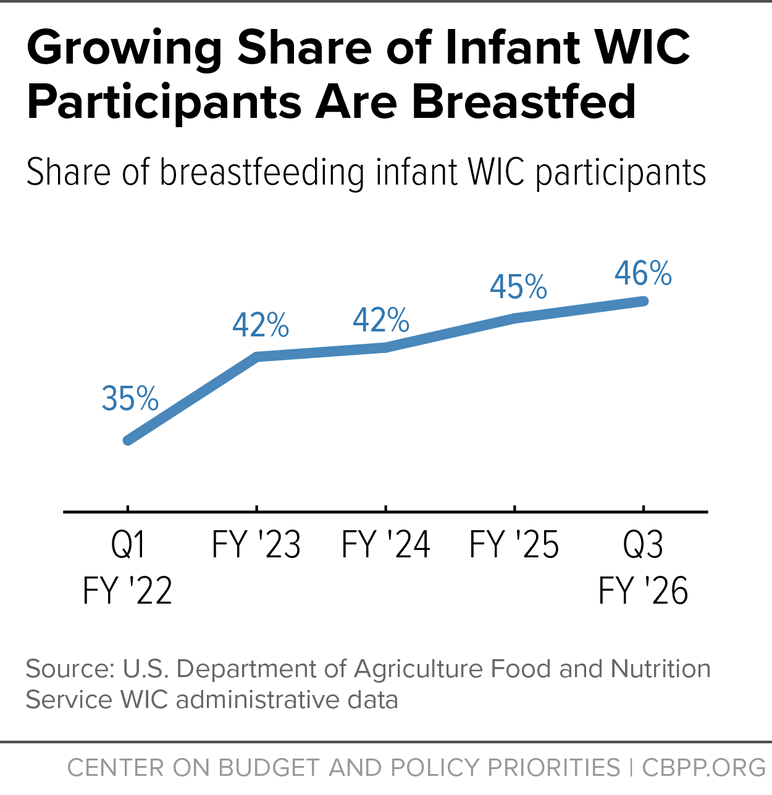
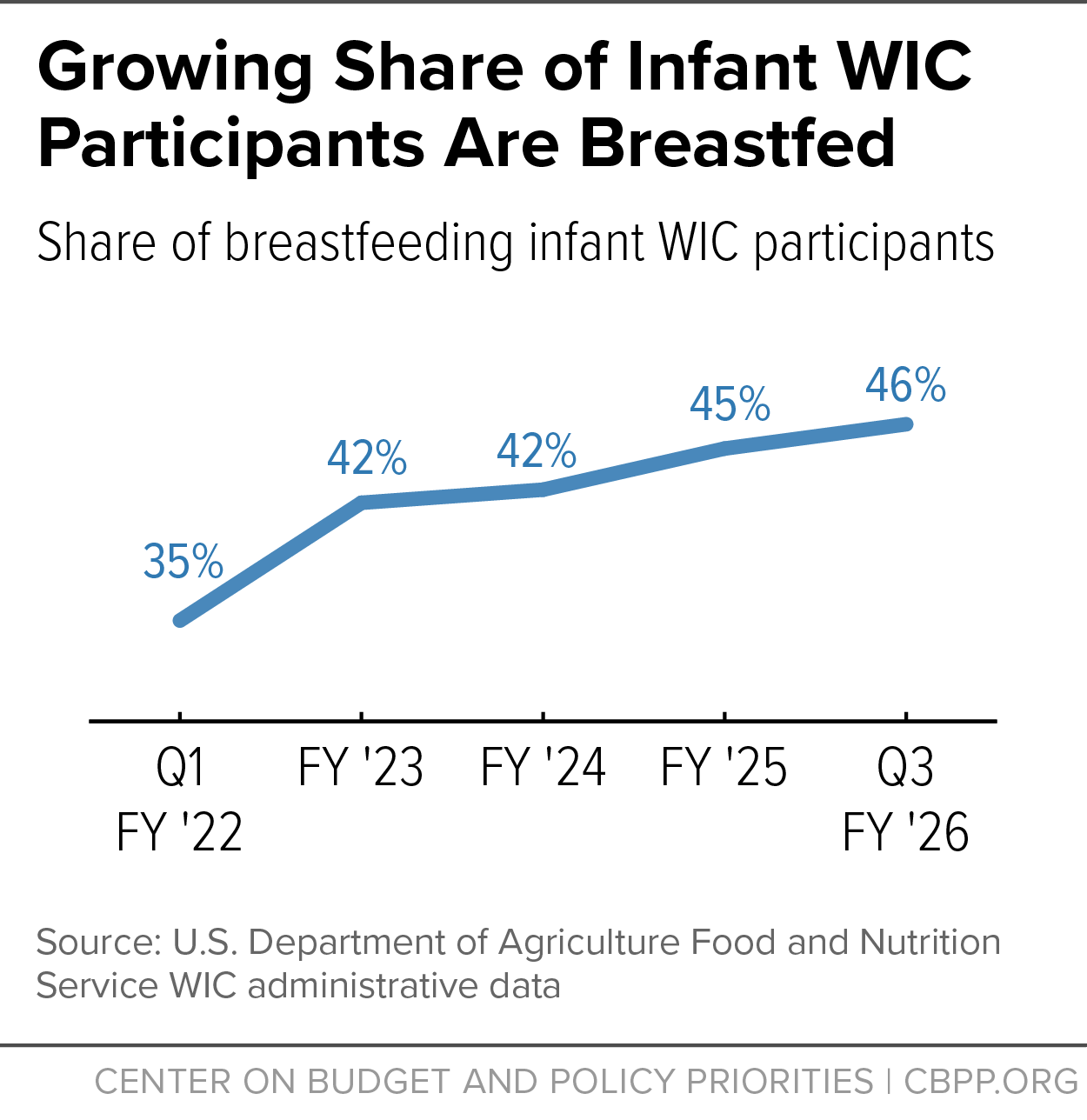
Studies have found that the supports offered through WIC — particularly peer counseling — help to increase the likelihood of breastfeeding. The breastfeeding rate among babies participating in WIC has risen nearly 18 percentage points over the last 15 years, from 26.7 percent in 2010 to 44.6 percent in 2025. Within the last four years alone, the share of infants participating in WIC who were breastfed rose by 10 percentage points. While the 2022 infant formula shortage likely triggered this recent increase in breastfeeding, other factors, including the availability of virtual appointments, the increase in the WIC fruit and vegetable benefit and additional food package improvements, and updates to WIC’s breastfeeding materials, likely contributed to sustaining the increase.
WIC’s supports have the potential to reduce racial and ethnic disparities in breastfeeding outcomes. Research has shown that African American infants are less likely to breastfeed compared with other racial and ethnic groups, but this gap is beginning to narrow. African American parents — both WIC participants and non-participants — experienced the largest gains in breastfeeding initiation rates between 2009 and 2017, with increases of more than 20 percent. A review of the available research focused on African American parents found mixed results regarding the impacts of WIC participation on breastfeeding outcomes. However, a more recent study found that African American and Hispanic parents were 10 to 20 percent more likely to begin breastfeeding if they participated in WIC.
WIC is designed to support the well-being of both mother and child. Outside of my own mother, I have never been cared for with so much compassion, patience, and understanding. I am so grateful for the safe space the WIC program creates for breastfeeding mothers and how dedicated staff are to making sure moms and babies get the nutrition they need to thrive.
If it weren't for WIC, I don't know how my breastfeeding journey would have gone. Even with all the challenges I faced in the beginning, WIC staff were there for me, partnered with me, and guided me toward a successful breastfeeding journey. I encourage all those who are eligible to join WIC. Participants should take advantage of their breastfeeding support services — they truly make all the difference.
Ashley Blair is a Community Health Advocate.