MÁS ALLÁ DE LOS NÚMEROS
This Open Enrollment Period, ACA Marketplace Enrollees Face Higher Premiums, More Eligibility Restrictions
The Affordable Care Act (ACA) marketplace is a vital source of health coverage for people who don’t have affordable coverage through their job and don’t qualify for other federal programs, like Medicare or Medicaid. More than 19 million people rely on the ACA marketplaces for their health insurance, including small business employees, entrepreneurs, part-time or seasonal workers, and more.
People who shop for marketplace coverage during the Open Enrollment Period this year (November 1-January 15 in most states) will likely find that coverage has become more expensive, due to the expiration of premium tax credit (PTC) enhancements and policy changes in the 2025 reconciliation law. However, everyone’s situation is unique, and people should visit HealthCare.gov or their state-based marketplace to compare plans and see if they qualify for financial help, as there may be coverage options that suit their budget and needs.
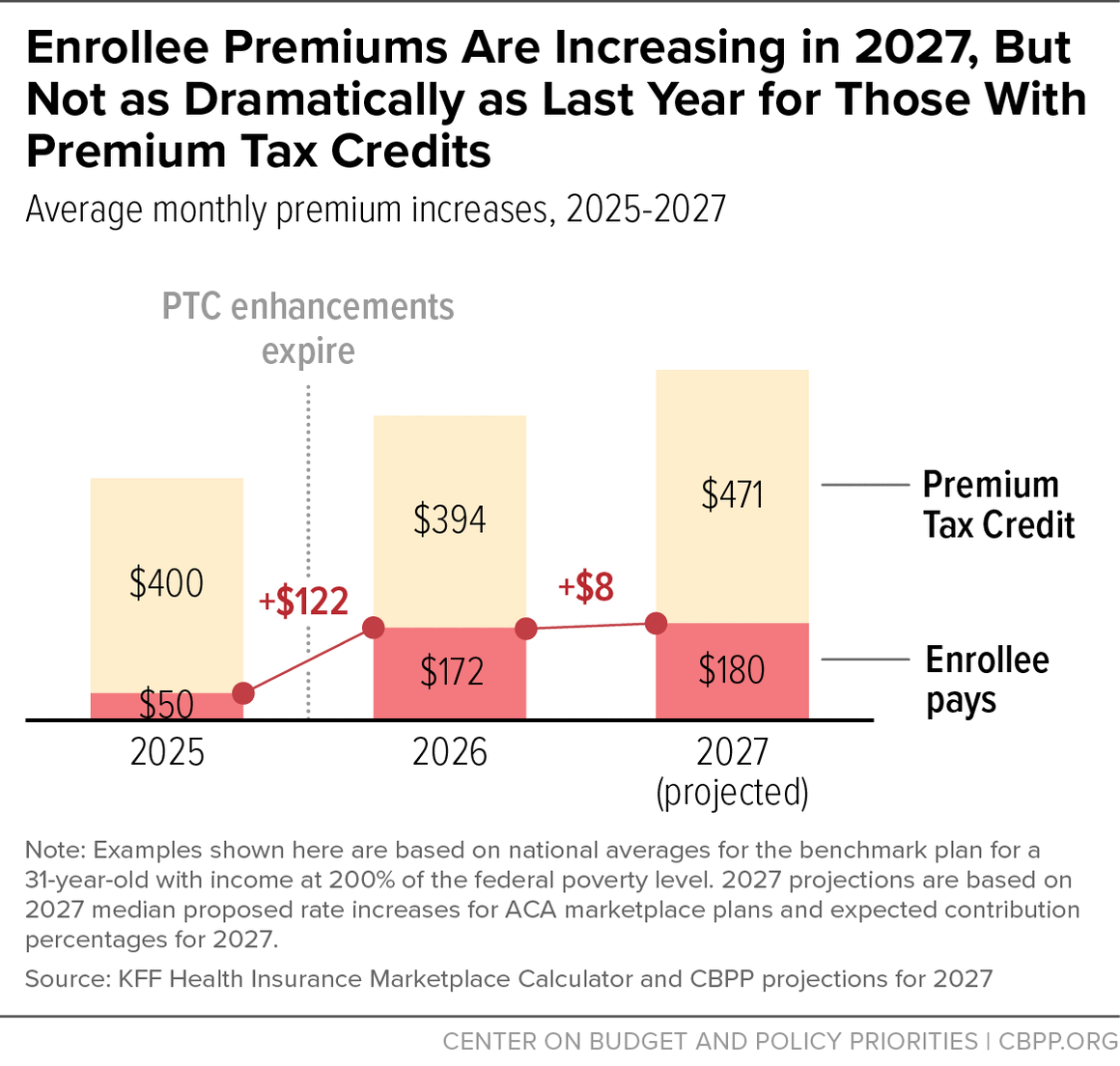
Insurers have proposed increasing median gross premiums (premiums before or without PTC) by 15 percent for 2027; they attribute about 10 percentage points of this increase to rising medical costs, and 4 percentage points to ripple effects from the expiration of the PTC enhancements. These ripple effects occur because healthier people are more likely to drop their coverage when premium costs increase; the remaining enrollees therefore tend to have greater health care needs and expenses.
Despite increases in gross premiums, many marketplace enrollees may find that their net premiums (premiums after PTC is applied) have not increased as dramatically as they did last year. This is because unlike last year, when the PTC enhancements expired, the underlying PTC formula is not changing. As a result, PTC amounts will increase proportionally to cover some of the increase in gross premiums (see chart).
Even so, continued premium increases will likely put coverage out of reach for even more people, compounding recent declines in marketplace enrollment. Between February 2025 and February 2026, marketplace enrollment fell by nearly 3 million people (13 percent), with some states losing nearly one-third of their enrollment. Some people who lost marketplace coverage may have gotten covered through Medicaid or an employer, but many are likely uninsured.
Adding to the coverage loss, the 2025 reconciliation law will take financial help away from many people with lawful immigration statuses. Beginning January 1, 2027, numerous immigrants living lawfully in the U.S. will become ineligible for PTCs, including people granted asylum, refugees, and people granted humanitarian parole. PTCs will only be available to U.S. citizens and nationals; lawful permanent residents (also known as green card holders); Cuban-Haitian entrants; and COFA migrants.[1] This change is expected to cause 900,000 people to become uninsured by 2034.
Rising premiums in the ACA marketplace are also likely to ramp up the sale of limited benefit products, such as short-term limited duration insurance (STLDI) and excepted benefits plans. These products are not subject to the ACA’s consumer protections. For example, STLDI plans can refuse to cover people with pre-existing conditions, charge higher premiums to people with pre-existing conditions, and limit coverage of services related to pre-existing conditions. These plans are often marketed aggressively; a recent secret-shopper study found that agents and brokers who sell these plans frequently misrepresent coverage and refuse to provide any written information prior to enrollment.
The Trump Administration has responded to the rising cost of marketplace coverage by weakening financial and other consumer protections for enrollees, aiming to push premiums down by allowing less generous coverage options to proliferate. Several of these changes have been blocked by federal courts. The Administration also recently sent out one-time $500 payments to a small subset of marketplace enrollees, which will do little to address the coverage loss and higher premiums caused by the expiration of the PTC enhancements and other policies.