MÁS ALLÁ DE LOS NÚMEROS
Nearly 3 Million Fewer People Secured Marketplace Coverage After Republican Health Care Cuts, New Data Show
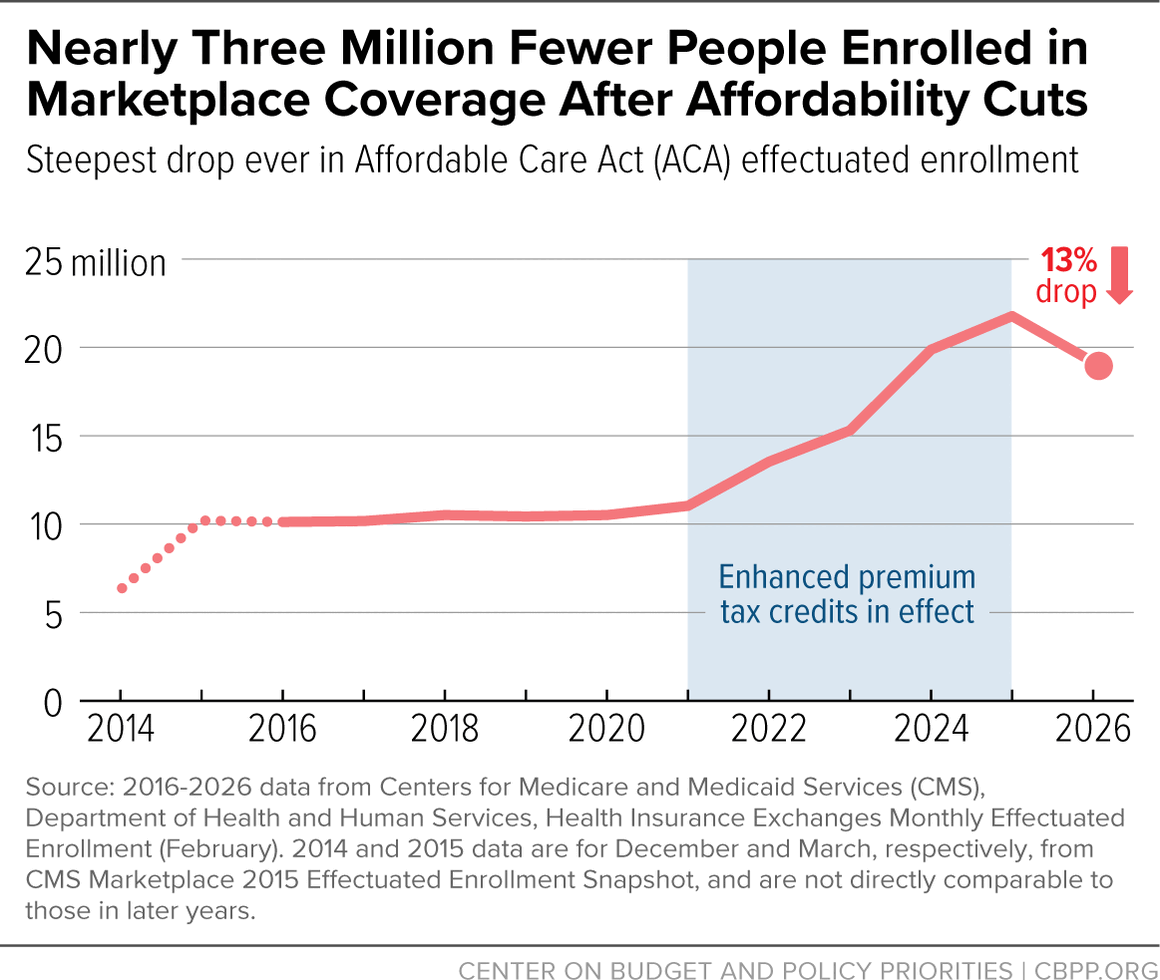
Nearly 3 million fewer people were enrolled in health insurance through the Affordable Care Act’s marketplaces in February 2026 than in February 2025, new data from the Centers for Medicare and Medicaid Services (CMS) show. These historic coverage losses follow a spike in premium costs, which occurred after congressional Republicans and President Trump failed to extend premium tax credit (PTC) enhancements in 2025. CMS rule changes that made ACA marketplace plans more expensive and harder to access also took effect.
Enrollment fell from 22.1 million to 19.2 million (13 percent), the largest drop in effectuated enrollment since the ACA marketplaces were established, in 2014.
Earlier this year, CMS released data showing the number of people who selected a plan on the ACA marketplace during the open enrollment period (November 1, 2025 through January 16, 2026). These latest data show how many people paid their first month’s premium and effectuated coverage as of February 2026. (People with $0 net premiums automatically effectuate coverage.) In 2026, 83 percent of people who selected a plan effectuated their coverage. That’s down from 91 percent in 2025, indicating that a smaller share of people who selected coverage can afford their monthly premium.
Some people who didn’t effectuate their marketplace coverage may have found coverage through Medicaid or an employer, but others are likely uninsured. Amid the premium increases, many who remained in the ACA marketplace switched to higher-deductible plans, which lowered what they pay in premiums but exposes them to higher costs when they need care.
These enrollment drops are only the beginning. More people are likely to drop coverage as their premium payments stack up through the year. One analysis projects that average marketplace enrollment could fall by as much as 26 percent in 2026, to about 16.5 million people. The harmful Republican megabill will take coverage away from millions more through its harsh Medicaid work requirements and other cuts to health programs.
CMS left out information in this year’s effectuated enrollment report that was standard in past years, such as the percentage of people with and without PTCs who effectuated their coverage. This information could have told us more about the enhanced subsidies’ effectiveness. For example, if effectuated enrollment dropped significantly among unsubsidized enrollees — those with income above 400 percent of the federal poverty level who lost PTCs entirely when the enhancements expired — we could infer that the PTC enhancements substantially helped people in this group afford health coverage.
Instead, the CMS report attempts to justify enrollment losses under the Trump Administration’s by claiming that large levels of improper or fraudulent enrollment have been eliminated.
Agent and broker fraud has occurred in the marketplace and should be addressed. But the Trump Administration has inflated these numbers as a pretext for adopting policies that result in massive coverage loss. And many of the indicators that CMS cites as evidence of fraud — like people with low incomes switching to $0 net premium bronze plans after the PTC enhancements expired and $0 net premium silver plans all but disappeared — are better explained by rational responses to rising premiums. Other indicators they cite can be attributed to misleading metrics that don’t account for short-term enrollment and other factors.
The Administration and congressional Republicans have let premiums rise and access to affordable health care fall. The people who need coverage to be able to see a doctor when they’re sick or to get treatment for chronic illnesses are losing out.