

MÁS ALLÁ DE LOS NÚMEROS
New Data Show Marketplace Consumers Facing Higher Costs, Selecting Lower-Quality Coverage
New open enrollment data for 2026 show that people are paying much more for marketplace coverage following the expiration of premium tax credit (PTC) enhancements, even as they shift into lower-premium but less generous plans that leave them with higher deductibles and out-of-pocket costs when they need care.
The PTC enhancements made coverage more affordable for over 20 million enrollees in the Affordable Care Act (ACA) marketplaces and helped double marketplace enrollment since taking effect in 2021. But congressional Republicans let the enhancements expire at the end of 2025, leaving enrollees on the hook for much higher premiums.
Also, the Republican megabill and the Trump Administration’s 2025 Marketplace Integrity and Affordability Rule include additional policies that limit eligibility, enrollment, and affordability in the marketplaces.
Fewer People Enrolled in Marketplace Coverage
In 2026, 1.2 million fewer people selected marketplace plans than in 2025. The true size of the enrollment decline will likely be far greater, as many enrollees will be unable either to pay their first month’s premium to make coverage effective or to continue paying premiums throughout the year. Data on how many enrollees effectuate their coverage by paying their first month’s premium are expected to be released later this year. According to KFF polling, 1 in 6 returning marketplace enrollees are not confident they’ll be able to afford their premiums for the entire year.
While the number of people selecting a plan in the federally facilitated marketplace declined by 8 percent (1.3 million) during 2026 open enrollment, plan selections increased slightly in state-based marketplaces (169,000). This might reflect the fact that several state-based marketplaces have acted to improve affordability, including by enacting supplemental premium or cost-sharing subsidies, reinsurance programs, or “premium alignment” (a state policy that requires insurers to “price plans at each metal level in strict proportion to their average actuarial value”).
People Shifted to Lower-Tier Plans With Higher Deductibles, Cost Sharing
Faced with steep increases in premiums due to the expiration of PTC enhancements, many enrollees shifted into higher-deductible bronze plans. Marketplace plans are tiered as bronze, silver, gold, and platinum. Bronze plans have the lowest premiums but the highest deductibles and other cost-sharing requirements, while platinum plans have the highest premiums but lowest cost-sharing. Bronze plans also tend to have narrower provider networks.
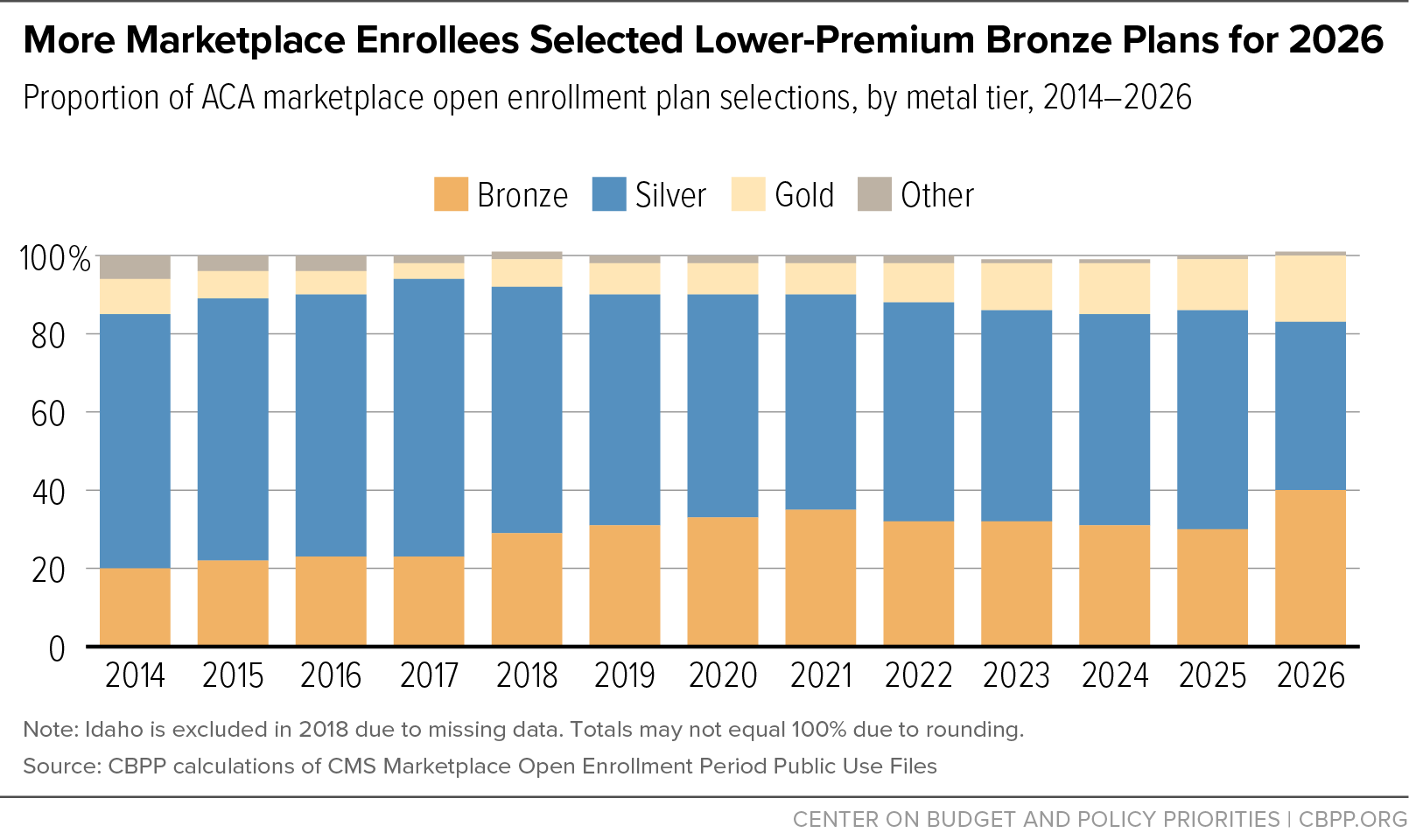
Historically, silver plans have been by far the most popular choice, offering a balance between premiums and deductibles and providing low-income enrollees with federal cost-sharing reductions (CSRs) that help with out-of-pocket costs. But in 2026, for the first time since the ACA exchanges were established in 2014, fewer than half of marketplace enrollees selected silver plans. (See first chart.)

Meanwhile, the share of enrollees choosing bronze plans increased from 30 percent in 2025 to 40 percent in 2026, the highest ever. The share of enrollees choosing gold plans also rose (likely due in part to premium alignment policies in some states) but by less than half the size of the bronze-plan increase.
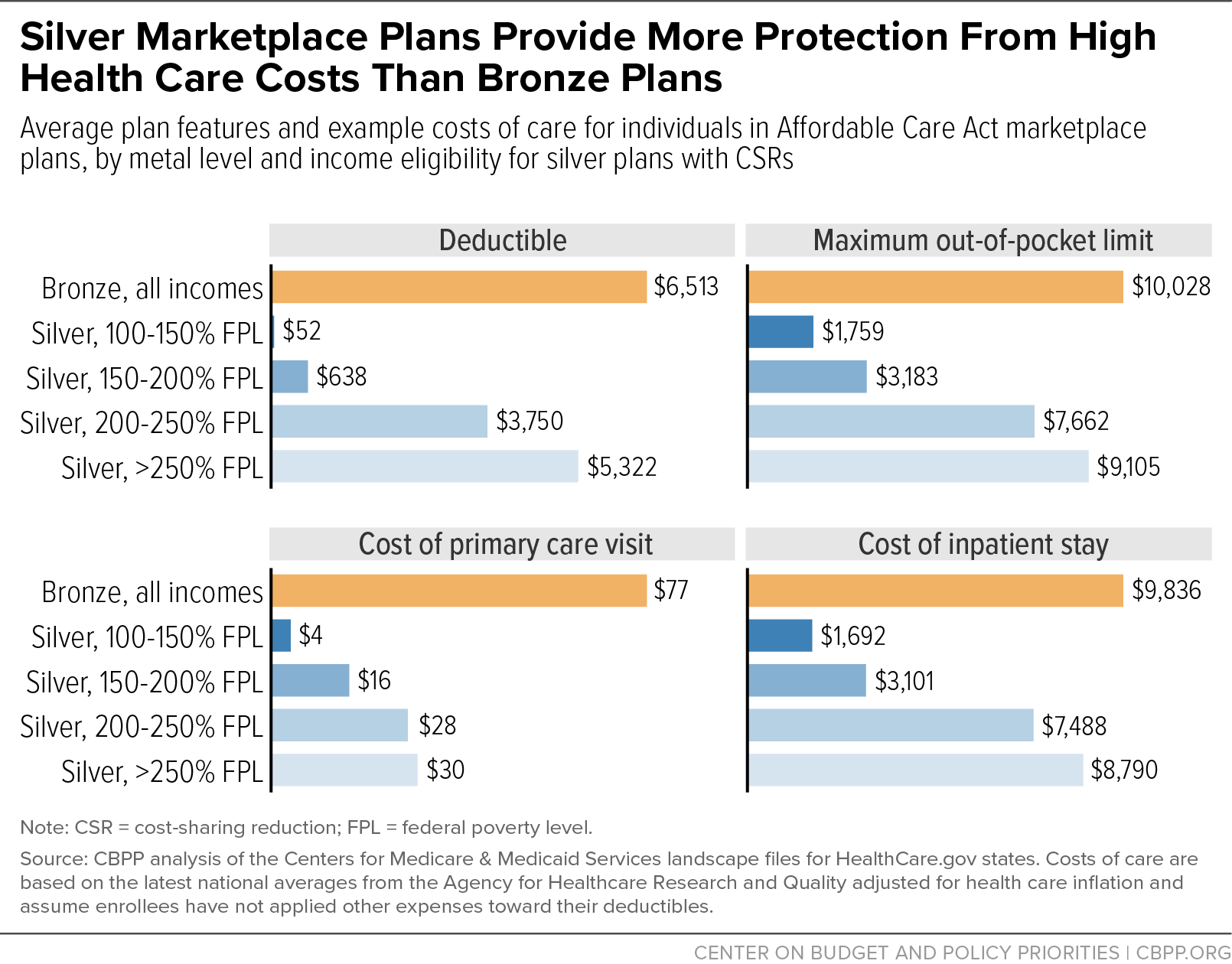
Because many enrollees switched into less generous bronze plans, far fewer people received silver plans with CSRs to help them pay for their deductibles and other out-of-pocket expenses. CSRs are only available to people with silver plans and incomes between 100 and 250 percent of the federal poverty level. With silver-plan premium costs rising, many people who would have received CSRs enrolled in bronze plans with significantly higher out-of-pocket costs. While opting for a bronze plan may save an enrollee some money on premiums, it puts them at risk of much higher costs if they need medical care. (See second chart.)

Average Premiums Rose Significantly Despite Shift to Less Generous Coverage
Even though many enrollees shifted into lower-tier plans with higher deductibles, enrollees are paying an average of $65 more each month in premiums than in 2025, or nearly $800 more over the course of the year. (See third chart.)

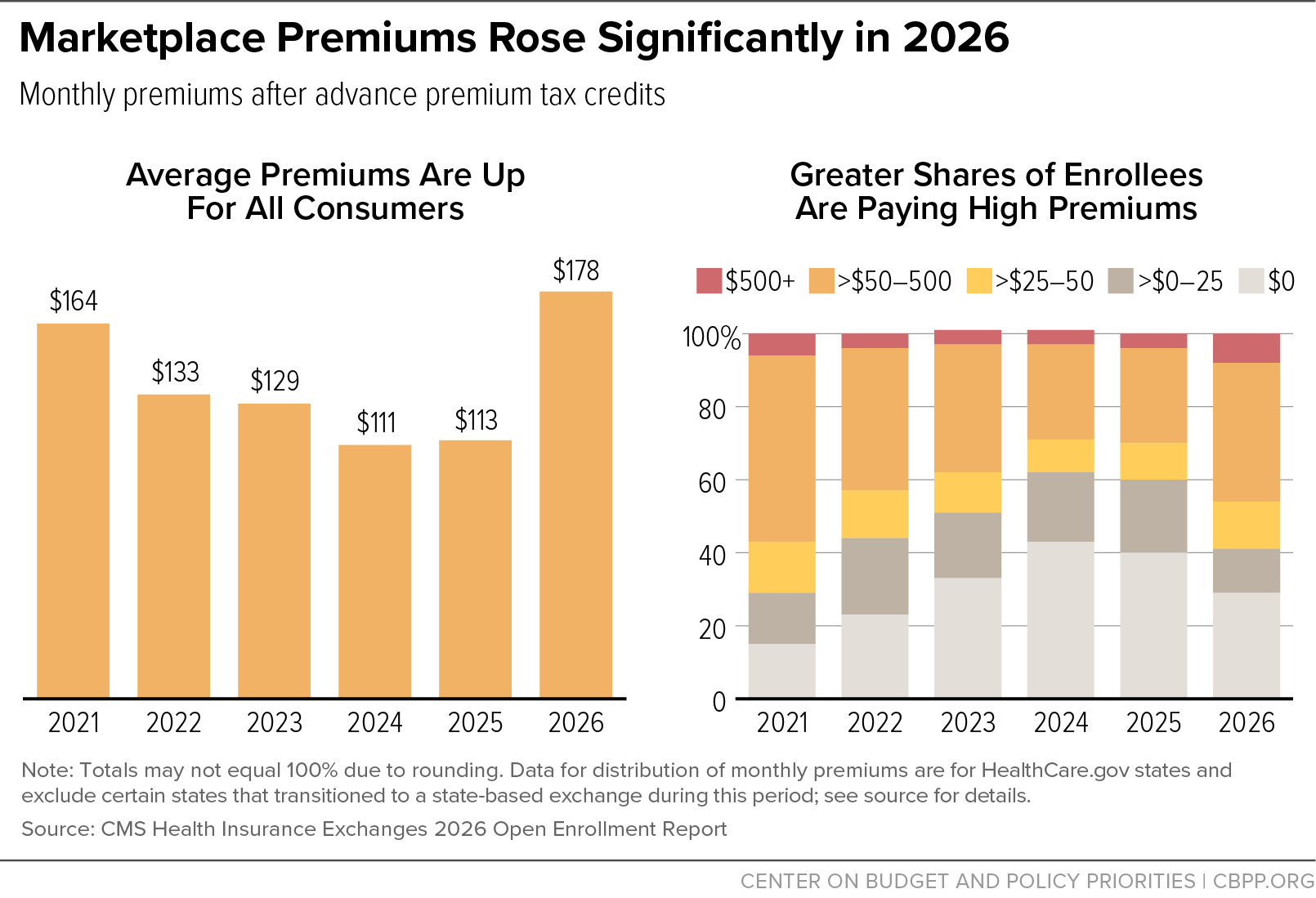
The share of enrollees paying more than $500 per month, after accounting for the advance premium tax credits they receive, doubled from 2025 to 2026 among states with available data. (These are the states that use the federal Healthcare.gov platform.)
Meanwhile, the shares of enrollees paying low out-of-pocket premiums fell. In 2026, 41 percent of enrollees selected plans with premiums of $25 or less, compared to 60 percent in 2025. And just 29 percent of enrollees signed up for $0 premium plans in 2026, compared to 40 percent in 2025.
Moreover, many of those in $0 premium plans in 2026 are enrolled in less generous coverage than in 2025, when people with low incomes were eligible for $0 benchmark silver plans. Access to $0 premium plans is especially important for people with low incomes who would qualify for Medicaid under the ACA’s Medicaid expansion but live in a non-expansion state.
The increased costs they face for coverage this year are weighing heavily on marketplace enrollees. Per KFF polling, 44 percent of returning enrollees report their health care costs have made it more difficult to afford their other expenses, such as food and housing.