

MÁS ALLÁ DE LOS NÚMEROS
Administration’s “If You Want Welfare” Arguments Conceal Proposals’ True Impact
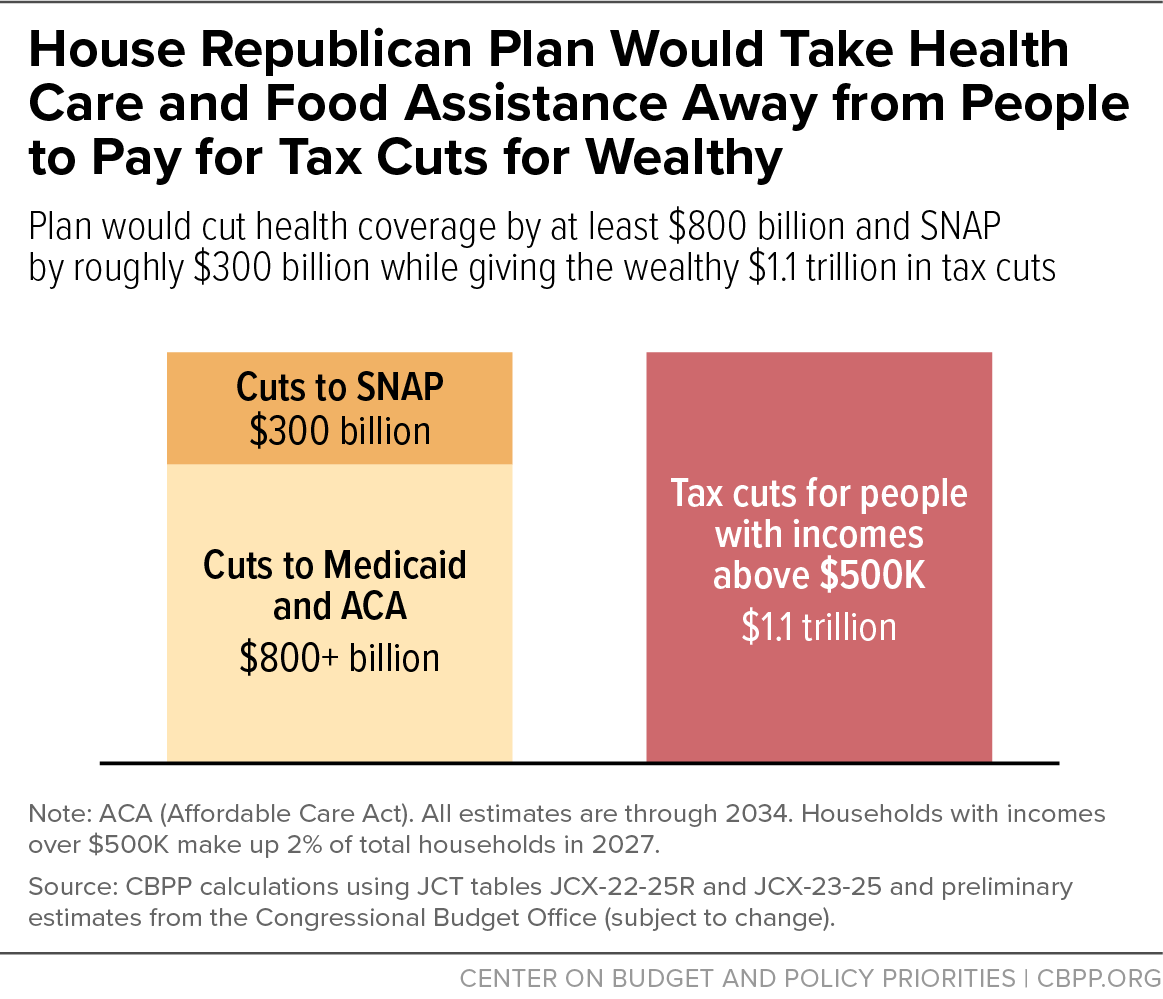
The sweeping tax and budget plan that House Republicans are rushing to advance this week would take away health coverage through Medicaid and food assistance through SNAP for many millions of people to partially pay for tax cuts heavily weighted to wealthy individuals and businesses. A recent op-ed from four top Trump Administration officials is designed to distract the public from that central fact.

Their argument is filled with hot-button terms like “able-bodied,” “welfare,” and “the truly needy.” But what they are actually proposing is to take away health care and food assistance from people who don’t meet red-tape-laden work requirements. Real-world experience shows those requirements are ineffective at increasing employment; instead they lead to major cuts in assistance designed to help people meet their basic needs.
Let’s start with health care. The nonpartisan Congressional Budget Office concluded that a previous Medicaid work requirement proposal would reduce Medicaid coverage while producing no meaningful change in employment or hours worked. That’s consistent with what happened when Arkansas implemented a Medicaid work requirement in 2018, before the courts struck it down. There is no indication the policy increased employment, but 18,000 people lost their health coverage despite evidence that 95 percent of those subject to the requirements appeared to have either met them or qualified for an exemption.
Given the complicated reporting requirements, people with disabilities were “particularly vulnerable” to having their Medicaid coverage terminated, even though they were supposed to be exempt, KFF research found. The bureaucratic hurdles of work requirements also trip up and cut coverage for many people who are working. In one noteworthy example, a Georgia man whom the state featured last year in a video touting its work requirement has since lost his Medicaid coverage twice due to red tape, despite consistently working. That’s why many working people and people with disabilities would likely be cut off under the House plan’s work requirement.
The evidence is also clear when it comes to food assistance. SNAP already has a harsh work requirement, limiting non-elderly adults who aren’t raising children at home to only three months of benefits out of every three years unless they document that they are meeting or exempt from a work requirement. As with Medicaid, studies show that SNAP’s work requirement mostly just terminates people’s assistance, without increasing employment. One analysis found that the requirement cut SNAP participation among those subject to it by more than half, with no effects on employment. Applying this harsh restriction to families with school-age children and to older adults, as the House proposal would do, would only increase hardship.
Why are work requirements such a failure? First, they fail to account for some basic realities, starting with the fact that the vast majority of people participating in Medicaid or SNAP who can work do work. Nearly 2 in 3 non-elderly adult Medicaid enrollees currently do paid work during the year, and most of the rest have a disability, are caring for family members, or are attending school. Similarly, more than 4 in 5 households with a non-disabled, working-age adult who reported getting SNAP also had earnings in the past year. The Trump officials complain that some of these people “work inconsistently throughout the year.” Well, welcome to the low-wage labor market.
Second, work requirements are counterproductive. Taking away someone’s food and health assistance when they are looking for a job will make it harder for them to find work if they can no longer manage their health conditions, such as diabetes.
Third, these requirements ignore the fact that many people lose work when their employer goes out of business or downsizes, or when they need to care for a sick family member, or when they face their own health challenges.
And fourth, these requirements often come down to a bureaucratic system that’s hard to navigate and that kicks off people who are eligible.
If the Trump Administration really wants to promote and support work, there is no shortage of useful changes it could pursue with Congress. It could start by ensuring that work always provides a path out of poverty by expanding the Earned Income Tax Credit (EITC) and Child Tax Credit and by raising the federal minimum wage, which has been frozen at $7.25 since 2009. Unfortunately, the massive House tax proposal goes in the opposite direction, imposing new paperwork burdens on EITC claimants and completely excluding 17 million children in families with low incomes from its increase in the Child Tax Credit.
The Administration could further help working parents by increasing access to child care and ensuring paid family and medical leave. And it could take steps to help people get a foothold on the employment ladder, especially those with barriers to employment.
What we should not do, especially given the economy’s signs of weakness, is threaten people’s health coverage and food assistance. Up to 14.4 million people would be at risk of losing Medicaid coverage, and nearly 11 million people, including more than 4 million children, would be at risk of losing at least some food assistance, under the work requirements in the House’s huge tax and budget plan. And that brings us back to the real motivation behind the plan’s work requirements: to partially offset the cost of enormous tax cuts for wealthy individuals and businesses by cutting people off Medicaid and SNAP.
Taking away people’s ability to meet their basic needs isn’t a strategy to promote work – it’s a recipe for making their lives much harder. That’s a terrible price to pay for more tax cuts for the wealthy.