Policy Basics: The Supplemental Nutrition Assistance Program (SNAP)
SNAP, formerly known as the Food Stamp Program, is the nation’s most important anti-hunger program. In 2021, SNAP helped an average of more than 41 million low-income people in the United States afford a nutritionally adequate diet each month.
What Is SNAP?
SNAP provides important nutritional support for low-paid working families, low-income older adults (60 years and older) and people with disabilities living on fixed incomes, and other individuals and households with low incomes. About two-thirds of SNAP participants are in families with children, and over one-third are in households with older adults or people with disabilities. After unemployment insurance, SNAP is the most responsive federal program that provides additional assistance during and after economic downturns.
The federal government pays the full cost of SNAP benefits and splits the cost of administering the program with the states, which operate it. SNAP operates in the 50 states, the District of Columbia, Guam, and the Virgin Islands, but not in Puerto Rico, American Samoa, or the Commonwealth of the Northern Mariana Islands. Despite higher levels of poverty than the rest of the U.S., these three territories are excluded from SNAP and instead receive capped block grants for nutrition assistance.
Who Is Eligible for SNAP?
Unlike most means-tested benefit programs, which are restricted to particular categories of low-income individuals, SNAP is broadly available to households with low incomes. SNAP eligibility rules and benefit levels are, for the most part, set at the federal level and uniform across the nation, though states have flexibility to tailor aspects, such as the value of a vehicle a household may own and still qualify for benefits. To qualify for SNAP benefits under federal rules, a household must meet three criteria (although states have flexibility to adjust these limits):
- Its gross monthly income generally must be at or below 130 percent of the poverty line, or $2,379 a month (about $28,550 a year) for a three-person household in fiscal year 2022. Households with a member who is age 60 or older or has a disability need not meet this limit.
- Its net monthly income, or income after deductions are applied for items such as housing costs and child care, must be less than or equal to the poverty line ($1,830 a month or about $21,960 a year for a three-person household in fiscal year 2022).
- Its assets must fall below certain limits: in fiscal year 2022 the limits are $2,500 for households without a member who is age 60 or older or has a disability and $3,750 for those with an older or disabled member.
A SNAP household is generally made up of people who live together and purchase and prepare food together. Some people — such as individuals on strike, some college students, individuals with drug felony convictions in some states, and people with certain immigration statuses — are not eligible for SNAP benefits regardless of how small their income or assets may be.
Most unemployed non-disabled adults aged 18 to 49 not living with minor children are limited to three months of benefits, unless they are working at least 20 hours per week or participating in a qualifying workfare or job training program. States may seek temporary waivers from this time limit for areas with high unemployment, where qualifying jobs are scarce. To receive a waiver, states must provide detailed Labor Department unemployment data for these areas with sustained levels of high unemployment. In 2020, in response to the COVID-19 pandemic, Congress temporarily suspended the three-month time limit until the month following the end of the federal public health emergency. States also have separate, broad authority to impose work requirements on many adults in SNAP households, which some states temporarily suspended due to the pandemic.
Pre-pandemic data show that nearly 90 percent of participants are in households with a child under age 18, an adult age 60 or older, or an individual who is disabled. Children under age 18 constitute nearly half (44 percent) of all SNAP participants. About two-thirds of SNAP participants are in families with children; over one-third are in households with older adults or disabled people. Nearly half of SNAP households are headed by a non-Latino white person, about one-quarter by a non-Latino Black person, and more than one-fifth by a Latinx person (of any race). And about 7 percent of SNAP households are headed by a person who is Asian or another race.[1]
How Do People Apply for SNAP?
Each state designs its own SNAP application process, following federal guidelines. People may apply in person at the local SNAP office or mail their applications. Almost every state also has an online application. Applicants must participate in an eligibility interview, which can often be on the phone. They must also document numerous aspects, including their identity, residency, immigration status, household composition, income and resources, and deductible expenses.
Households determined to be eligible receive an EBT (electronic benefit transfer) card, which is loaded with benefits monthly. Household members may use it to purchase food at one of the more than 254,000 retailers authorized to participate in the program. In 2021, 80 percent of benefits were redeemed at supermarkets or superstores. SNAP cannot be used to purchase alcoholic beverages, cigarettes, vitamin supplements, non-food grocery items such as household supplies, or hot foods.
Households must contact the local SNAP office to report if their income increases dramatically. They also must reapply for SNAP periodically — typically every six to 12 months for most families and every 12 to 24 months for older adults and people with disabilities.
During the pandemic-related public health emergency, states have been using temporary SNAP flexibility that Congress and the U.S. Department of Agriculture (USDA) granted to ease program administration. For example, states have been able to temporarily modify interview, certification period, and reporting requirements to help them manage administrative demands and ensure that participants maintain access to SNAP benefits.
How Much Do Households Receive in Benefits?
On average, SNAP participants received an estimated $127 per month (or about $4.16 a day) per person in regular SNAP benefits in fiscal year 2021.[2] They received an additional $92 per month (or $3.01 a day) per person in temporary pandemic-related benefits, for a monthly total of $218 per person.[3] (See box, “Increases to SNAP Benefits During COVID-19.”) The pandemic-related benefit increases will expire when the federal public health emergency ends or when states end their state emergency declaration, as some states have, resulting in a cut in SNAP benefits for participants.
To help households with the greatest need afford an adequate diet, the SNAP benefit formula enables households with the lowest incomes to receive larger benefits than households closer to the poverty line. The formula assumes that families will spend 30 percent of their net income on food; SNAP makes up the difference between that and the cost of the Thrifty Food Plan (TFP), a diet plan USDA established that is designed to be nutritionally adequate at a very low cost.
Based on a bipartisan provision of the 2018 farm bill, USDA revised the TFP in August 2021 to more accurately reflect the cost of a healthy diet, raising maximum SNAP benefits by 21 percent, which took effect in October 2021. The TFP’s real purchasing power had been frozen since the 1970s due to an administrative decision to allow its cost to increase only by inflation even though changes in dietary guidelines, consumption patterns, and constraints on working families had effectively raised the cost for families to secure an adequate diet.
Compared to the 1970s, scientific evidence today emphasizes the importance of eating more of specific sub-groups of food such as whole grains, leafy green and orange vegetables, lean protein foods, and seafood. This shift made the TFP increasingly outdated and inadequate. As a result, SNAP benefits fell well short of what households need to ensure a healthy diet, with many running out of benefits before month’s end, which increased their risk of food insecurity (meaning that their access to adequate food is limited by a lack of money or other resources). Studies have found that running out of benefits may harm participants’ health and educational achievement: hospital admissions and school disciplinary problems increase, and test scores fall, among SNAP households later in the month.[4]
A household with no net income receives the maximum benefit amount, which equals the cost of the TFP for a household of its size (see Table 1). For example, consider a household of three: if it had no income, it would receive the maximum benefit of $658 per month; if it had $600 in net monthly income, it would receive the maximum benefit ($658) minus 30 percent of its net income (30 percent of $600 is $180), or $478. Due to the pandemic, these benefit calculation rules have been temporarily suspended for states with emergency allotments.[5]
| TABLE 1 | ||
|---|---|---|
| SNAP Benefits by Household Size | ||
| Household Size | Maximum Monthly Benefit, Fiscal Year 2022 | Estimated Average Monthly Benefit, Fiscal Year 2022* |
| 1 | $250 | $175 |
| 2 | $459 | $334 |
| 3 | $658 | $520 |
| 4 | $835 | $638 |
| 5 | $992 | $748 |
| 6 | $1,190 | $869 |
| 7 | $1,316 | $941 |
| 8 | $1,504 | $1,137 |
| Each additional person | $188 | |
How Much Does SNAP Cost?
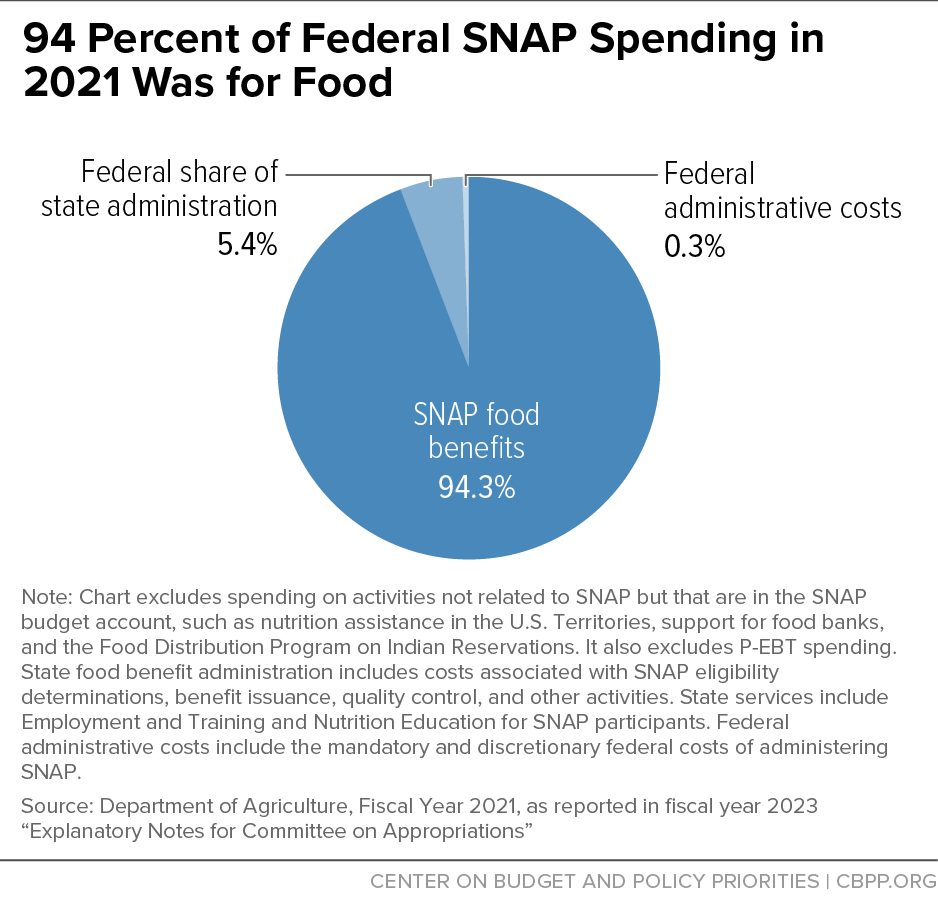
In fiscal year 2021, the federal government spent about $111 billion on SNAP and other directly related food assistance programs. About $105 billion, or 94 percent of SNAP spending, went directly to benefits that households used to purchase food. Of the total SNAP benefits in fiscal year 2021, about 60 percent, or approximately $63 billion, was authorized under the regular SNAP program. The rest (40 percent, or about $42 billion) was from temporary authority that Congress and the Trump and Biden administrations enacted to respond to the pandemic,
About 5 percent of SNAP spending in 2021 went to state administrative costs, including eligibility determinations, employment and training and nutrition education for SNAP households, and anti-fraud activities. COVID-19 relief legislation provided more than $1 billion in additional funding for state administrative expenses that became available in 2021 and will last for several years. Less than 1 percent of SNAP spending went to federal administrative costs.
An additional $3.6 billion in 2021 went to other food assistance programs under the SNAP law, including block grants for food assistance in Puerto Rico, American Samoa, and the Commonwealth of the Northern Mariana Islands, commodities for The Emergency Food Assistance Program (which helps food pantries and soup kitchens across the country), and for the Food Distribution Program on Indian Reservations. (In 2021 each program also received temporary increases due to the pandemic.)
Figures in this section do not include the Pandemic EBT (P-EBT) program, a temporary child nutrition program that has provided funds on SNAP EBT cards to low-income children to enable families to prepare food at home to replace the meals missed in school or child care during the pandemic.
SNAP Caseloads Rose Early in the Pandemic; Costs Are Set to Moderate Going Forward
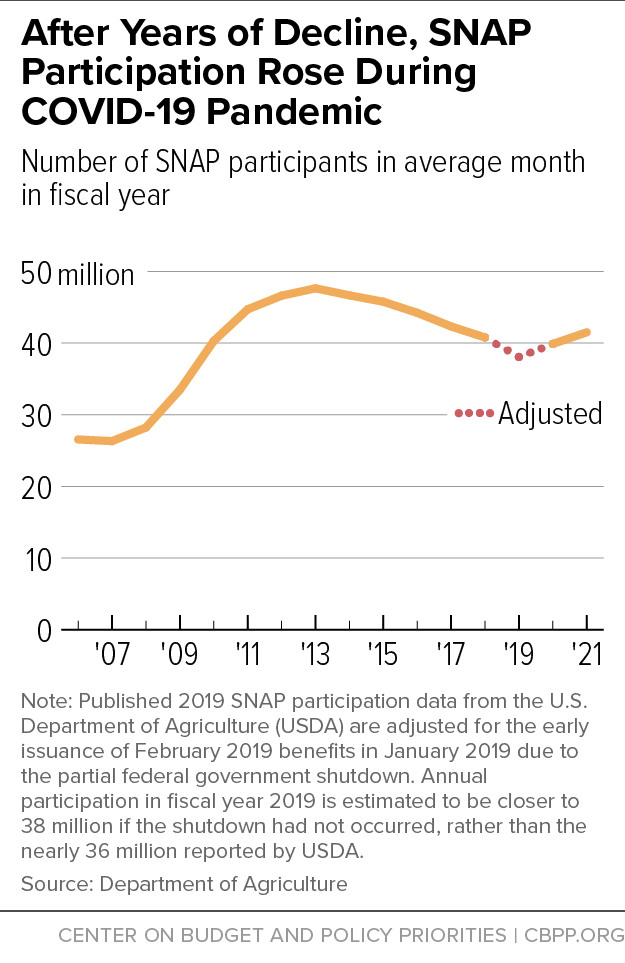
The number of SNAP participants grew from 37 million in an average month pre-pandemic to 43 million in June 2020. (The total number of individuals SNAP helped during the pandemic is likely substantially higher, as households enrolled in and left the program over the last two years.) The number of participants has declined since the summer of 2020, but in February 2022 (the most recent data available) more than 41 million people participated — 12 percent above the 37 million participants in February 2020. The increase reversed a six-year decline in SNAP participation that previously occurred as the economy recovered from Great Recession. Nevertheless, SNAP caseloads currently remain well below the peak of nearly 48 million participants following that previous recession. The Congressional Budget Office (CBO) forecasts the number of SNAP participants will continue to decline in coming years and ultimately fall below pre-pandemic levels.
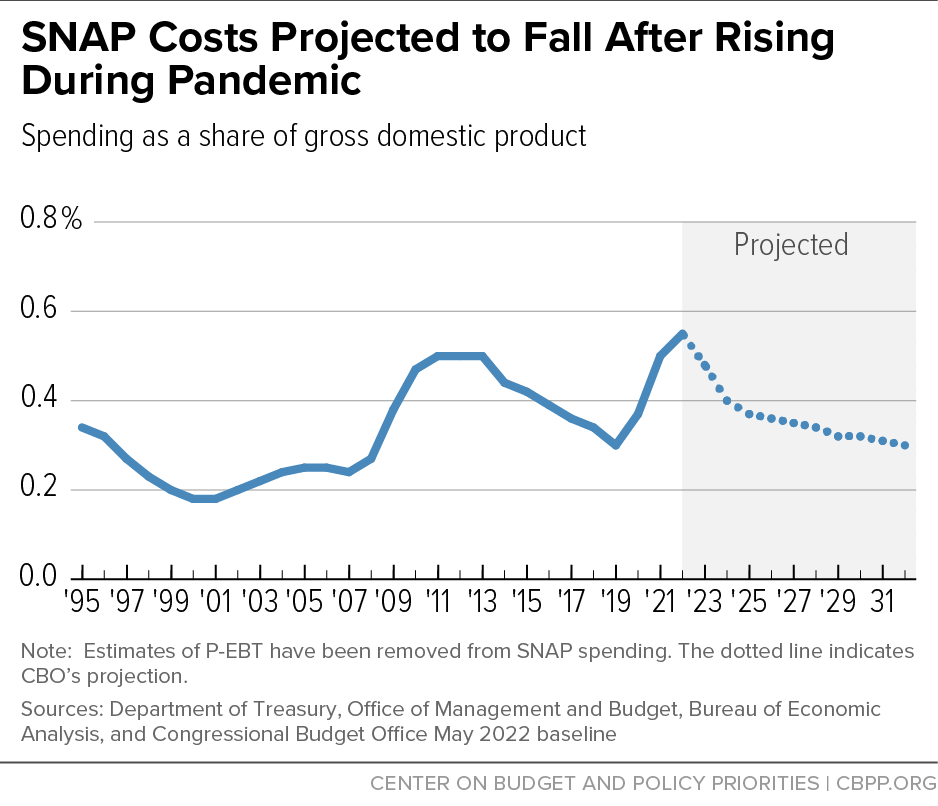
SNAP spending increased sharply beginning in 2020, as participation rose and temporary EAs increased benefits. Measured as a share of the economy (gross domestic product or GDP), SNAP spending — which had fallen by 39 percent between 2013 and 2019 — will fall sharply when the EAs end, and CBO forecasts spending will continue dropping in the coming years. Even with the recent high rates of food inflation and the 2021 revision of the TFP, SNAP spending as a share of GDP under CBO projections will return to its 2019 level by 2032. Thus, SNAP is not contributing to long-term budgetary pressures.
Special Features of SNAP
While SNAP’s fundamental purpose is to help low-income families, older adults, and people with disabilities afford an adequate diet, it also promotes other goals:
Protecting families from hardship and hunger
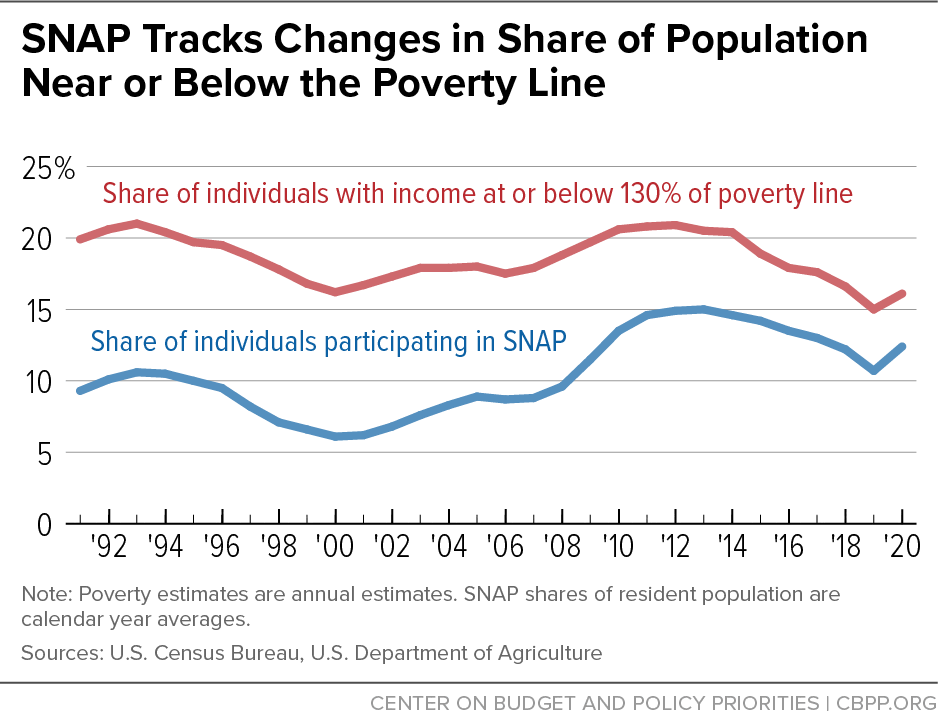
Anyone who qualifies under SNAP program rules can receive benefits. Enrollment expands when the economy weakens, and contracts when the economy recovers and poverty declines. In this way, SNAP helps families to bridge temporary periods of unemployment or a family crisis. If a parent loses their job or has a low-paid job, SNAP can help them feed their children until they are able to improve their circumstances.
Studies show that SNAP benefits have reduced food insecurity for households with limited resources to purchase adequate food. Evidence from research shows that SNAP participation reduces food insecurity by as much as 30 percent and is even more effective among children and those facing very low food security — that is, a severe form of food insecurity characterized by disrupted eating patterns and reduced food intake.
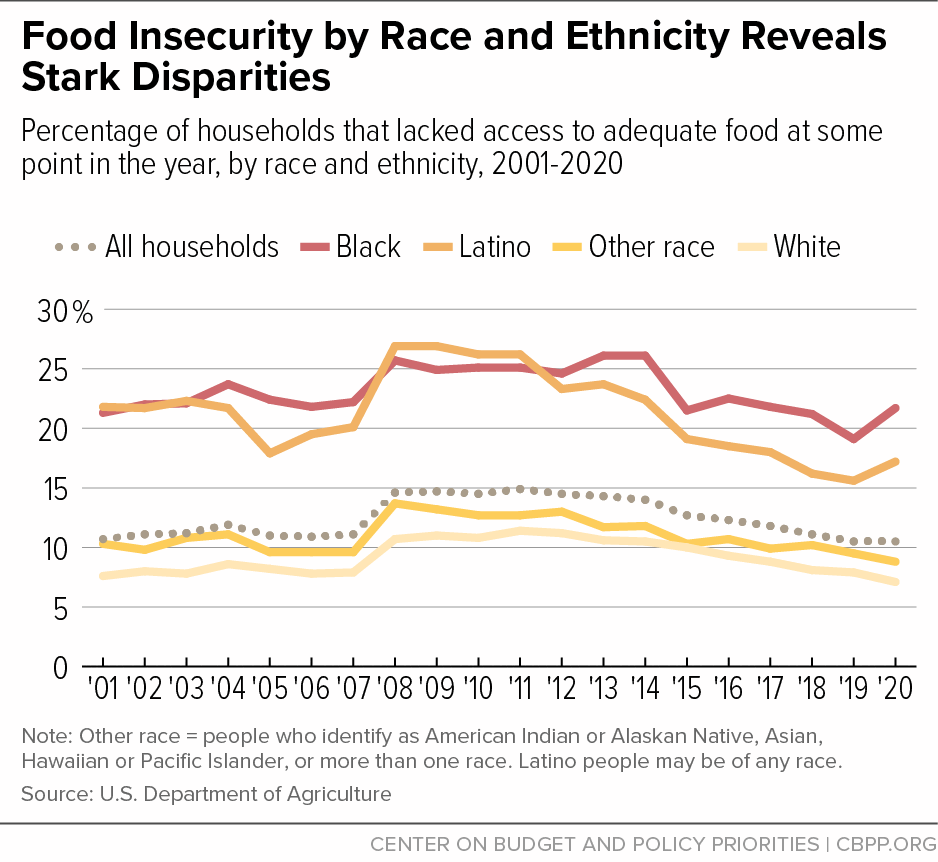
According to annual food insecurity data from the December Food Security Supplement of the Current Population Survey (CPS-FSS), food insecurity sharply increased at the start of the Great Recession from 11.1 percent in 2007 to 14.6 percent in 2008. It peaked in 2011 at 15 percent and steadily decreased through 2019 to 10.5 percent — 30 percent lower compared to the peak in 2011.
As a result of the robust relief effort during the pandemic, food insecurity did not surge as it did during the Great Recession. The typical annual measure was unchanged in 2020 from its 2019 level of 10.5 percent. However, the number of individuals in food-insecure households increased by 3 million, from 35.2 million in 2019 to 38.3 million in 2020.
Due to long-standing structural racism and discrimination, people of color have disproportionately faced food insecurity. Food insecurity under the annual measure increased from 2019 to 2020 for households with children and for households headed by Black adults. Other Census data show higher levels of food insufficiency (a different measure of food hardship) during the pandemic than what the annual data show. In 2020, Black- and Latino-headed households were more than twice as likely as white-headed households to be food insecure. Even after the public health emergency ends, access to SNAP benefits will be critical in reducing households’ hunger and risk of food insecurity, as well as racial disparities in food insecurity.
Protecting the overall economy
SNAP benefits are one of the fastest, most effective forms of economic stimulus because they get money into the economy quickly during a recession. Individuals with low incomes generally spend all their income on daily needs such as shelter, food, and transportation. This means that every dollar in SNAP that a low-income family receives enables them to spend an additional dollar on food or other items. Nearly 78 percent of SNAP benefits are redeemed within two weeks of receipt and 96 percent are spent within a month, based on data from 2017.
According to a 2019 USDA report, every dollar in new SNAP benefits increases GDP by $1.50 in a weak economy. Similarly, CBO and Moody’s Analytics have each found that SNAP has one of the largest “bangs-for-the-buck” (i.e., increase in economic activity and employment per budgetary dollar spent) among a broad range of policies for stimulating growth and creating jobs in an economic recession.
Lessening the extent and severity of poverty and hardship
SNAP is heavily focused on households with the fewest resources to purchase food. It provides additional resources for food, but also frees up household resources for other basic needs such as rent, utilities, or medical care. According to the most recent SNAP administrative data (from 2019), about 92 percent of SNAP benefits go to households with incomes at or below the poverty line, and 54 percent go to households at or below half of the poverty line (about $10,980 for a household of three in 2022).
These features make SNAP a powerful anti-poverty tool. A CBPP analysis using the government’s Supplemental Poverty Measure (which counts SNAP as income) and correcting for underreporting in government surveys found that SNAP kept nearly 8 million people above the poverty line annually before the pandemic, including 3.6 million children.[6] A related CBPP analysis found that SNAP has one of the strongest anti-poverty effects of any program.
Supporting low-paid workers
In addition to providing security for older people and those who are disabled or temporarily unemployed, SNAP is designed to supplement the wages of low-paid workers.
Millions of people in the U.S. work in low-paid jobs, on unpredictable schedules, and with no benefits such as paid sick leave. SNAP benefits help fill the gaps for workers with low and inconsistent pay, including periods when they don’t have a job. Workers who participate in SNAP most commonly work in service or sales occupations such as aides or cashiers, which are often low paid and vulnerable to income volatility.
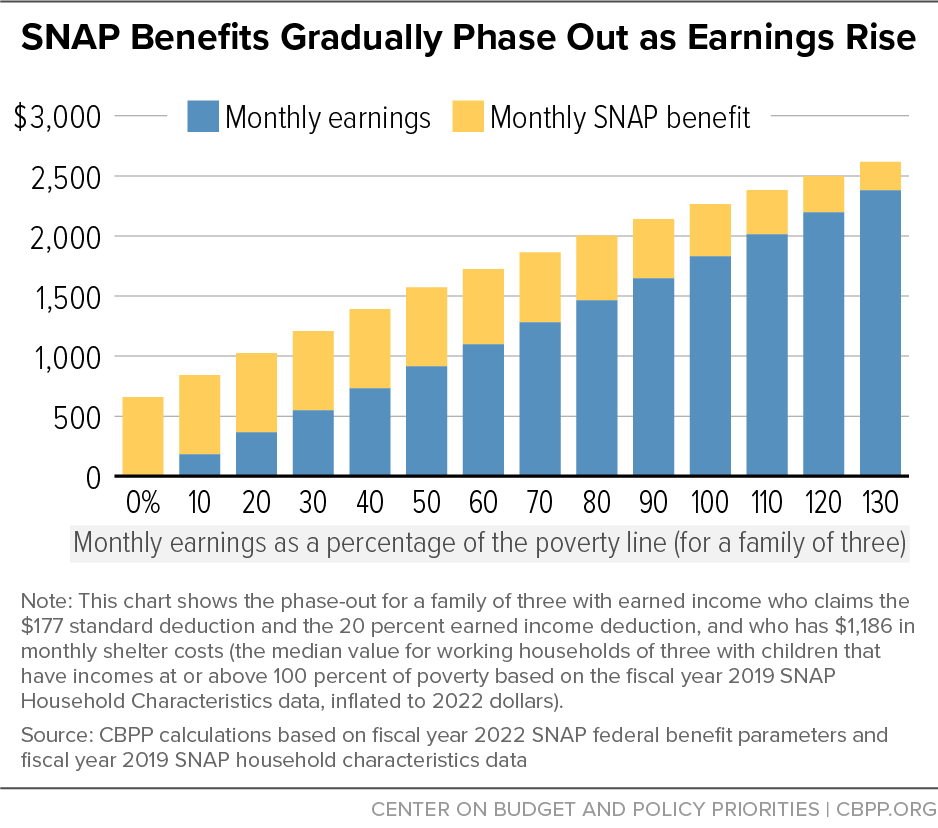
The SNAP benefit formula phases out benefits slowly with increased earnings. For every additional dollar that SNAP participants earn, their benefits decline gradually, by only 24 to 36 cents. This means that for most SNAP households, the program continues to serve as an income support — making it easier for families to afford food — as they earn more and work toward financial stability and self-sufficiency. SNAP participants who lose their jobs can apply for benefits and receive them quickly, and workers who participate do not risk seeing their total income (earnings plus SNAP) fall if the promise of increased hours or a new, higher-paying job does not come through. States further support work through the SNAP Employment and Training program, which funds training and work activities for unemployed adults who receive SNAP.
The number of SNAP households with earnings while participating in the program has more than doubled — from about 2 million in 2000 to 5.4 million in 2019. The share of all SNAP households with earnings while participating in SNAP has also increased — from about 27 percent in 2000 to about 29 percent in 2019.
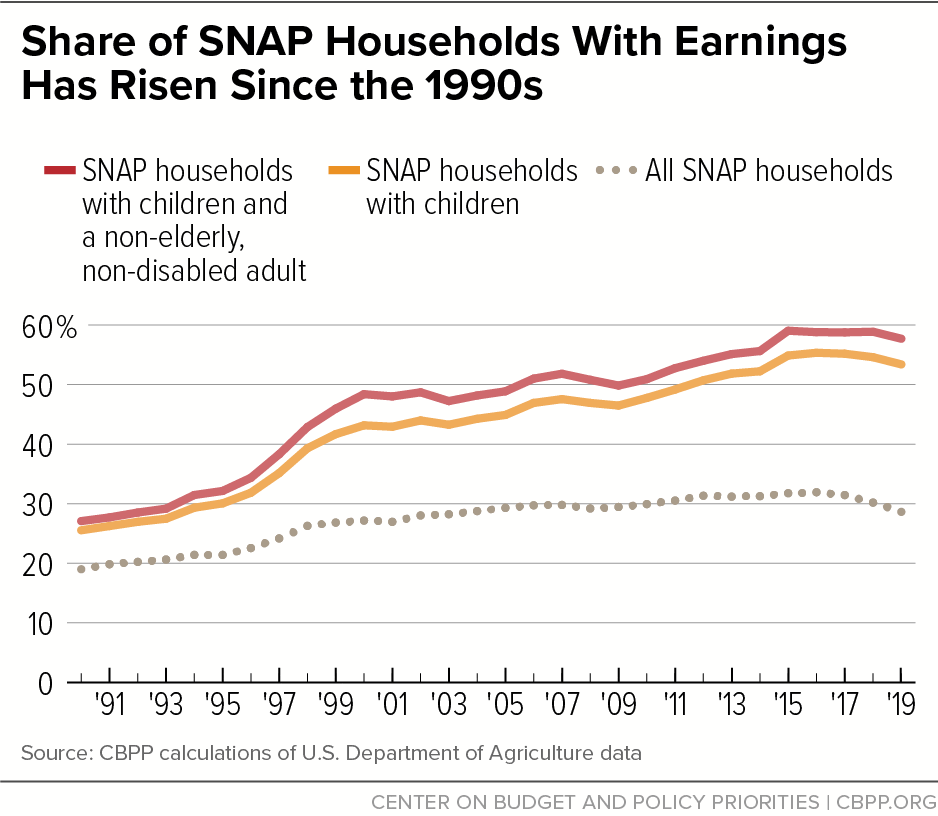
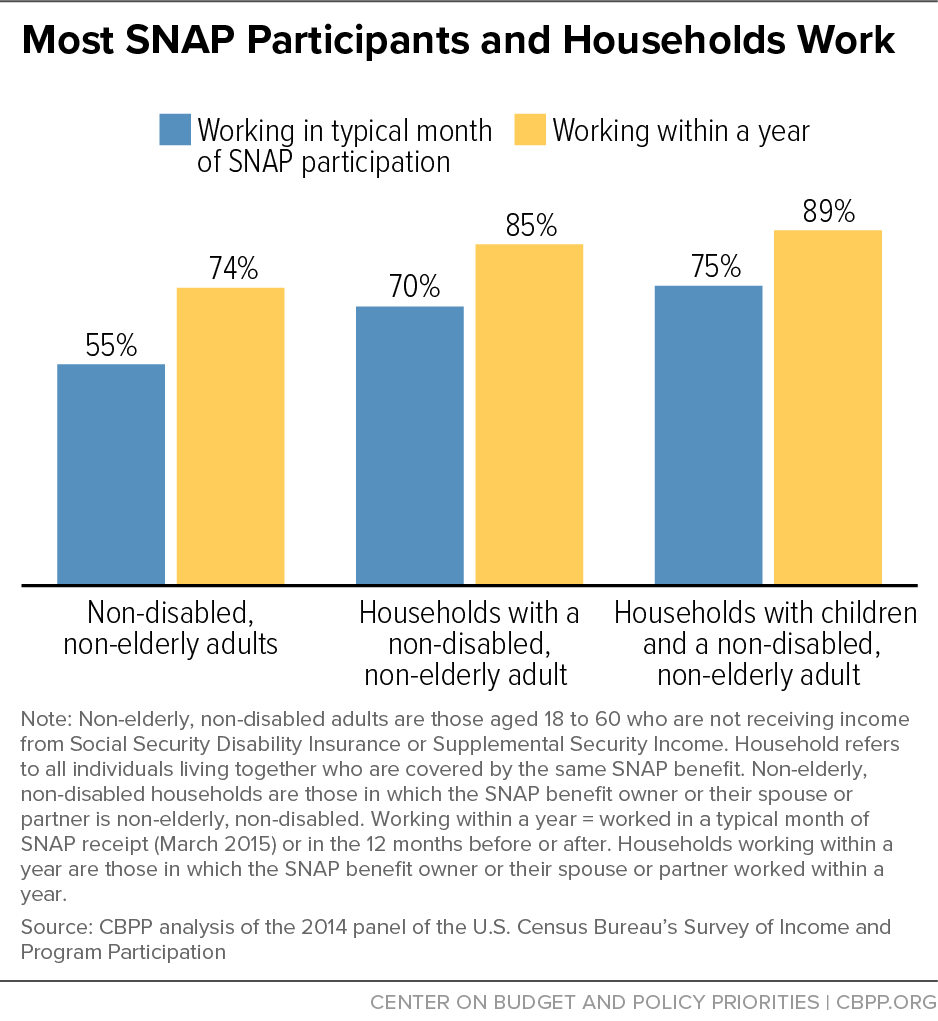
Most SNAP participants who can work do so. Over half of individuals who were participating in SNAP in a typical month in 2015 were working in that month. Further, 74 percent worked in the year before or after that month (in the 25-month period). Rates were even higher when including work among other household members: 89 percent of households with children and a non-disabled adult included at least one member who worked in this 25-month period. More than two-thirds of SNAP participants are not expected to work, primarily because they are children, older adults, or disabled people.
Supporting healthy eating and improved health
SNAP enables low-income households to afford more healthy foods and boosts families’ food purchases, particularly those to be prepared or eaten at home. In addition, all states operate SNAP nutrition education programs to help participants make healthy food choices.
A substantial body of recent research links SNAP with improved health outcomes and lower health care costs. Adult SNAP participants have a more positive self-assessment of their health status; they also miss fewer days of work due to illness, make fewer physician office visits, and have a reduced likelihood of experiencing psychological distress. Children receiving SNAP report better health status than their counterparts who are not SNAP participants, and their households are less likely to have to sacrifice health care to pay for other necessary expenses. Older SNAP participants are less likely to be admitted to a nursing home or hospital than their counterparts who do not participate.
Several studies also show a relationship between SNAP participation and reduced health care expenditures. Additionally, research on the nationwide expansion of food stamps in the 1960s and ’70s finds that children born to women with low income in counties that had implemented food stamps had better health outcomes as adults — and girls grew up to be more self-sufficient — than those born in counties that had not yet implemented the program.
Responding quickly to natural disasters
In the wake of natural disasters, SNAP provides critical food assistance to vulnerable households. USDA and states work together to provide quick, targeted assistance after disasters. This can include replacing participants’ benefits to compensate for lost food, providing temporary Disaster SNAP benefits to non-participants who have suffered significant loss, and relaxing program requirements to ease access and relieve undue burden on staff. For example, SNAP helped households affected by major weather events such as Hurricane Zeta in Alabama in 2020, snowstorms in California, tornadoes in Kentucky, and wildfires in Colorado in 2021. Due to the pandemic, SNAP agencies were provided with significant flexibility in their administrative operations to help eligible families keep food on the table. Congress also provided additional funds through the American Rescue Plan for Puerto Rico, American Samoa, and the Commonwealth of the Northern Mariana Islands. (Because these U.S. Territories receive food assistance in the form of a block grant, disaster funding there was not available without congressional action.)
How Effective and Efficient Is SNAP?
Before the federal government began providing nutrition assistance on a permanent basis in the late 1960s, hunger and severe malnutrition existed in many low-income communities in the U.S. In large part owing to these assistance programs, such conditions are no longer found in large numbers today.
In fiscal year 2019, 82 percent of individuals who qualified for SNAP benefits received them. This is a significant improvement from 2002, when the participation rate bottomed out at 54 percent. Participation among eligible people in working families rose from 40 percent in 2002 to 72 percent in 2019.
To promote efficiency and integrity, SNAP has one of the most rigorous eligibility determination systems of any federal benefit program. Households applying for SNAP report their income and other relevant information; a state eligibility worker interviews a household member and verifies the accuracy of the information using data matches or paper documentation from the household or by contacting a knowledgeable party, such as an employer or landlord. Households must reapply for benefits periodically, usually every six or 12 months, and between reapplications must report income changes that would affect their eligibility. USDA provided state agencies with temporary flexibility to modify these certification periods and reporting requirements during the pandemic to help states manage their workload as caseloads rose and they quickly adapted to remote operations.
In addition, the SNAP quality control (QC) system requires states each month to select a representative sample of SNAP cases (totaling about 50,000 cases nationally over the year) and have independent state reviewers check the accuracy of the state’s eligibility and benefit decisions within federal guidelines. Federal officials then re-review a subsample of the cases.
USDA annually releases state and national payment error rates based on these reviews. When there are errors, they are generally honest mistakes by state agencies or participating households, not fraud. These error rates measure how accurately states determine eligibility and benefit amounts. States are subject to fiscal penalties if their error rates are persistently above the national average.
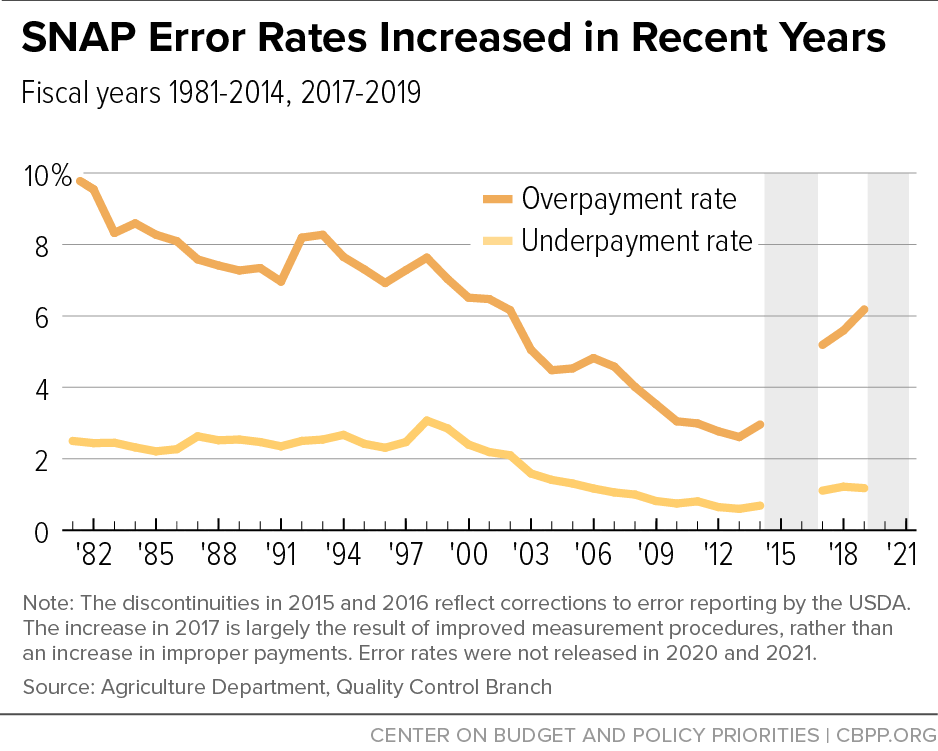
Before the pandemic, SNAP’s overpayment rate was in the single digits and its underpayment rate was less than 2 percent. In 2019, the most recent year available, the overpayment rate was 6.18 percent and the underpayment rate was 1.18 percent.
USDA allowed states to suspend QC operations from March through May of 2020 because of “extraordinary temporary situations” that made it difficult for states to complete reviews as they adapted to remote operations and other workload issues. Congress subsequently extended the suspension through June 2021. USDA encouraged states to continue conducting QC reviews during this period for internal improvement purposes, and most states did. But because states were not required to report results, USDA determined it could not establish national SNAP error rates for fiscal years 2020 or 2021. States started reporting error rates to USDA in July 2021, so QC operations are fully underway for fiscal year 2022.
For fiscal years 2015 and 2016, USDA did not report SNAP QC error rates due to an Office of Inspector General report that drew attention to concerns about data quality issues with error rates in several states. During this time USDA conducted detailed reviews in all states and took action to address the quality and consistency of the measure. The revised SNAP error rates for 2017 through 2019 were higher than the rate published in 2014; USDA attributed the increase in 2017 to an improved measurement process, rather than an actual increase in improper payments.
Updated June 9, 2022
End Notes
[1] See CBPP Program Participation Data Dashboard, https://apps.cbpp.org/program_participation/#start, for more estimates on SNAP participation.
[2] Estimated fiscal year 2021 benefits without the pandemic-related increases are calculated by inflating fiscal year 2019 benefits from SNAP household characteristics data to fiscal year 2021 dollars using the Consumer Price Index for All Urban Consumers (CPI-U). The CPI-U is recalculated as the average monthly index for the fiscal year, rather than the calendar year.
[3] Figures have been rounded and may not add up exactly.
[4] Steven Carlson, Joseph Llobrera, and Brynne Keith-Jennings, “More Adequate SNAP Benefits Would Help Millions of Participants Better Afford Food,” CBPP, updated July 15, 2021, https://www.cbpp.org/research/food-assistance/more-adequate-snap-benefits-would-help-millions-of-participants-better.
[5] For a more detailed explanation on SNAP emergency allotments see CBPP, “A Quick Guide to SNAP Eligibility and Benefits,” updated January 6, 2022, https://www.cbpp.org/research/food-assistance/a-quick-guide-to-snap-eligibility-and-benefits,
[6] For estimates of people whom SNAP lifted above the poverty line, see Appendix Tables 1-10 (https://www.cbpp.org/sites/default/files/8-10-21pov-data.xlsx) Appendix Tables 1-10in Matt Saenz, “Research Note: Economic Security Programs Significantly Reduce Poverty in Every State,” CBPP, updated August 10, 2021, https://www.cbpp.org/research/poverty-and-inequality/economic-security-programs-significantly-reduce-poverty-in-every.