

2025 Budget Stakes: Cuts Would Widen Economic Disparities for Many People of Color
Update, March 10, 2026: We've updated this fact sheet.
Republican proposals that Congress could act on this year, including spending cuts House Republicans are reportedly considering, would take away or significantly reduce assistance to families of all races and ethnicities but would particularly affect communities of color. Past and ongoing discrimination and inequities in areas like housing, school resources, and hiring create barriers to education, health, well-paying jobs, and wealth for people of color, increasing economic hardship and the need for assistance.
Even families with incomes above the poverty line (about $37,500 for a couple with two children renting in an average-cost community, according to the federal Supplemental Poverty Measure) often struggle to pay the bills, but financial distress can be especially severe for those below the poverty line, who are likelier to be people of color. In 2023, 18.5 percent of Black, 20.9 percent of Latino, and 19.0 percent of American Indian and Alaska Native (AIAN) people had incomes below the poverty line — more than double the poverty rate for non-Hispanic white people (which, at 8.8 percent, was also too high). Wealth is even more concentrated by race.
Republican Proposals Would Turn Back the Clock on Improving Racial Equity
Federal programs like SNAP, Medicaid, and housing assistance provide tens of millions of people of color with critical access to food, health insurance, and stable housing. This economic foundation can help families get better jobs, educate their children, and contribute to the broader economy. Having access to SNAP and Medicaid in childhood, for example, has been found to lift people’s health, education, and future earnings. Republican proposals that would jeopardize assistance and endanger these families’ financial futures include:
Undermining Medicaid or rolling back key improvements under the Affordable Care Act (ACA). The ACA reforms to Medicaid and individual market coverage dramatically reduced the uninsured rate, particularly among many people of color. Between 2013 and 2023, for example, uninsured rates for people under age 65 dropped significantly among people who are Black (from 18.7 percent to 9.7 percent), Latino (from 29.7 percent to 17.7 percent), AIAN (from 23.8 percent to 13.9 percent), or Asian (from 15.6 percent to 5.8 percent). And after Congress temporarily improved premium tax credits to make marketplace coverage more affordable, marketplace enrollment among Black and Latino people grew by 186 percent and 158 percent, respectively.
Cutting federal Medicaid funding — either through caps for all states or through funding reductions for states that expanded Medicaid coverage under the ACA — or failing to extend the premium tax credit improvements that expire this year would reverse this progress. The results would be loss of coverage and higher costs for millions of people of color.
Cutting SNAP funding, eligibility, or benefit amounts. SNAP reduces food insecurity for all racial and ethnic groups but is particularly important for Black, Latino, and AIAN households, who are at least twice as likely to be food insecure as white and Asian or Native Hawaiian and Pacific Islander (NHPI) households.
Over 2 million SNAP participants across all racial and ethnic groups were lifted above the poverty line by the recent adjustment of SNAP benefits to more accurately reflect the cost of a healthy, realistic diet — and the reduction in the poverty rate was the largest among Black and Latino people. Undoing it would reverse this progress by potentially cutting SNAP benefits for over 40 million people across all groups.
Other broad-based cuts to SNAP would hurt many people of color as well. For example, 26 percent of SNAP households are headed by a Black person. Many SNAP participants work in occupations where Black and Latino workers are overrepresented and wages are low, such as home health and personal care aides — two occupations (among many) where more than 1 in 5 workers participate in SNAP.
Cutting rental assistance. Rental assistance is highly effective at helping people afford housing and preventing homelessness, overcrowding, and housing instability. Taking away assistance, raising rents for participants, or expanding waiting lists would put more families at risk of eviction and homelessness. Black rentersare far more likely than other groups to face eviction, and NHPI people are the most likely to be homeless, followed by AIAN, Black, and Latino people. Thus, people of color are likelier to qualify for and receive federal rental assistance and would be disproportionately harmed by cuts to these programs.
Also, barring families with mixed immigration status (who often include multiple eligible family members and one ineligible member) from receiving any rental assistancewould increase housing inequities and disproportionately harm Latino people, who make up some 85 percent of people in mixed-status families.
Taking assistance away from people who can’t meet rigid work requirements. In programs like Housing Choice Vouchers, Medicaid, and SNAP, most participants who can do paid work already do. Taking health care, food, or housing assistance away from people who can’t get through the red tape to document that they are complying with a work requirement or qualify for an exemption won’t increase employment but will increase hardship. In Arkansas, for example, Medicaid work requirements didn’t increase work, but 1 in 4 of those subject to the requirement lost coverage. Work requirements buy into inaccurate stereotypes based on race, gender, and disability status and ignore the instability of low-paid work, as well as ongoing labor market discrimination that also limits employment opportunities.
Alternative Path Could Reduce Disparities, Help All Families Thrive

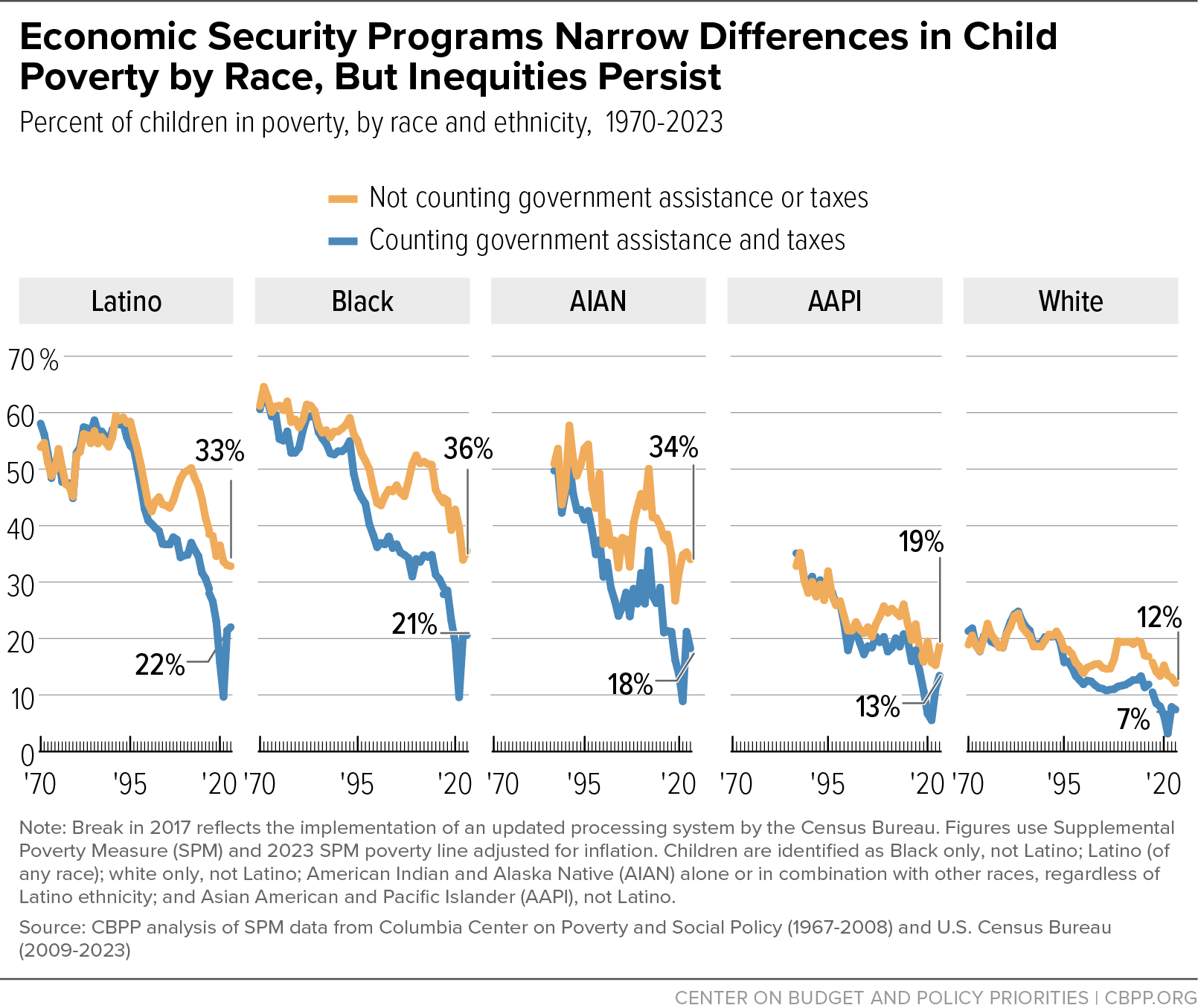
Supports like rental assistance, Medicaid, and SNAP reduce racial and ethnic disparities in food insecurity, child poverty, health access, and other hardship indicators. Improving these programs and reducing access barriers would drive further gains in equity.
For example, people of color make up two-thirds of the 1.6 million uninsured adults with incomes below the poverty line who are ineligible for Medicaid because their state hasn’t expanded Medicaid; closing this “coverage gap” would shrink ethnic and racial inequities in coverage. Also, increasing rental assistance can improve housing affordability across racial and ethnic groups and reduce the especially high rates of homelessness and eviction among Black and Latino people. And expanding the Child Tax Credit would reduce poverty for all children and narrow the large differences in child poverty rates.