

2025 Budget Stakes: Proposals Would Mean Higher Costs, Less Help for Seniors
Proposals that Congress could enact this year, including through fast-track “reconciliation” legislation, would reduce assistance that helps seniors — 8 million of whom have incomes below the poverty line, based on the federal government’s Supplemental Poverty Measure — get needed health care, afford sufficient food, and in other ways meet their basic needs.
Cutting Seniors’ Health Care Through Medicaid
More than 7 million seniors with low incomes receive health coverage and care through Medicaid. More than 3 in 5 nursing home residents have their care paid for by Medicaid, including many who had middle-class incomes during their working years but can’t afford nursing home care.
Medicaid also covers other long-term services and supports, as well as medical care and supportive services that Medicare doesn’t cover, which help many low-income seniors (as well as people with disabilities) stay independent and healthy. Medicaid also helps cover premiums, deductibles, and cost-sharing for Medicare beneficiaries. Cutting Medicaid by hundreds of billions of dollars would lead to large cuts in eligibility or benefits that could leave many seniors with less health care.
Cuts in home- and community-based services. The largest share of Medicaid funding for “optional” services (those not required by the federal government) is for home- and community-based care for seniors and people with disabilities. These include services such as case management, home health aides, and personal care services. Because home- and community-based services make up such a large share of states’ optional Medicaid spending, they are likely targets for cutbacks if congressional Republicans severely cut federal funding and shift cost to states. Don’t be fooled by a bill that doesn’t explicitly cut these services; if significant costs are shifted to states, home- and community-based services will be in serious jeopardy.
Increased health care costs and decreased quality of care. Some proposals call for rescinding rules that were designed both to streamline enrollment procedures for seniors and people with disabilities and to make it easier for eligible low-income seniors to get help paying their Medicare costs. Canceling these rules would make it more likely seniors would lose coverage and experience higher health care costs. Similarly, pulling back rules intended to keep nursing home residents safe would set back efforts to ensure safe, quality care for seniors and other people who need nursing facility services.
Cutting Seniors’ Food Assistance Through SNAP
Seniors with low incomes are particularly vulnerable to the consequences of food insecurity, such as hunger, poor dietary quality, and adverse health outcomes such as depression and other chronic illnesses. SNAP helped 6.5 million households that include seniors — over 80 percent of which consist of a senior living alone — afford adequate food in 2022 while covering other household expenses. Large cuts in federal SNAP funding would lead to cuts in eligibility and benefits that would make it harder for many seniors to afford groceries.
Forcing deep SNAP benefit cuts by radically altering SNAP’s funding structure. SNAP benefit costs have been fully federally funded for 50 years. Shifting a share of those costs to states would strain state budgets, likely forcing states to cut benefits or restrict eligibility; seniors would no longer be guaranteed to receive the food assistance they need regardless of where they live. This harm would be particularly acute during recessions, when state revenues plummet but more people need food assistance.
Taking SNAP benefits away from older people who don’t meet rigid work requirements. Under current SNAP rules, non-elderly adults without children in their homes are limited to three months of benefits out of every three years if they can’t document they are either meeting a 20-hour-per-week work requirement or are exempt. In 2023, Congress applied the rule to individuals aged 50 through 54 for the first time, putting almost 750,000 older adults newly at risk of losing food assistance, Expanding punitive work requirements further to older adults up to age 65 would put another 1.4 million adults at risk of losing benefits. This population faces age discrimination in employment and substantial health barriers to work.
Restricting SNAP benefit updates designed to keep up with the cost of a healthy, realistic diet. Restricting future updates of the Thrifty Food Plan, the basis for SNAP benefit levels, so they couldn’t reflect current dietary guidance and the types of foods people eat would cut benefits for all participants, including seniors, by more than $30 billion over the next decade.
On top of the impact of these potential SNAP cuts, eliminating the Social Services Block Grant would weaken the Meals on Wheels program, which delivers nutritious meals and social connection to more than 2 million seniors, and adult protective care services that guard against elder abuse.
Reducing Seniors’ Access to Their Social Security Benefits

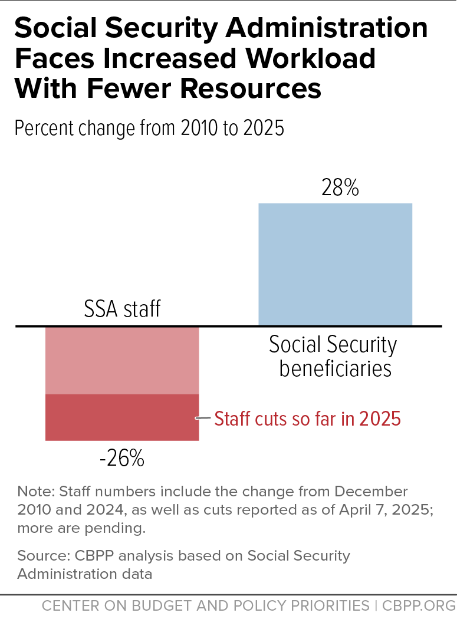
Actions by the Trump Administration — including by Elon Musk and the Department of Government Efficiency (DOGE) — risk creating unprecedented delays, degraded customer service, and unnecessary barriers for millions of beneficiaries to access the benefits they earned through Social Security.
The Administration has used false claims of massive fraud as a pretext for deep cuts in the staff who take appointments, answer calls, and process applications, and other moves that will delay people’s benefits or make it harder to get them in the first place. It also has threatened the security of people’s personal information by giving untrained DOGE political appointees unprecedented access to sensitive Social Security Administration (SSA) data.
Alternative Path Would Help Seniors Meet Basic Needs
Policymakers should ensure that seniors and older adults have enough resources to meet their basic needs. For example, Congress should provide SSA with sufficient funds to give seniors, survivors, and people with disabilities the customer service they deserve. Also, strengthening Supplemental Security Income benefits, which currently leave many recipients with below-poverty incomes and unable to cover basic living expenses, would assist the roughly 2.5 million very poor seniors participating in the program.