

2025 Budget Stakes: Proposals Would Degrade Quality of Government Services
A number of proposals that Congress could consider this year or President Trump might try to impose through executive actions would make key government services less efficient or degrade customer service, contrary to the Department of Government Efficiency’s stated goal of “maximiz[ing] governmental efficiency and productivity.” These proposals would reduce access to everything from school lunches to IRS tax assistance. Also, President Trump’s abrupt firing of inspectors general from 17 federal agencies raises serious questions about his Administration’s commitment to improving government efficiency.
Adding Red Tape Would Increase Burdens on People Eligible for Public Services
Proposals that would make it harder for people and families eligible for help to afford the basics by increasing red tape and administrative complexity include:
Making it harder to get free school meals. Currently, schools in every state serving large numbers of children in low-income families can provide free school meals to all students. Instead of collecting and processing applications, schools are reimbursed based on how many students receive selected means-tested benefits as an efficient way to determine how many students have low incomes. Getting rid of applications cuts down on paperwork for families and administrative work for schools, while eliminating the stigma children can feel about receiving free meals. More than 23 million children attend a school that uses this option. Curtailing this policy, especially in combination with a proposal to make it harder for families to apply for free school meals in schools that require applications, would create more red tape for families and schools, raise families’ food costs, and leave more children without enough to eat.
Reversing new rules that help eligible people enroll and keep health coverage through Medicaid. These simplified rules reduce administrative barriers in Medicaid’s enrollment and renewal processes so eligible people aren’t deterred from enrolling due to red tape or because they aren’t able to navigate the complex processes involved. For example, the rules prevent states from requiring seniors and people with disabilities to complete complicated renewal processes every six months, requiring this every 12 months instead. Reversing the rules would have the effect of taking away coverage from people who are eligible.
Imposing or intensifying rules that take assistance away from people not meeting burdensome work requirements. Numerous studies have found that work requirements in public benefit programs don’t significantly increase employment. Instead, they create administrative barriers and red tape that take away people’s benefits, including people who are working as well as people who are supposed to be exempt from the requirements due to their health, disability, or caretaking responsibilities.
For example, Arkansas’ short-lived experiment with Medicaid work requirements found no evidence that the policy increased employment, but 1 in 4 of those subject to the requirement had their coverage taken away. The Congressional Budget Office concluded in 2023 that a proposed Medicaid work requirement would lead to coverage loss with no change in employment or hours worked. Also, nearly 2 in 3 adult Medicaid enrollees aged 19-64 already work in paid jobs; most of the rest would likely be exempt from a work requirement, but many would face serious challenges navigating a complex exemption process.
Increasing paperwork in SNAP and making it harder for working families to qualify. A long-time option lets states phase out SNAP benefits more gradually as incomes rise so households can take slightly higher-paying jobs and still benefit from SNAP. It also lets states adopt less-restrictive asset tests so families, older adults, and people with a disability can have modest savings without losing SNAP. The option simplifies the SNAP application process: since few low-income households that apply for SNAP have assets above the federal limits, states can use the option to eliminate the asset test so they no longer need to collect and review documentation of assets. The first Trump Administration proposed to roll back this option, estimating it would terminate SNAP for more than 3 million people.
Underfunding Administration Would Weaken Customer Service
Some Republican proposals would undermine efforts to make government more responsive to taxpayers and seniors:

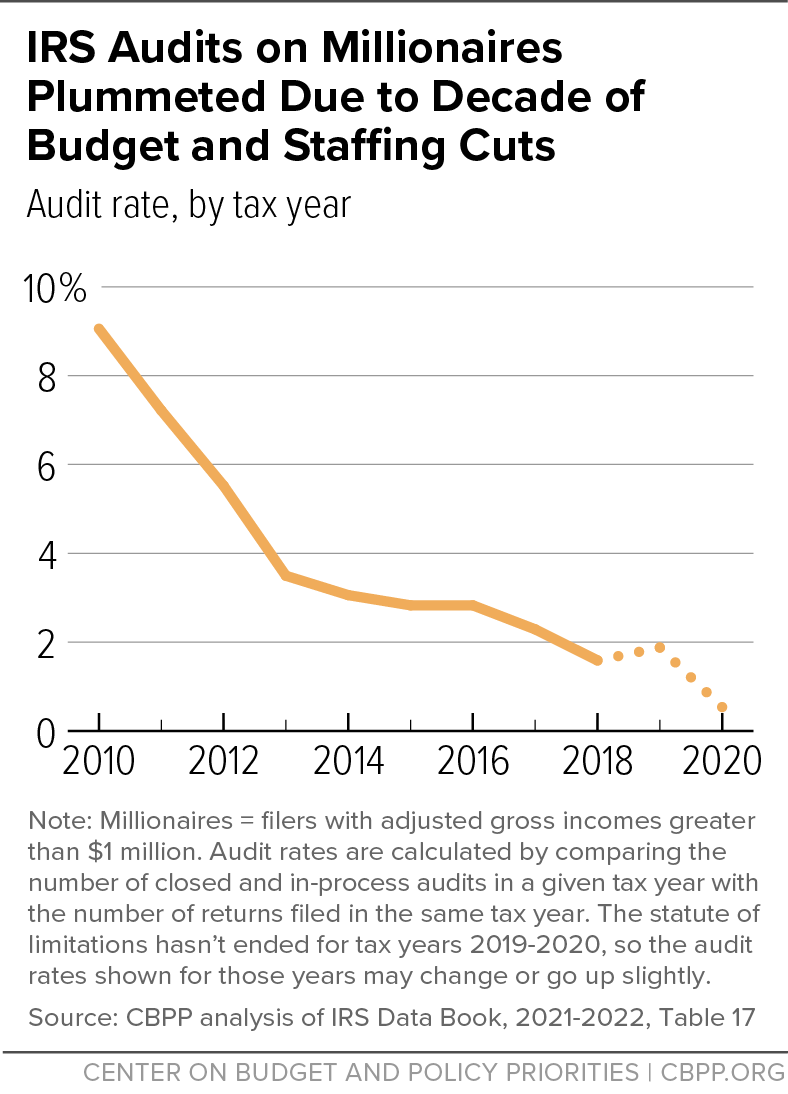
Cancelling IRS funding aimed at improving customer service and ensuring that wealthy people pay the taxes they owe. During the 2010s, steep budget cuts imperiled the IRS’s ability to serve taxpayers and enforce the nation’s tax laws. But funding from the 2022 Inflation Reduction Act is helping the IRS dramatically improve its customer service, implement “direct file” so people can file their taxes directly with the IRS for free, and modernize and improve its tax enforcement efforts. Those efforts are already paying off in cracking down on tax cheats and ensuring that wealthy people pay more of the taxes they owe. But Congress has already canceled some of the new enforcement funding, and Republican budget proposals call for repealing the rest.
Underfunding the Social Security Administration (SSA) so it can’t serve the public adequately. SSA is experiencing a customer service crisis fueled by over a decade of austere funding, with long hold times on the phone and record-long waits for disability determinations. Between 2010 and 2024, the number of SSA staff fell by 11 percent, even as the number of Social Security beneficiaries rose by 25 percent.
Republican budget proposals would cut several trillion dollars over the next decade from overall non-defense discretionary funding, the budget area that supports SSA customer service as well as a host of investments in people, communities, and the economy. The cuts are so large that there is simply no way that all critically important public services could be protected. Cuts that worsen the underfunding of SSA would further compromise its ability to provide the customer service that beneficiaries deserve.
Alternative Path Would Make Programs Work Better for People
Instead of adding complexity and red tape, Congress should make it easier for eligible people to access health coverage as well as school meals, food assistance through SNAP, and economic security supports. Congress also should strengthen efforts to improve customer service across government, including by adequately funding the IRS and SSA.