MÁS ALLÁ DE LOS NÚMEROS
The Republican Megabill’s Many Harms and Misdirected Priorities, in Charts
A nation living its ideals of opportunity and economic justice is one where all people have the resources they need to thrive, where everyone can get the health care they need for their well-being, and where food security is recognized as a human right. The harmful Republican megabill, enacted in July, betrays each of those principles. It will raise families’ food and health care costs, increase poverty and hunger, take health coverage away from millions of people, and drive up deficits — all to give costly tax cuts to the wealthy and corporations.
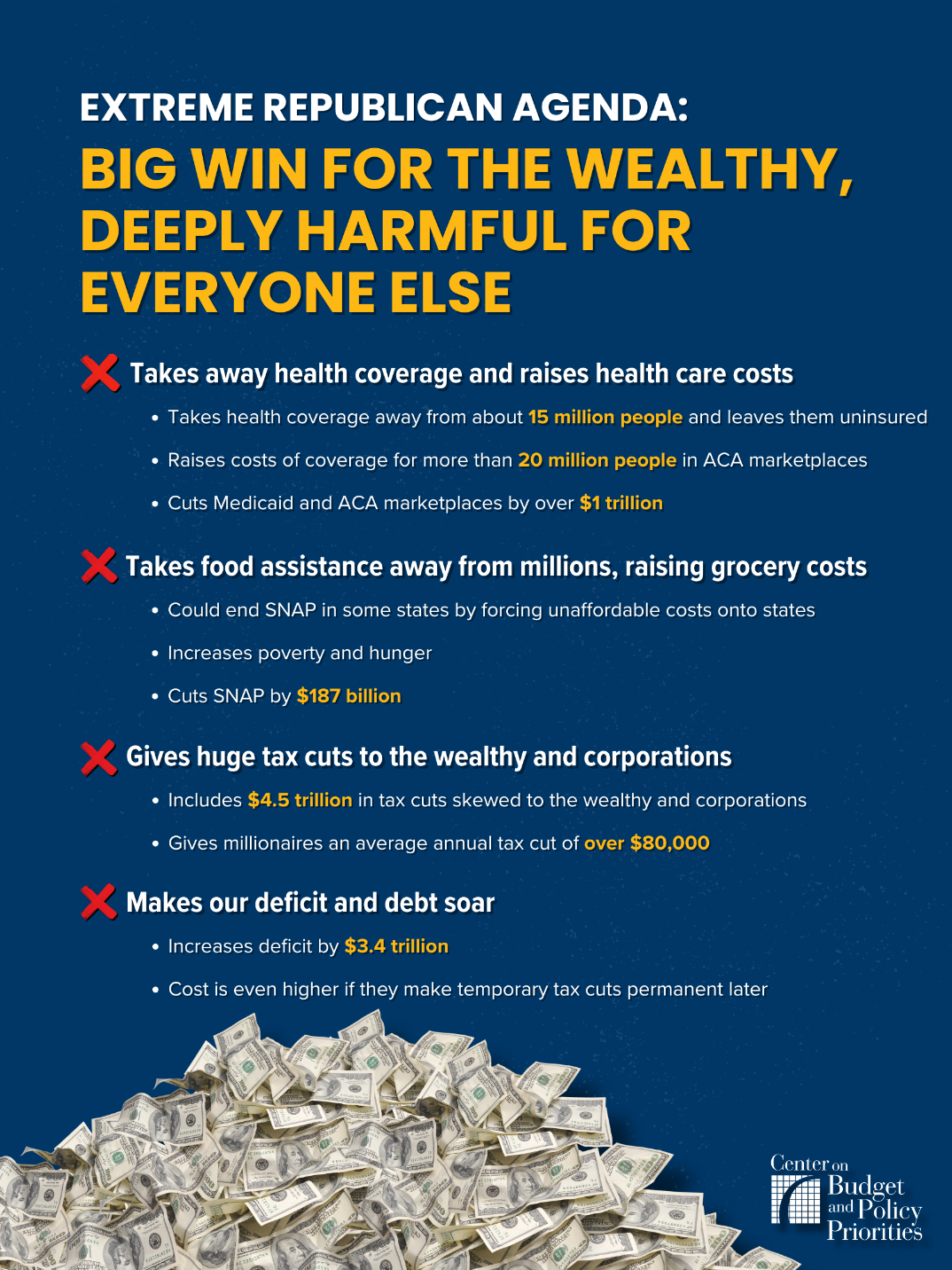
Many of these deep harms and skewed priorities become clearer when visualized in charts. Here are just some of the new law’s lowlights:

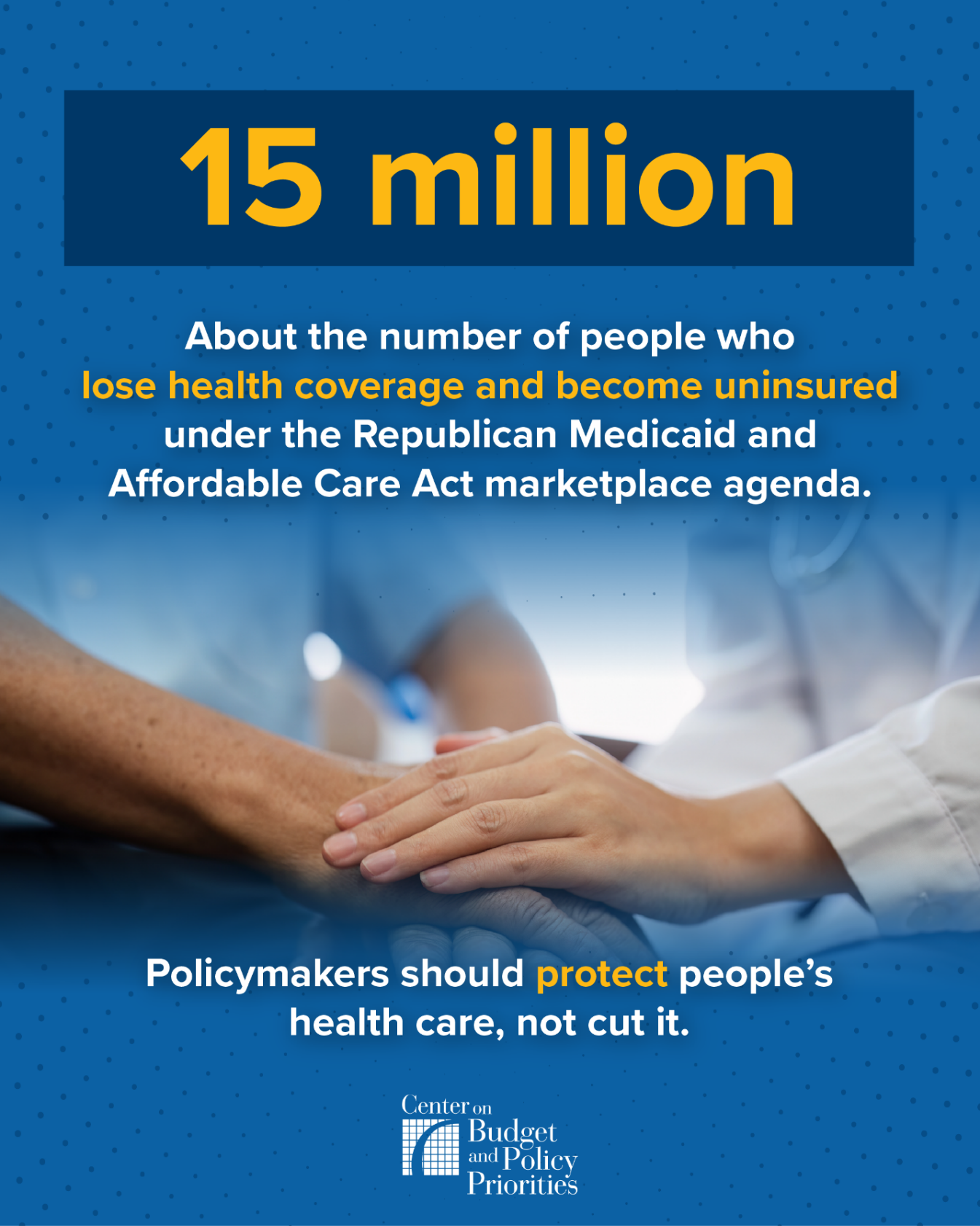
Now let’s zero in on the many millions of people it takes health coverage from:

These 15 million people have low or moderate incomes and can ill afford to lose their coverage. And with it they’ll be losing access to preventive and primary care, care for life-threatening conditions, and treatments for chronic conditions. Many millions of them will have their Medicaid coverage taken away by a rigid, red-tape laden work requirement that will trip them up even if they’re eligible for coverage.
And millions more people will keep their coverage but will see their costs skyrocket because the law failed to extend premium tax credit enhancements that help people whose employers don’t provide health care purchase their own.
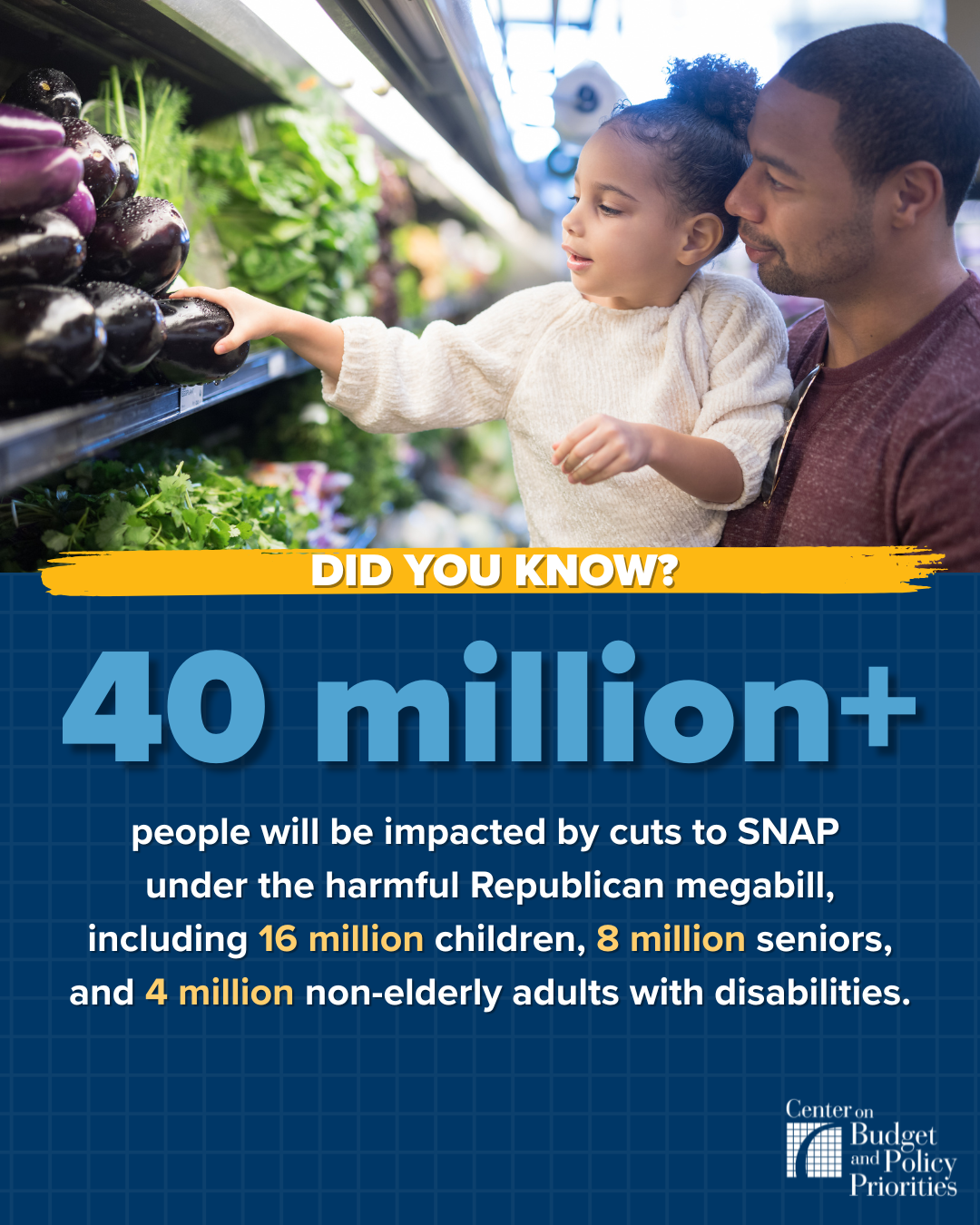
Now let’s turn to the law’s devastating harms on people’s ability to afford groceries.

The megabill’s cuts to food assistance through SNAP will affect all of the 40 million-plus people the program benefits, 16 million of them children. These cuts would increase poverty, food insecurity, and hunger among program participants — people in low-income households who may already be struggling with grocery prices. More than 5 million SNAP participants are at risk of losing at least some of their benefits, due to the expansion of SNAP’s already harsh, ineffective, and red tape-laden work requirement.
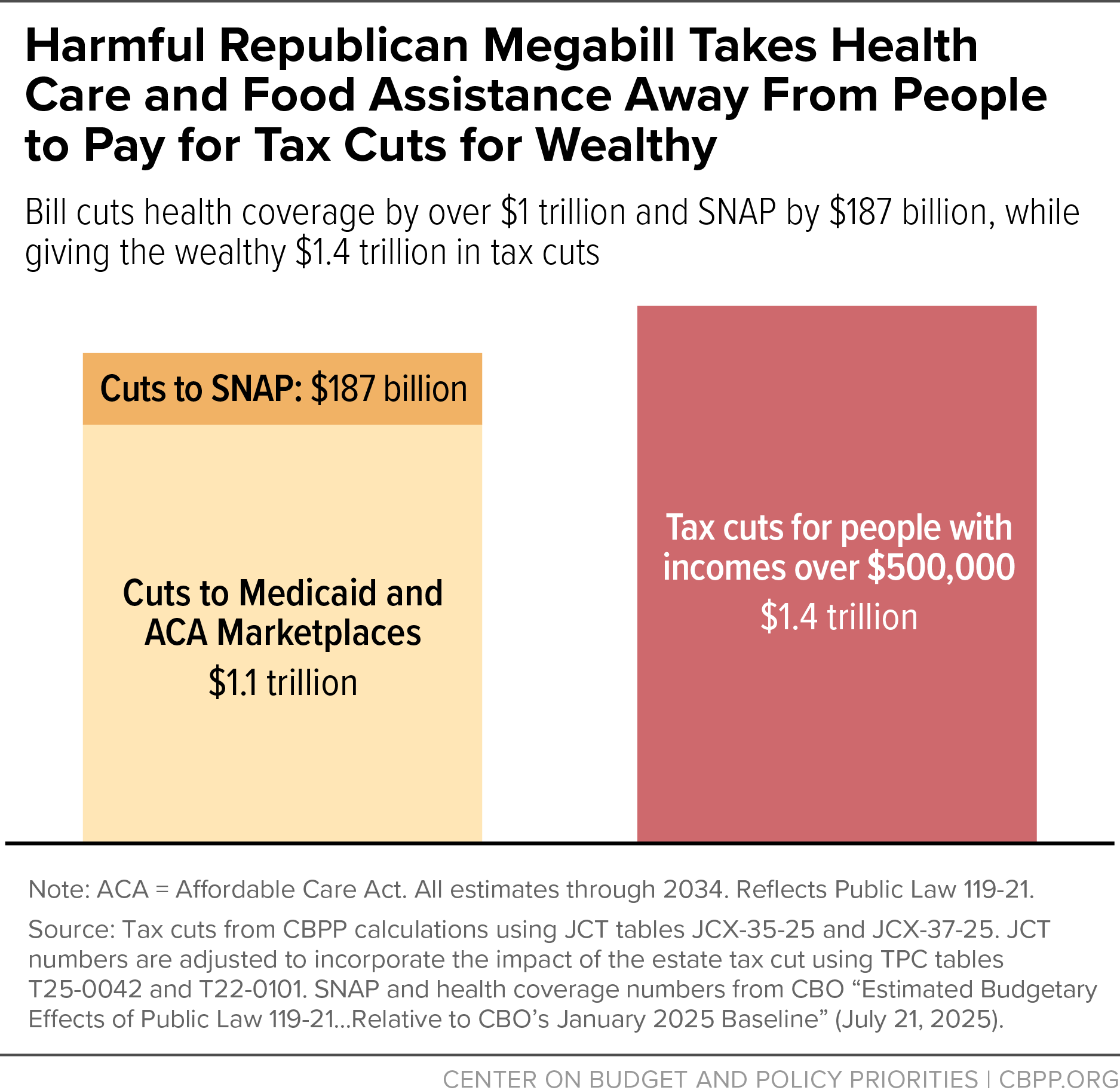
What it’s all for? To pay, in part, for tax cuts highly skewed to the wealthy.

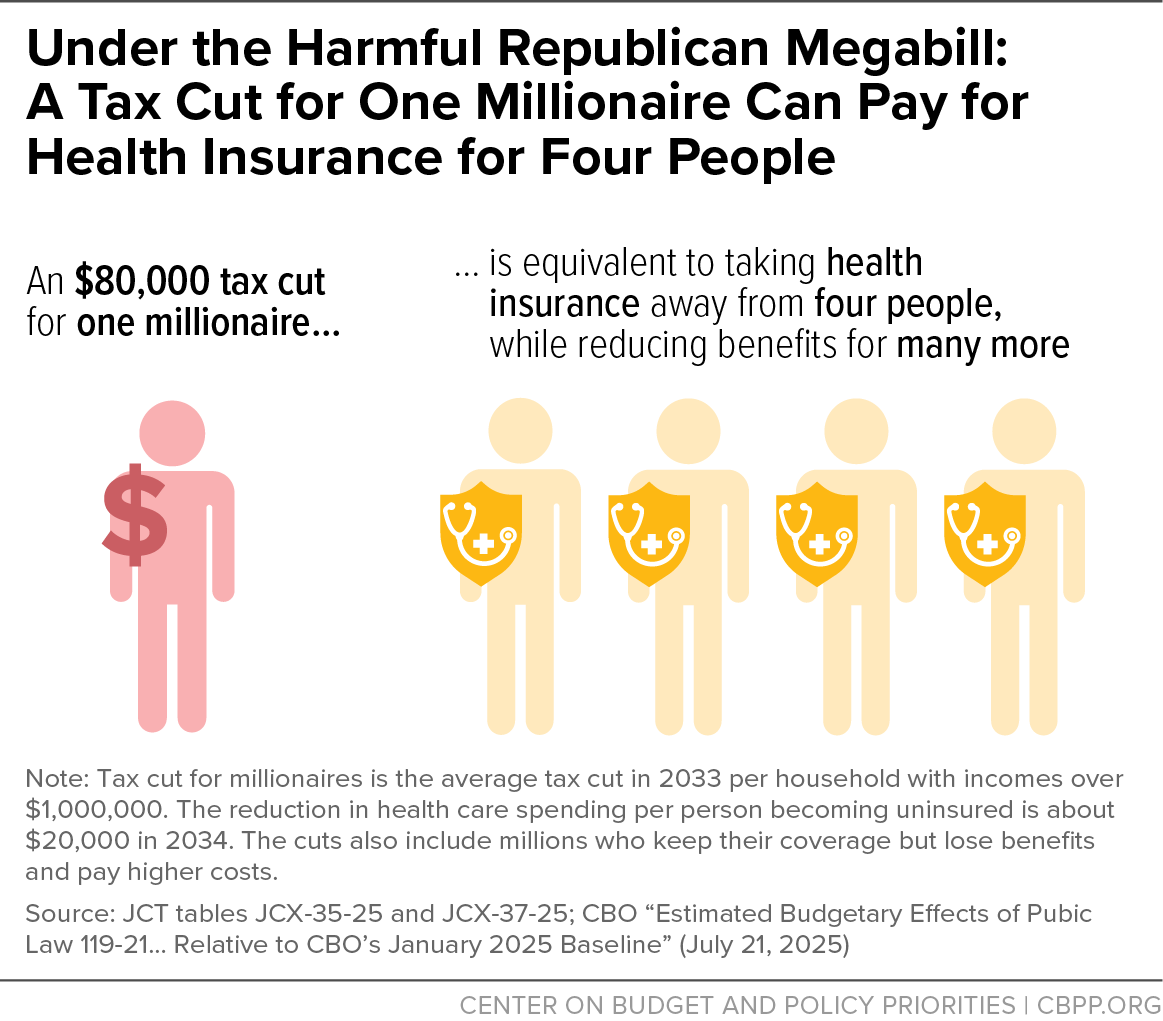
When looking closer at the law’s winners and losers, the bill’s upside-down tax priorities become clearer. For every $80,000 cut it gives one millionaire, it takes away health insurance from four people while reducing benefits for many more.

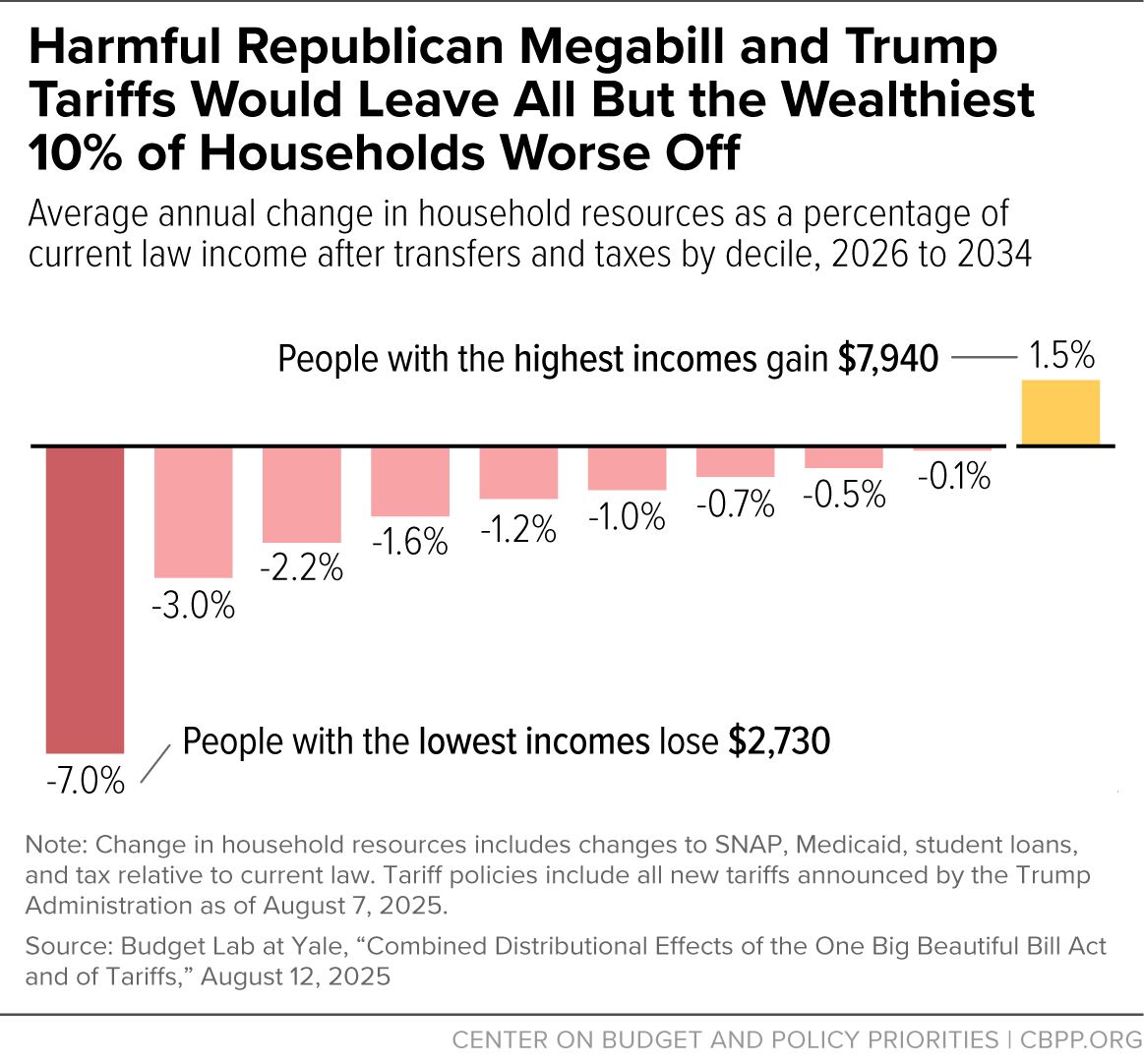
And that’s just one snapshot of the many troubling trade-offs the law made. When you zoom out to the wider megabill’s tax provisions and its benefit cuts — and consider them in tandem with President Trump’s costly tariff policy — everyone but the top 10 percent loses out. And people with the lowest incomes lose big — hardly the tax cut for working families it’s now being billed as.

Republican policymakers have tried to justify the cuts to programs as necessary to avoid raising taxes on families next year as tax cuts from 2017 expire. Yet the megabill’s $4.5 trillion in tax cuts is $1.2 trillion more than the cost of extending the 2017 cuts for everyone, including millionaires — in other words, larger than the $1.1 trillion in cuts the bill makes to health care. And its tax cuts cost $2.9 trillion more than extending the tax cuts for the 98 percent of families making under $400,000.

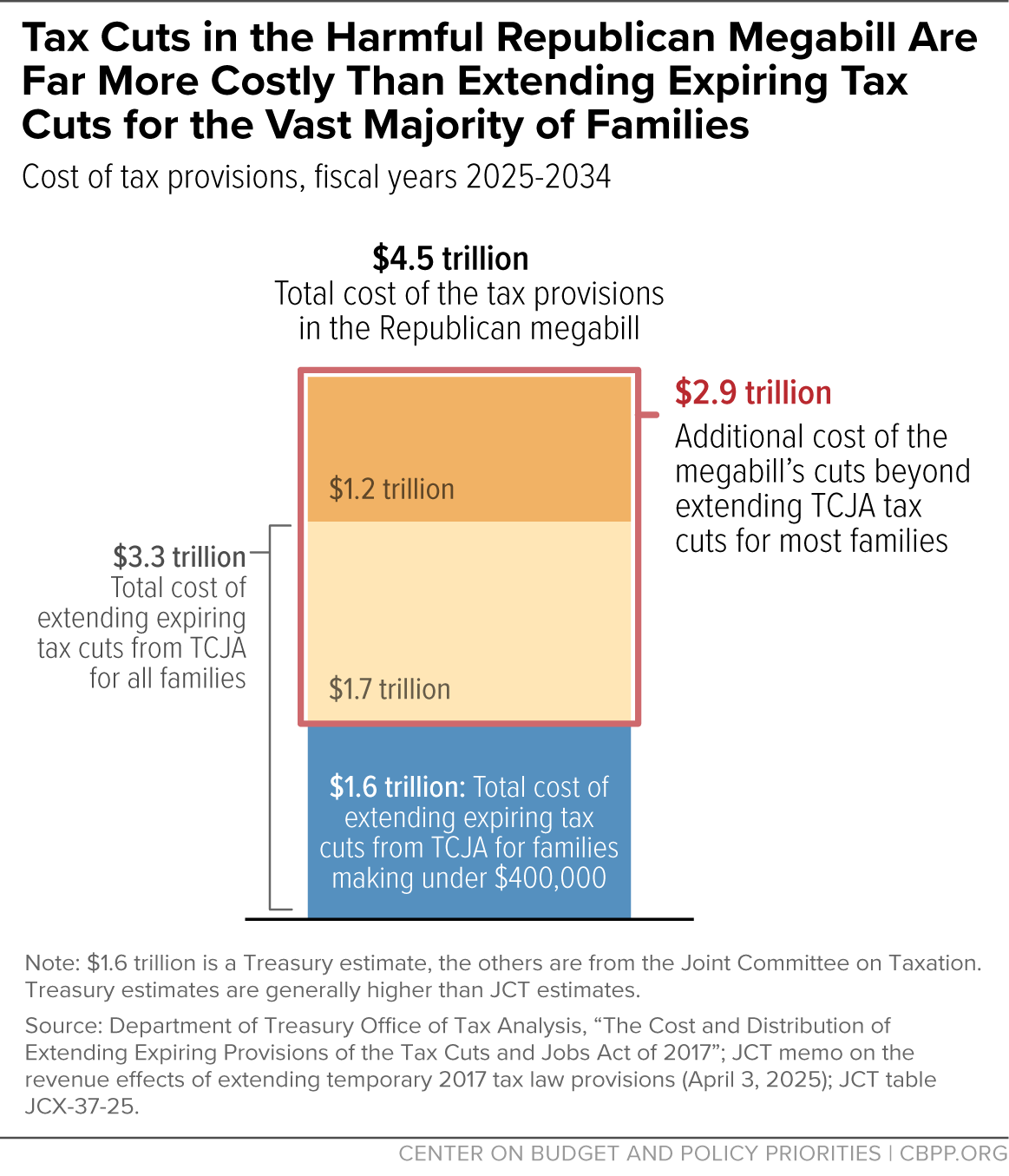
In other words, Republican policymakers could have avoided all of the cuts to programs, reduced the overall cost of the bill, and continued tax cuts for the vast majority of families. But they chose not to.
For more charts analyzing the megabill’s harms and skewed priorities, see: https://www.cbpp.org/research/resource-lists/resources-on-harmful-republican-megabill.
Authors