MÁS ALLÁ DE LOS NÚMEROS
Arizona’s SNAP Participation Is Plummeting — Far More Than Anticipated — as It Implements Megabill
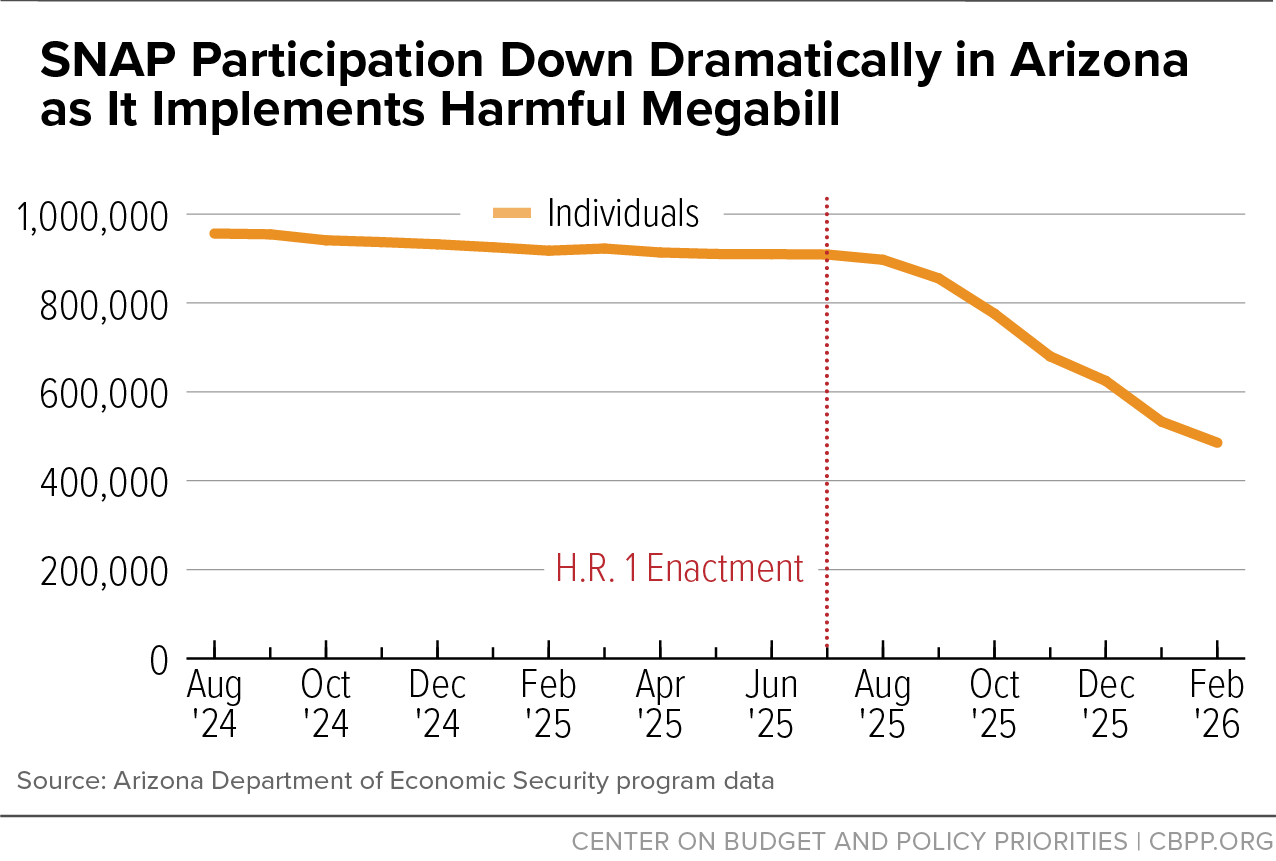
People across the country are losing vital grocery benefits as states grapple with a difficult SNAP landscape, following deep cuts and other harmful program changes enacted last July in the Republican megabill. (We’ve just launched a resource tracking SNAP participation in states nationwide.) Nowhere has this been more alarming than in Arizona, where about 424,000 fewer people were receiving food assistance seven months after the law’s enactment, a 47 percent drop. (See chart.) That includes about 181,000 fewer children, based on the latest data from the state agency.

This dramatic drop cannot be explained by a rapid improvement in people’s economic well-being or reduced need for help affording food. Arizona’s unemployment rate actually rose during the same period, and the cost of groceries remains high, rising 4 percent in the 12 months ending January 2026.
Arizona’s governor and spokespeople for the state agency have blamed the decline in SNAP participation on the megabill (H.R. 1). But it’s also the case that the losses far exceed our estimates of the number of people directly at risk of losing SNAP due to the law’s new eligibility restrictions, including now harsher policies taking away benefits for not meeting work requirements. And Arizona households of all types, including those not subject to these new provisions, are losing access to SNAP.
Thus, it appears that a combination of factors, including the megabill and the state’s response to it, are contributing to the sharp decline in the number of Arizona families getting SNAP.
First, the megabill’s harmful SNAP policies threaten significant losses in participation directly from its work requirement policies and restrictions that make people with certain lawful immigration statuses newly ineligible for SNAP.
Second, the megabill includes new incentives for states to undertake drastic efforts to reduce their error rate and costs. Many steps states may take could make it harder for eligible people to access SNAP, driving down caseloads. Here is how the incentive works:
- The megabill includes a major structural change to SNAP that requires most states to pay a share of SNAP food benefit costs for the first time in the program’s history, based on their payment error rate. For many states, this could cost potentially hundreds of millions of dollars a year.
- The law requires states to begin paying this share in October 2027, but the share they will pay is based on their payment error rates for fiscal years 2025, which just ended, or 2026, which is now well underway.
- This has created an incentive for states to reduce their payment error rates quickly and cut program costs, even if it means delaying or improperly denying benefits to eligible people. States that don’t hit their error rate reduction goals may directly restrict SNAP to reduce costs.
It’s imperative that Congress delay this unprecedented shifting of SNAP costs onto states. If it doesn’t, other states may follow Arizona’s lead, taking measures that cause delays and procedural denials for eligible individuals and families, exacerbating the number of people losing SNAP due to H.R. 1.
A third reason for Arizona’s caseload drop is that the megabill cuts federal funding to states to administer SNAP, which may be contributing to serious staffing shortages in the state’s SNAP agency. According to news reports, agency staff responsible for eligibility determinations dropped from 1,370 in July 2024 to 880 in July 2025. While these staffing shortages predate the megabill, the governor has indicated that the state doesn’t have the money to backfill for the lost federal administrative funding, which may mean the staffing shortages will persist.
These shortages have impacted the state’s ability to provide food assistance to eligible families, and the agency is facing a backlog of SNAP applications. People are reporting significant issues accessing SNAP, including long delays in getting their applications or recertifications approved or not being able to get through to agency staff through the phone.
These staffing cuts also coincide with substantially increased requirements on households to provide additional paperwork in an effort to reduce error rates. The precipitous drop in Arizona’s SNAP caseload strongly suggests that hundreds of thousands of people are running into barriers that are denying them access to the food assistance they need to afford groceries, putting them at risk of food insecurity and hunger.
And on top of everything else, the state’s legislature is considering putting additional restrictions on SNAP receipt.
But even as the massive and rapid drop in Arizona’s SNAP caseload is for now an outlier, other states may not be far behind. SNAP participation dropped in every state (and by 6 percent nationwide) from the megabill’s July 2025 enactment through December. And all states are navigating the 50 percent cut in federal funding to administer SNAP, which may lead to reduced staffing problems of their own.
Moreover, the new requirement that most states pay for part of SNAP benefits — totaling billions of dollars across all states — will put enormous fiscal pressure on them. States that can’t make up for these massive federal cuts by raising taxes or cutting other vital services will have to further cut SNAP, and they have limited options for doing so other than erecting access barriers. They may even withdraw from the program altogether, terminating food assistance for all low-income people in the state, including children, seniors, people with disabilities, veterans, and other adults.
With states in such a bind and the stakes for low-income families so high, at minimum Congress should heed bipartisan calls to delay the megabill’s SNAP cost shift by two years for all states, not just the limited ones already granted this delay. If Congress doesn’t act quickly, millions of people will lose the assistance they need to afford groceries as states make it harder to access the program or opt out of SNAP altogether.