

2025 Budget Stakes: Many Households Could Lose Needed Rental Assistance
Affordable housing is a basic human need, but many families’ incomes aren’t high enough to afford market-rate rents in their neighborhoods. Republican budget proposals could make this worse. Many households already struggling to afford rent could have their housing assistance taken away under Republican proposals that Congress could consider this year, putting them at risk of eviction and homelessness. Past Republican proposals would cut trillions of dollars over the next decade from the part of the federal budget that funds rental assistance. This year’s funding proposals from House Republicans are insufficient to protect rental assistance for hundreds of thousands of people. Other Republican proposals would impose harmful changes such as rent hikes and inflexible work requirements and undercut community efforts to reduce homelessness and housing discrimination.
Republican Proposals Would Worsen Shortage of Rental Assistance
Federal rental assistance makes housing affordable for more than 10 million people, including nearly 3.3 million children, 2.6 million people with disabilities, and 2.1 million older adults. Rental assistance sharply reduces homelessness and other hardships and lifts close to 3 million people above the poverty line. It also can improve adults’ health and children’s chances for long-term success. Tenant-based rental assistance also gives families more choices about where they live. But due to inadequate funding, only 1 in 4 renters with low incomes actually receive federal rental assistance.

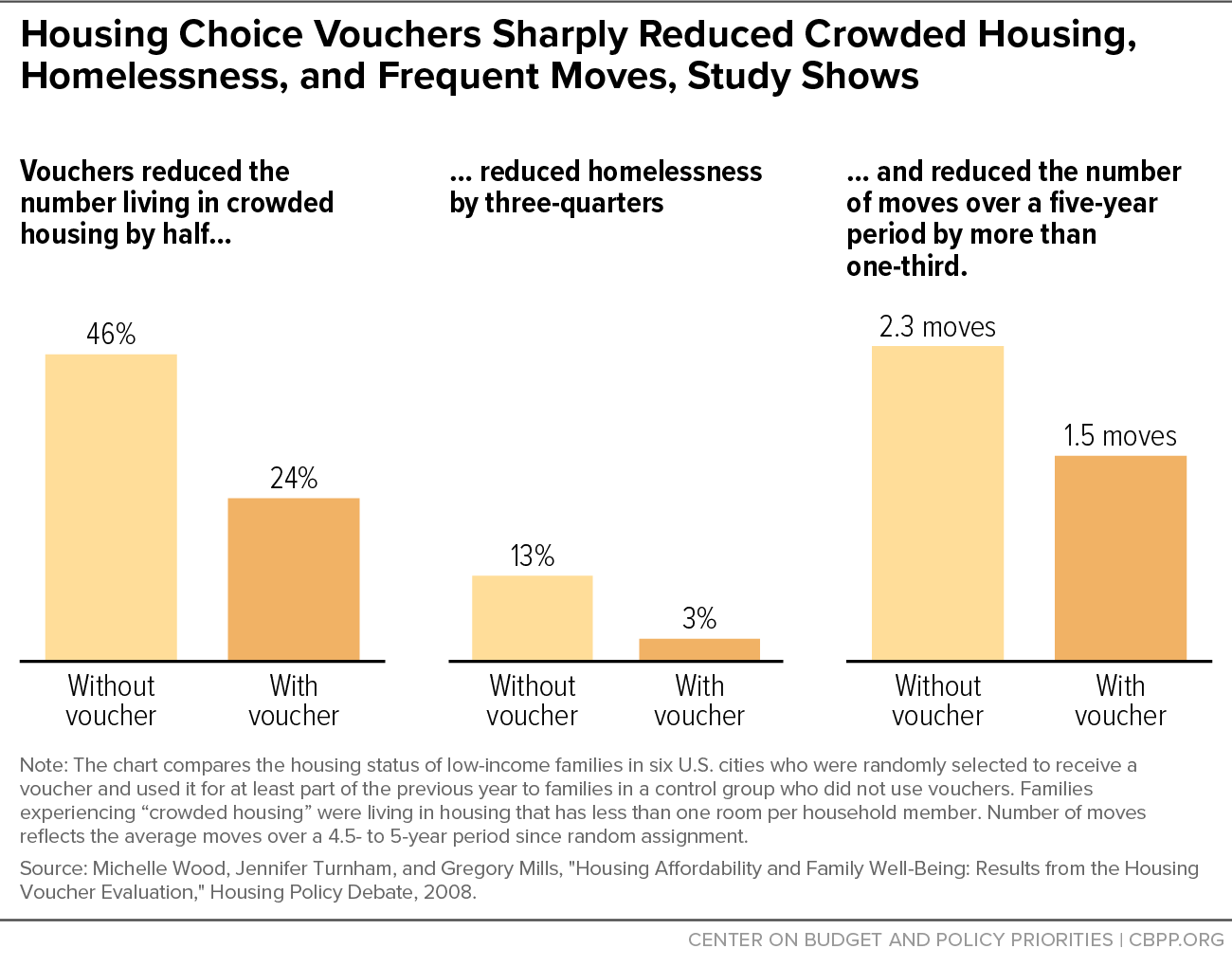
Republican proposals that would increase families’ housing costs by reducing access to help include:
Severely cutting funding for housing vouchers, homelessness assistance, and other programs. Past Republican budget proposals would cut several trillion dollars over the next decade from overall non-defense discretionary funding, which supports rental assistance and a wide variety of other investments in people, communities, and the economy as well as core functions of government. Also, due to underfunding, roughly 750,000 fewer people would receive vouchers under the bill passed by a Republican House committee to fund housing programs for fiscal year 2025.
Taking away housing assistance from people who don’t meet a work requirement. Most rental assistance recipients who can work do work. Also, research shows that work requirements in other programs have generated little or no long-term increase in earnings and employment and have caused many families, often those with the greatest disadvantages, to lose assistance. Taking rental assistance away from struggling households for not meeting work requirements, an approach Secretary of Housing and Urban Development (HUD) nominee Scott Turner endorsed at his confirmation hearing, does nothing to help them access better-paying jobs. It only increases their risk of homelessness and other hardships.
Raising rents on tenants with low incomes. Enacting legislation to raise rents on tenants with low incomes who receive rental assistance — as the first Trump Administration proposed — would force them to divert resources from other basic needs to avoid eviction or homelessness. Most of those affected would be working families with children, seniors, and people with disabilities.
Forcing “mixed-status” families to break up or lose rental assistance. Federal law limits rental assistance to U.S. citizens and people with certain immigration statuses, such as lawful permanent residency. When eligible families include an immigrant whose status doesn’t qualify them for assistance, assistance is prorated so ineligible family members don’t receive it, but families aren’t separated. The first Trump Administration proposed regulatory changes disallowing rental assistance entirely to these “mixed status” families. This would increase homelessness, evictions, and general hardship for these families.
The typical mixed-status household is a working family of four with two school-aged children and two adults; usually, three of the four are eligible for rental assistance and are U.S. citizens. Latino people would be disproportionately harmed, as they make up 85 percent of people in mixed-status families.
Attacking fair housing opportunities for everyone regardless of their race, color, gender, nationality, disability status, religion, or whether they have children. Housing agencies and communities receiving HUD funding must work to create communities that are open to all by identifying barriers to housing access for certain groups and taking steps to end housing discrimination. Eliminating or weakening this requirement through executive action, as the first Trump Administration sought to do, would undermine community efforts to enable all households to secure housing without facing discrimination.
Abandoning humane, evidence-based responses to homelessness. Strategies that pair rental assistance with personalized supportive services (an approach often called Housing First) are highly effective in helping people become permanently housed. The President and other Republicans have called for executive actions or legislation that would abandon this approach in favor of cruel and short-sighted measures like encouraging jurisdictions to arrest people for sleeping outside when they have nowhere else safe to stay. This would only punish people for being homeless, not help them find stable housing.
Alternative Path Could Improve Access to Rental Assistance
The extreme agenda represented by proposals like these, which would make housing more expensive for households who can least afford it while extending and expanding tax breaks for wealthy households and businesses, is the wrong direction for our nation. A far better path would be to ensure people have the resources they need to thrive, such as by increasing access to housing assistance, not reducing it.
For example, Congress should expand access to rental assistance, ultimately building toward a program that guarantees assistance to every person with a low income who needs it. Rental assistance helps people stay in their current housing by making it more affordable, is essential to helping unhoused people gain housing, and helps families make choices about where they live so they can access the schools, jobs, and family connections that matter most to them.