MÁS ALLÁ DE LOS NÚMEROS
Working Families’ Big Stake in the Expiring Tax-Credit Improvements
Note: This blog post was updated on December 28, 2012 to reflect the latest data.
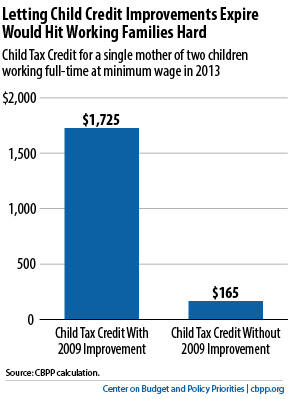
Take, for example, a single mother with two children who is trying to support her family through work rather than welfare by working full-time, year round at the minimum wage and earning around $14,500. We calculate that she would see her Child Tax Credit plummet next year by over $1,500 — from $1,725 to just $165 — if the 2009 improvements expire.
The Recovery Act improved the Child Tax Credit so that it would reach many low-income working families who had been excluded from it and many other families would receive a larger credit.
The Recovery Act also strengthened “marriage penalty relief” in the EITC (that is, it reduced the financial penalty that some couples receive when they marry by allowing them to qualify for a larger credit), and it expanded EITC benefits for larger families.
Combined, these Recovery Act improvements lifted 1.5 million people, including almost a million children, out of poverty in 2010 and lessened the severity of poverty for nearly 15 million others, including 7 million children.
The Tax Policy Center estimates that if the improvements expire:
- 11 million families will lose an average of $854 as a result of the reduced Child Tax Credit.
- 7 million families will lose an average of $532 as a result of the reduced EITC.