MÁS ALLÁ DE LOS NÚMEROS
Outdated SSI Asset Limits Pose Real Problem for Children With Disabilities Hoping to Benefit From Trump Accounts
Starting this month, families can open Trump Accounts for their children. Those welcoming new babies between 2025 and 2028 will qualify for a $1,000 federal contribution to seed the account. But for some families caring for disabled children — who will need savings the most as they come of age — the accounts could create big problems. That’s because once account holders reach adulthood, the money saved in their Trump Accounts will likely run afoul of the extraordinarily strict asset limits in the Supplemental Security Income (SSI) program for low-income disabled people. If those savings exceed the cap — just $2,000 — it will lead not only to the loss of needed monthly income support from SSI, but could also jeopardize their eligibility for health care and community-based services through Medicaid.
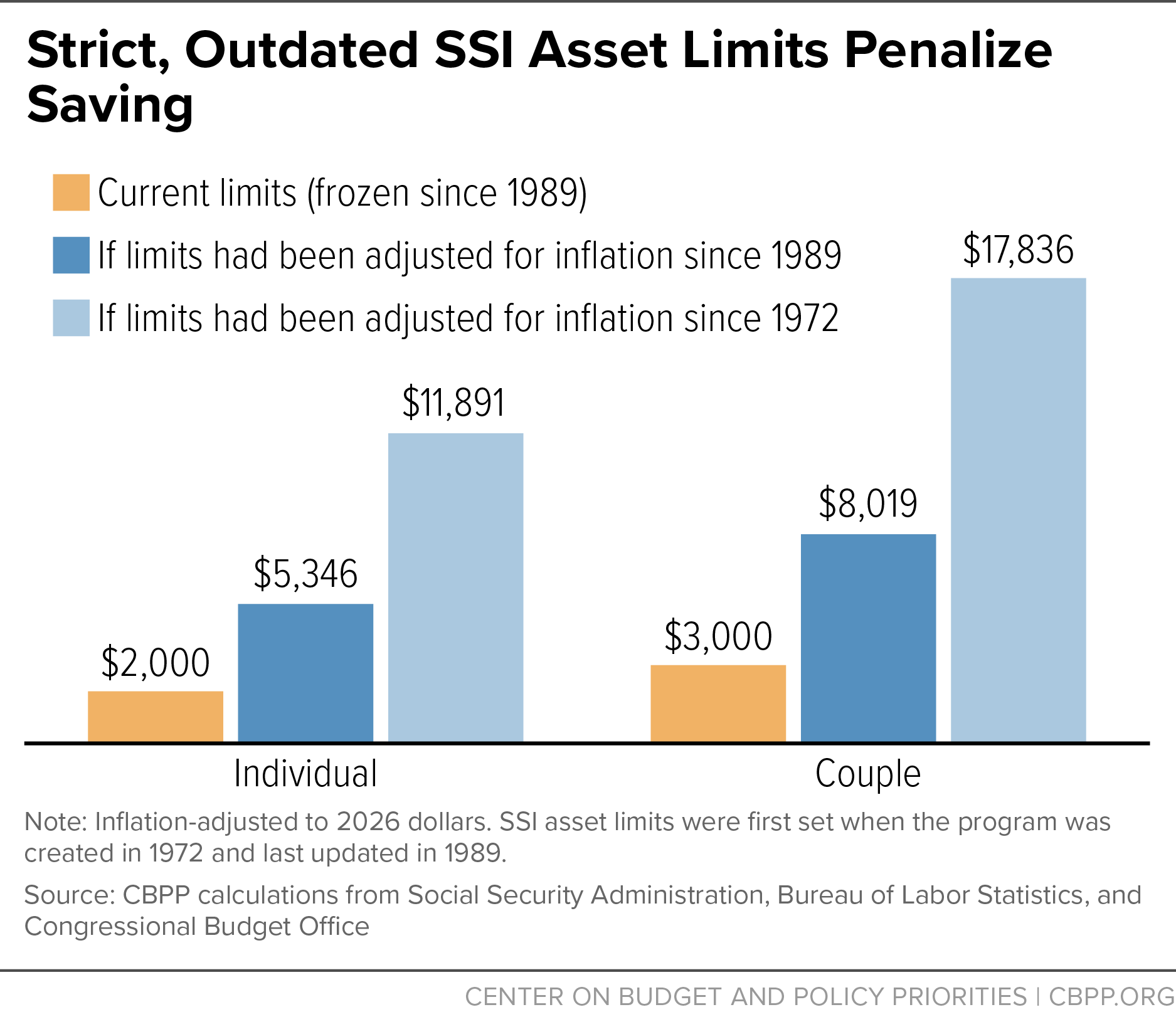
The real problem here is that the asset limits in SSI are far out of date and too low, both for young adults and others. Congress should raise SSI asset limits to prevent families from worrying that their efforts to save for their children’s futures will cost them essential support from SSI and Medicaid as a result. There is strong bipartisan support for this approach, notably the SSI Savings Penalty Elimination Act, which would raise the limit for a single beneficiary to $10,000 and index it to inflation.
SSI’s asset limits have been frozen at $2,000 (or $3,000 for couples), with no adjustment for inflation, for nearly 40 years. There is a good chance that many disabled children with Trump Accounts will be at risk of exceeding this extremely low threshold when they reach adulthood. Babies born between 2025 and 2028 are eligible for a $1,000 contribution from the federal government — to which children’s families and others can add. Even if there are no further contributions, an initial $1,000 contribution would exceed the $2,000 SSI asset limit level if it grows as little as 4 percent each year for 18 years (well below the historical average annual return for the default fund, an S&P 500 index).

As CBPP has described before, the tight SSI asset limit — the most restrictive of any federal program — does not allow for beneficiaries to have savings that can help them weather an emergency, let alone provide stability or save for the future. Policymakers have recognized the case for allowing greater savings and have increased or eliminated resource limits in other economic security programs, including the Supplemental Nutrition Assistance Program (SNAP) and Medicaid.
Trump Account balances don’t count towards the asset limit for children receiving SSI while they’re still minors. But the entire value of their Trump Accounts will count against the limit starting on their 18th birthday — unless their parents are savvy enough to take advantage of a one-time opportunity to transfer Trump Account balances into a special savings vehicle for people with disabilities (known as ABLE accounts) at age 17. But it’s unlikely that many families will take advantage. To date, only about 246,000 ABLE accounts have been set up, including for people who are not SSI beneficiaries. That’s significantly less than 5 percent of SSI beneficiaries who are eligible under the current rules.
The conflict between SSI asset limits and Trump Accounts will have significant consequences not just for disabled children in low-income families receiving SSI now, but also for disabled children in middle-income families who may become eligible when they turn 18.
About half of disabled children receiving SSI continue to receive benefits into adulthood. If their assets exceed $2,000 — including not only Trump Accounts, but also any other savings or checking accounts, college funds, and more — their benefits will be suspended and then terminated. And if the Social Security Administration doesn’t suspend their benefits promptly — as is often the case — these young adults will likely rack up thousands of dollars in overpayments that will be extremely difficult to repay from their meager benefits. But it will be too late to transfer Trump Account balances into little-known ABLE accounts to avoid these negative consequences, since that one-time opportunity will have already expired.
Families whose children with severe disabilities are not currently eligible for SSI benefits because of their families’ incomes and savings will be in a similar position. By the time those children reach young adulthood and apply for SSI benefits after turning 18, their Trump Account balances will likely be too high for them to qualify — and it will be too late to take advantage of the opportunity to transfer Trump Account balances into an ABLE account, either.
There are many other good reasons to increase outdated asset limits, which we have described previously. A higher limit would encourage — rather than penalize — saving and allow people to retain savings to use when they really need those resources. It would also help relieve families of disabled kids of the need to jump through hoops to transfer Trump Account savings to a different account — which most are unlikely to do. In addition to raising SSI asset limits, Congress should consider allowing families who do wish to transfer Trump Account balances to ABLE accounts to do so at any age.