MÁS ALLÁ DE LOS NÚMEROS
How House Republican Agenda Boosts the Wealthy, Does Little (or Worse) for Low-Income Families
House Ways and Means Republicans have released their tax plan as part of the budget reconciliation process and as long expected, it provides enormous tax cuts for the wealthy while doing little for low- and moderate-income families. In 2027 those families would get little, while the average family making over $1 million would get cuts worth about $90,000. (See first chart.)
In fact, the $105 billion tax cut going to the 1 million households making over $1 million in 2027 exceeds the cut going to the 127 million households making under $100,000 (this figure, like the other figures here, have adjusted the Joint Committee on Taxation’s estimates to include the effects of the estate tax, which they do not include).
These imbalances are even greater when taking into account the massive proposed cuts to crucial health care and food assistance through Medicaid and SNAP, and the fact that provisions benefiting the wealthiest are permanent while families with the lowest incomes would see an eventual tax increase.

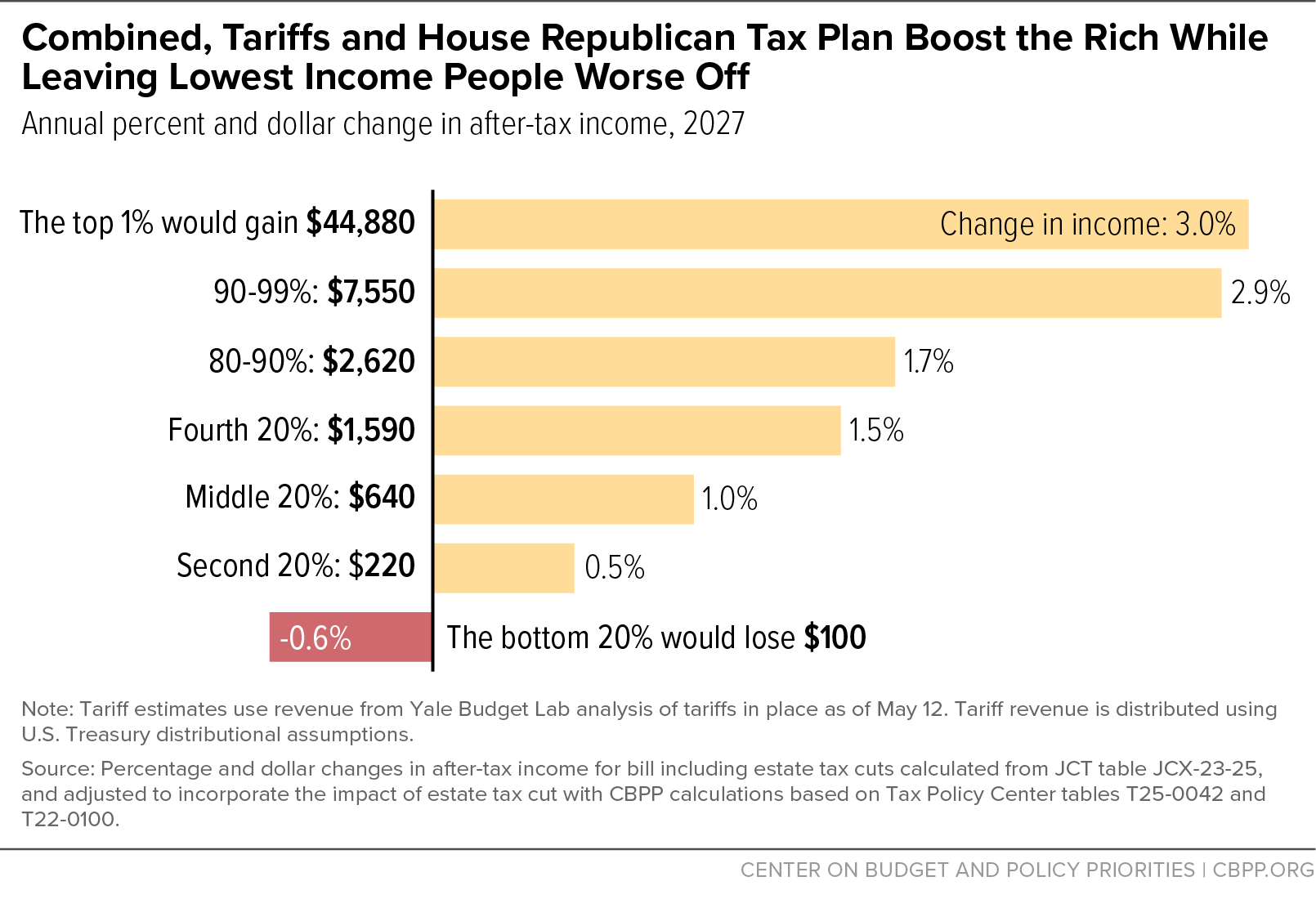
If we add just the effects of the tariffs the Trump Administration has put in place, the plan would still boost the rich while leaving the lowest-income people worse off because their tax cuts are so small. (See second chart.)

Again this is just a partial snapshot. It leaves aside the House Republican agenda’s cuts to Medicaid, the Supplemental Nutrition Assistance Program (SNAP), and more, which would take away access to health care and grocery benefits while weakening financial security for tens of millions of people with low incomes. We hope to be able to show these combined effects soon.
But what we can calculate now is the effect the plan would have by cutting premium tax credits (PTCs), which help tens of millions of people afford coverage through the Affordable Care Act. (This is on top of allowing enhanced PTCs that are now in effect to expire, which are not included in the calculations here, but would cause 4 million people to lose coverage, according to the Congressional Budget Office.)
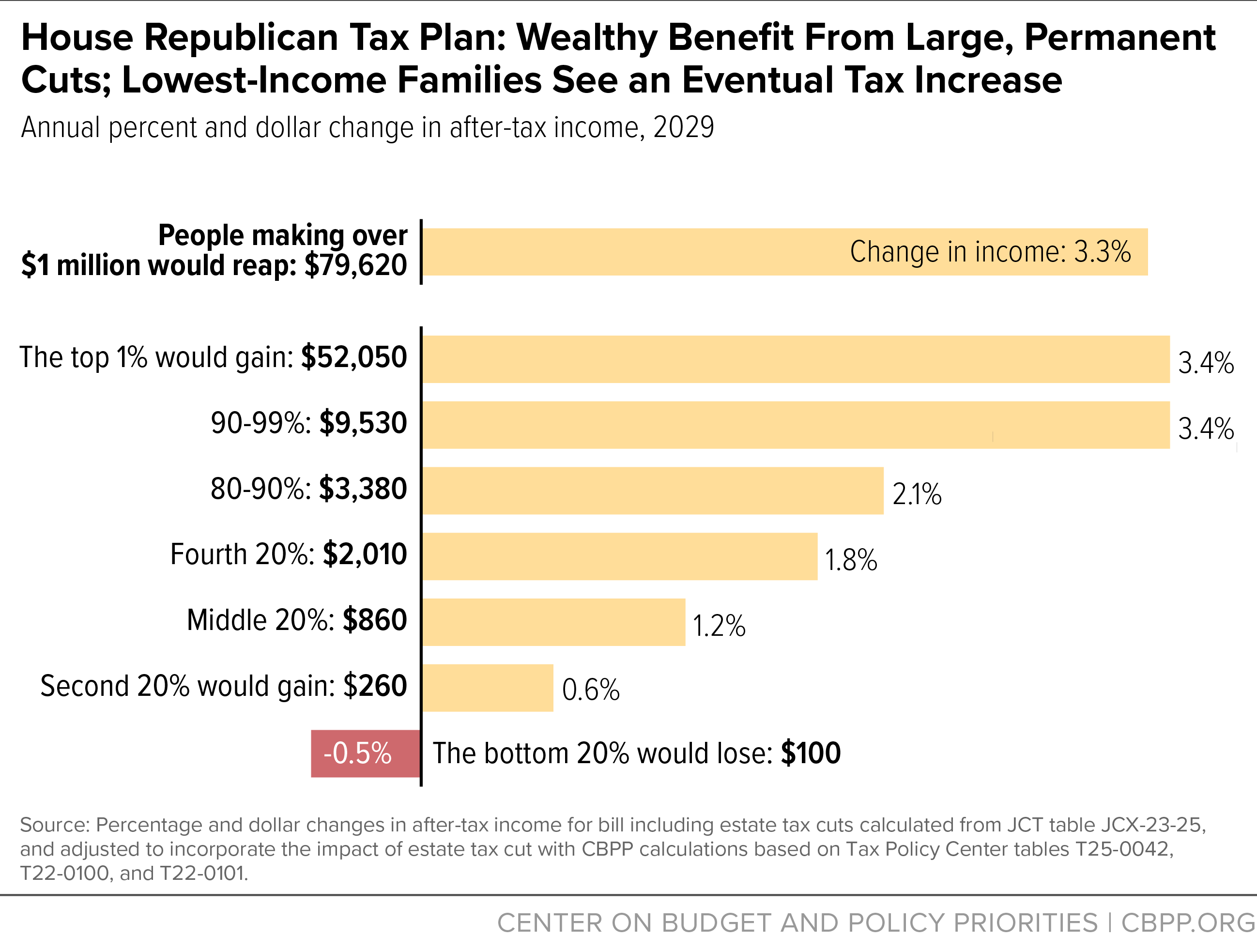
Moreover, House Republicans are taking a page from the 2017 tax law playbook and making the most regressive tax cuts permanent while making new tax cuts for families temporary. The combination of the cuts to PTCs and the temporary nature of the plan’s new tax cuts for low- and middle-income families means that the plan would raise taxes on the lowest-income families by 2029. (See third chart.)

The permanent tax cuts in the bill include cuts for estates worth over $30 million (per couple) and for “pass-through” businesses, more than half of whose benefits go to households with incomes above $1 million. The 2017 tax law was costly, skewed to the wealthy, and failed to deliver on promised economic benefits. So far the 2025 version is doubling down on that.