All Reports by Date
2009 | 2008 | 2007 | 2006 | 2005 | 2004 | 2003 | 2002 | 2001 | 2000 | 1999 | 1998 | 1997/1996
Now showing 100 most recent reports-
House Health Bill’s High-Income Surcharge is Sound and Well Targeted
Updated November 20, 2009
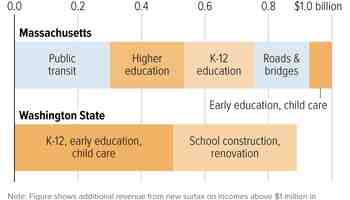
A 5.4 percent surcharge on couples with incomes over $1 million, a key financing feature of the House health reform bill, is sound and well targeted. It would affect just a fraction of 1 percent of taxpayers, a group whose incomes have soared and tax burdens have fallen in recent years, and would have only a modest impact on small businesses. … -
House Health Reform Bill Expands Coverage and Lowers Health Cost Growth, While Reducing Deficits
Updated November 20, 2009
The comprehensive health reform legislation that House Democratic leaders unveiled on October 29 would make significant progress in three critical areas: expanding health coverage and ensuring that such coverage is affordable, slowing the growth in health care costs, and instituting essential reforms in the health insurance market. Moreover, the … -
Statement: Robert Greenstein, Executive Director, on the New Senate Health Reform Bill
November 19, 2009
The new Senate health bill marks a major step toward comprehensive, fiscally responsible health reform. It would extend health insurance coverage to 31 million Americans who lack it, reduce the budget deficit, and put long-term downward pressure on health care costs. The bill would reduce deficits by an estimated $130 billion over the 2010-2019 period and by … -
Changes in Senate Health Bill Make Coverage More Affordable for Millions of Moderate-Income Families, Although not for Those on Low End of Subsidy Scale
November 19, 2009
Executive Summary The health reform bill that Senate leaders unveiled on November 18 makes health coverage more affordable for millions of households of modest means, as compared to the bill that the Senate Finance Committee approved last month. The amounts that many families and individuals would pay for coverage would be less than under the … -
Senate Health Bill Improves Employer Responsibility Provision
November 19, 2009
The “employer responsibility” provisions of the health reform bill that Senate leaders unveiled yesterday reflect notable progress in lessening the disincentives that the Senate Finance Committee health bill would have created for employers to hire workers from low- or moderate-income families. Significant disincentives to hire or retain … -
Senate Health Reform Bill Is Fiscally Responsible
November 19, 2009
The health reform bill that Senate leaders unveiled yesterday meets two rigorous fiscal tests: it reduces deficits over the next decade and beyond, and it puts long-term downward pressure on health care costs. The bill would reduce deficits by an estimated $130 billion over the 2010-2019 period and by about one-quarter of one percent of GDP in the decade … -
Additional Federal Fiscal Relief Needed to Help States Address Recession’s Impact
Updated November 19, 2009
States face a serious fiscal problem that could force them to institute additional deep budget cuts and tax increases in 2010, weakening the fragile economic recovery and harming vulnerable children, seniors, and people with disabilities, among others. The federal assistance that states received for their Medicaid programs … -
An Update on State Budget Cuts
Updated November 19, 2009
With tax revenue declining as a result of the recession and budget reserves largely drained, the vast majority of states are making spending cuts that hurt families and reduce necessary services. These cuts, in turn, will make the recession worse because families and businesses have less to spend in their local economies. … -
Policy Points: Recession Still Causing Trouble for States
Updated November 19, 2009
The weak economy continues to cause great fiscal distress among states. New budget gaps have opened up in many states for the current fiscal year (July 1 marked the start of 2010 for most states). The budget gaps for this year and next year combined are estimated to total more than $350 … -
Recession Continues to Batter State Budgets; State Responses Could Slow Recovery
Updated November 19, 2009
The worst recession since the 1930s has caused the steepest decline in state tax receipts on record. As a result, even after making very deep cuts, states continue to face large budget gaps. New shortfalls have opened up in the budgets of at least 35 states for the current fiscal year (FY 2010, which began July 1 in … -
Podcast: Understanding the House Health Reform Bill
November 17, 2009
The House health reform bill and the next steps for Congress in moving forward with reform are discussed by Senior Fellow, Judy Solomon.
Duration: 4:46
-
Amazon’s Arguments Against Collecting Sales Taxes Do Not Withstand Scrutiny
November 16, 2009
The Internet retailer Amazon.com has offered two primary justifications for opposing efforts of a growing number of states to require the company and other online retailers to charge sales tax. Amazon officials have argued that collecting sales taxes would be administratively burdensome. They have also claimed that the … -
Increasing Medicare Tax on High-Wage Earners Could Help Pay for Health Reform and Strengthen Medicare’s Finances
November 13, 2009
Increasing the Medicare payroll tax on high-wage earners would represent a sound and well-targeted way of paying for health reform. It would also improve the solvency of Medicare’s Hospital Insurance (HI) trust fund and thereby strengthen this critical program, which provides health coverage for 46 million seniors and persons with disabilities. … -
How Much Would a State Earned Income Tax Credit Cost in 2010?
November 12, 2009
The federal Earned Income Tax Credit (EITC) is the nation’s most effective anti-poverty program for working families, lifting 6.5 million people — including 3.3 million children — above the poverty line each year.[1] The 24 state-level EITCs modeled after the federal program complement it in combating … -
Video: Fox Business Network Interviews Chuck Marr on the Cost of Health Reform
November 12, 2009
Fox Business Network Interviews Chuck Marr on the Cost of Health Reform
-
Video: CNBC Interviews Jim Horney on the Economy and the Federal Budget Deficit
November 12, 2009
CNBC interviews Jim Horney on the Economy and the Federal Budget Deficit
Duration: 6:02
-
Video: CNN cites CBPP on Potential Job Losses Due to State Budget Cuts
November 12, 2009
-
Policy Basics: The Child Tax Credit
November 11, 2009
The Child Tax Credit, designed to help offset the cost of raising children, is worth up to $1,000 per child. Taxpayers eligible for the credit subtract it from the total amount of federal income taxes they would otherwise owe. For example, if a couple with two children would owe $5,000 in … -
Podcast: State Budget Cuts and Tax Increases Put Fragile Economic Recovery at Risk
November 11, 2009
The risk that, without more federal aid, states efforts to address their budget problems could cost the economy 900,000 jobs is discussed by Bob Greenstein, Mark Zandi, chief economist of economy.com, and Senior Advisor Iris Lav.
Duration: 21:42
-
Raising State Income Taxes on High-Income Taxpayers
Revised November 11, 2009
As states face increasingly difficult choices for closing the gap between available resources and the cost of needed programs and services, one potential revenue source can be found at the high end of the income tax spectrum. The personal income tax, a major source of revenue for 41 states, can yield a significant amount of money from small rate increases … -
State Earned Income Tax Credits: 2009 Legislative Update
November 10, 2009
An Earned Income Tax Credit (EITC) modeled on the federal program of the same name is now offered in 23 states and the District of Columbia as a way to reduce taxes and supplement wages for low- and moderate-income working families. A large body of evidence has shown that the state and federal EITCs serve a number of important … -
Excise Tax on Very High-Cost Health Plans Is a Sound Element of Health Reform
Revised November 10, 2009
An excise tax on very high-cost health plans, which the Senate Finance Committee included in its health reform bill, represents a sound way to help pay for health reform. The excise tax finances nearly a quarter of the costs of the Finance Committee bill over the first ten years ($201 billion out of $829 billion) and makes a major contribution to the … -
Berkley Estate Tax Bill Would Add Billions to Deficit While Benefiting Only Wealthiest 1 in 500 Estates
Revised November 9, 2009
A new estate tax bill introduced by Representative Shelley Berkley (D-NV) and others would cost $91 billion more over the first decade (2012-2021) than extending the tax under its current rules as the President has proposed, yet would benefit only the nation’s wealthiest 0.2 percent of estates since they are the only ones … -
House Health Bill Would Expand, Strengthen Coverage for Children and Families
November 6, 2009
The health reform bill that House Democratic leaders introduced on October 29 (H.R. 3962) would provide affordable, comprehensive health insurance coverage to 36 million Americans who otherwise would be uninsured, according to the Congressional Budget Office. [1] This is 7 million more otherwise-uninsured people than CBO estimates would gain coverage under … -
Podcast: The October Unemployment Report and What It Means for the Economy
November 6, 2009
The jobs report for October is discussed by Chief Economist, Chad Stone.
Duration: 2:35
-
Statement: Chad Stone, Chief Economist, on the October Employment Report
November 6, 2009
Today’s jobs report shows that although the economy turned up in the third quarter, the labor market did not. The unemployment rate crossed into double digits in October, and payrolls shrank for the 22nd straight month. The economy is in a very deep hole and faces a long climb back to full … -
Podcast: Maine and Washington Reject TABOR
November 5, 2009
Senior advisor Iris Lav discusses voters’ rejection of TABOR — a strict state spending restriction — in Washington and Maine, and the implications for other states.
Duration: 4:00
-
Video: NBC affiliate WVTM in Birmingham, Alabama Cites CBPP on State Income Tax Threshold
November 4, 2009
NBC affiliate WVTM in Birmingham, Alabama Cites CBPP on State Income Tax Threshold
Duration: 0:30
-
Statement: Iris Lav, Senior Advisor, on Defeat of “TABOR” Initiatives In Maine and Washington
November 4, 2009
Yesterday’s votes in Maine and Washington show clearly that TABOR’s crippling and arbitrary spending limits remain unpopular around the country. Anti-government groups have made serious efforts to enact TABORs in 20 states since 2004 — and they have failed every time. … -
The Impact of State Income Taxes on Low-Income Families in 2008
November 4, 2009
While some working-poor families get help lifting themselves out of poverty through exemptions from state income taxes, in many states they continue to face substantial state income tax liability. An analysis of state income tax systems for the 2008 tax year shows that: In 16 of the 42 states that levy income taxes, two-parent … -
Press Release: State Income Taxes Push Many Working-Poor Families Deeper Into Poverty
November 4, 2009
Sixteen states taxed working-poor families deeper into poverty last year, according to a new report from the Center on Budget and Policy Priorities. Income tax bills on poor families in those 16 states ranged from a few dollars to several hundred dollars, which is a significant amount for a family struggling to make ends meet, the report said. … -
Which States Tax the Sale of Food for Home Consumption in 2009?
Revised November 4, 2009
Forty-five states and the District of Columbia levy general sales taxes. Most of those states have eliminated, reduced, or offset the tax as applied to food for home consumption. The relief strategies include full or partial exemptions from the sales tax for food purchased for home consumption and credits or rebates to offset the food tax. Of … -
Podcast: Protecting Low-Income Consumers in Climate Change Legislation
November 3, 2009
The nuances of climate change legislation, and how the Senate and House bills will protect low-income families, are discussed by the Center’s Chief Economist, Chad Stone.
Duration: 3:38
-
Video: Michael Mazerov Discusses Closing Pennsylvania Corporate Tax Loopholes on WGAL TV
November 2, 2009
Duration: 3:32
-
House Health Reform Bill Would Help Ensure Affordable, Quality Coverage for Older Adults Aged 55-64
Updated November 2, 2009
The House health reform bill (H.R. 3962)[1] unveiled last week would reduce the ranks of the uninsured by 36 million by 2019 as compared to under current law, the Congressional Budget Office says, meaning that 96 percent of the non-elderly population would have health insurance.[2] One particularly vulnerable subset of the … -
House Health Reform Bill Would Strengthen Medicare
Updated November 2, 2009
The comprehensive health reform bill (H.R. 3962)[1] unveiled by House Democratic leaders on October 29 includes a number of significant changes to the Medicare program that would enhance benefits and improve the quality of care, as well as shore up the program’s finances.[2] Much of the discussion of Medicare in the health reform debate has focused, however, on various proposals … -
Audio Clip: Michael Leachman Discusses Stimulus and Job Creation on National Public Radio
October 31, 2009
Michael Leachman Discusses Stimulus and Job Creation on National Public Radio
Duration: 1:17
-
New Climate Bill in Senate Provides Funding for Low-Income Consumers but Amount Falls Short of Need
October 29, 2009
The Clean Energy Jobs and American Power Act (S.1733) introduced by Senators John Kerry (D-MA) and Barbara Boxer (D-CA) represents a notable achievement, as it continues to move Congress forward toward taking needed action to address global climate change. The Kerry-Boxer bill, like the Waxman-Markey bill that the House … -
The Administration’s October 30 Data Release on Jobs Created by the Economic Recovery Law: What it Will Tell Us and What it Won’t
October 28, 2009
The Obama Administration’s October 30 release of data on jobs created and saved by the American Recovery and Reinvestment Act (ARRA), which the Administration and Congress enacted early this year, will capture only a portion of the jobs created and saved due to ARRA’s limited reporting requirements. ARRA’s … -
Podcast: Understanding the Senate Finance Committee's Health Reform Bill
October 27, 2009
The Senate Finance Committee’s health reform plan is discussed by Senior Fellow, Judy Solomon.
Duration: 4:06
-
Video: Bob Greenstein Discusses Controlling Costs in Senate Health Reform Bill on PBS’ Nightly Business Report
October 27, 2009
Video Clip: Bob Greenstein Discusses Controlling Costs in Senate Health Reform Bill on PBS’ Nightly Business Report
Duration: 2:22
-
Washington Times Op-Ed: Robert Greenstein on the Deficit — Don't Make Things Worse
October 27, 2009
We recently updated our long-term projections of federal spending, revenues and deficits, and they confirm what budget experts both inside and outside the government have concluded: The nation is on an unsustainable fiscal course, facing unprecedented deficits that, if left unaddressed, will seriously weaken our economy.
-
Proposed Expansions of Homebuyer Tax Credit Would Be Highly Inefficient and Squander Federal Resources
October 27, 2009
Executive Summary Members of Congress are considering extending — and possibly substantially expanding — the $8,000 homebuyer tax credit enacted as part of the American Recovery and Reinvestment Act (ARRA) of 2009. The credit, which is available to first-time homebuyers with incomes up to $150,000 (up to $75,000 for … -
Provision Under Consideration for Merged Senate Health Bill Would Harm Needy Families:
October 26, 2009
A family of three earning $27,465 a year before taxes — that is, at 150 percent of the poverty line — would have to pay $1,318 a year for health coverage under a proposal that Senate negotiators are considering for a merged health reform bill that they would bring to the Senate floor. This is more than such a family would pay under either … -
Video: Judith Solomon Discusses Affordability, Individual and Employee Mandates in Health Reform on Fox Business News
October 26, 2009
Duration: 6:07
-
Audio Clip: Jim Horney Discusses Cost-of-Living Increase for Social Security on National Public Radio
October 22, 2009
Jim Horney Discusses Cost-of-Living Increase for Social Security on National Public Radio
Duration: 3:45
-
Testimony: Chad Stone, Chief Economist, on Climate Policy Impact on Low-Income Households
October 21, 2009
Chairman Bingaman, Ranking Member Murkowski, and other members of the Committee, thank you for the opportunity to testify on this important topic. The focus of my testimony will be on how low-income households will be affected by climate change policy and the allocation of greenhouse gas emissions allowances. The essential … -
Podcast: Climate Change Testimony
October 21, 2009
The Center’s Chief Economist, Chad Stone, testifies before the Senate Committee on Energy and Natural Resources on how low-income households will be affected by climate change policy.
Duration: 7:24
-
Finance Committee Makes Flawed Employer Requirement in Health Reform Bill Still More Problematic
Revised October 21, 2009
The health reform bill that the Senate Finance Committee approved this week, while a major step forward as a whole, contains a requirement that could inhibit the hiring of individuals from low-income families and would place cumbersome burdens on employers. The provision would require employers who do not offer health coverage to pay substantial … -
TABOR Has Hampered Economic Growth and Reduced Quality of Life in Colorado
October 19, 2009
On October 12, the Maine Heritage Policy Center released a report that touted Colorado’s prosperity and claimed that its prosperity was the result of TABOR – ostensibly “refuting” the Center on Budget and Policy Priorities work showing that TABOR has been detrimental to Colorado. (Question 4, a TABOR … -
Podcast: Low-Income Consumers and the Kerry-Boxer Climate Bill
October 19, 2009
Recent developments in climate change legislation are discussed by Chief Economist, Chad Stone.
Duration: 3:32
-
I-1033's Problematic Measure of Inflation
October 15, 2009
Each year, the cost of providing health care, education, roads and other services rises. As a result, state and local governments have to spend more to provide the same level of services. Washington’s Initiative 1033 would dictate the amount of these increases in spending based not on the actual cost of those services, … -
Case For a Social Security Cost-of-Living Adjustment in 2010 Is Weak
Updated October 15, 2009
Under current law, there will be no cost-of-living adjustment (COLA) in Social Security in 2010 — the first time that has happened since automatic cost-of-living adjustments began in 1975. Several bills before Congress would grant a special increase in Social Security payments for 2010. The inflation … -
Statement: Robert Greenstein, Executive Director, on the Senate Finance Committee’s Health Reform Plan
October 13, 2009
The Senate Finance Committee’s approval of an ambitious health reform plan marks a major step toward enactment of legislation to extend health care to tens of millions of people who lack it, strengthen insurance protections for millions more who are underinsured or face exorbitant charges, and begin to address the nation’s most serious … -
Finance Committee Health Reform Bill Makes Improvements, But Still Falls Short of What Is Needed for Many People to Afford Health Care
October 13, 2009
The health reform bill that the Senate Finance Committee approved today includes significant improvements, compared to the original chairman’s mark, in making health care coverage affordable to low- and moderate-income households. It could, however, still leave many such households facing fairly steep insurance premiums and cost-sharing … -
What Level of Coverage Will Health Reform Likely Provide? The Basics of Actuarial Value
October 13, 2009
Each of the major health reform proposals Congress is considering sets standards for the coverage that the insurance plans offered through new health insurance exchanges would provide. To measure whether an insurance plan meets these standards, the bills rely on the use of “actuarial value.” This analysis explains the concept of actuarial … -
Coalition Makes Flawed Arguments Against Proposal to Help Finance Health Reform by Maintaining Current Value of Itemized Deductions for Wealthy Households
Revised October 13, 2009
A coalition consisting of several trade associations for foundations and some nonprofit organizations along with a number of large charities has raised objections to a proposal that would help finance improved health coverage for low- and moderate-income people by maintaining the value of itemized deductions for wealthy Americans at its current … -
Senate Finance Committee Health Reform Bill Is Fiscally Responsible
Revised October 13, 2009
A fundamental principle of the bill that the Senate Finance Committee approved today is that it is budget neutral — that is, its costs are fully offset. It pays for the costs of expanding health coverage to the uninsured by redirecting spending and tax subsidies from less productive uses elsewhere in the health sector. Several of the offsets are … -
Video: Nick Johnson Discusses State Budgets Problems on Fox News
October 10, 2009
Iowa is just one of many states with serious budget problems. Steve Brown reports on expected job loss and cuts in 2010 and 2011; commentary by Nick Johnson.
Duration: 1:54
-
A Formula for Decline: Lessons from Colorado for States Considering TABOR
Updated October 9, 2009
Colorado’s so-called Taxpayer Bill of Rights, or TABOR, has contributed to a significant decline in that state’s public services. This decline has serious implications not only for the 4.6 million residents of Colorado, but also for the many millions of residents of other states in which TABOR-like measures are now being promoted. TABOR, … -
Video Highlights from the Conference “Progressives and the National Debt: Consequences and Solutions”
October 8, 2009
Click here to view the conference videos. -
Podcast: The Safety Net’s Response to the Recession
October 8, 2009
Director of the Center’s Welfare Reform and Income Support Division, Dr. LaDonna Pavetti, testifies on the safety net's response to the recession before the U.S. House of Representative's Ways and Means Subcommittee on Income Security and Family.
Duration: 10:55
-
Podcast: TABOR’s Harmful Effect on States
October 8, 2009
Robb Gray, the Center’s state project coordinator, explains TABOR, a strict state spending restriction, and its harmful effect on states.
Duration: 4:47
-
Testimony: LaDonna Pavetti, Director of Welfare Reform and Income Support, on the Safety Net’s Response to the Recession
October 8, 2009
Thank you for the opportunity to testify today. My testimony will focus on four points: With recent Census data showing increases in poverty and declines in incomes even before Americans began experiencing the worst effects of the recession — and with further deterioration expected in both areas — policymakers face a … -
Fact Sheet: TABOR Will Not Improve Maine’s Business Climate
October 7, 2009
Colorado, the only state with a TABOR, has an economy that is stronger than Maine’s. However, that has nothing to do with TABOR. The strength of Colorado’s economy is largely a legacy of a post World War II public investment boom by the military and federal government. The federal investment left Colorado with a strong infrastructure of high-tech firms … -
How Low-Income Consumers Fare in the House Climate Bill
Updated October 7, 2009
On June 26, 2009, the House of Representatives passed the American Clean Energy and Security Act of 2009 (H.R. 2454). The legislation, which would place a cap on emissions of greenhouse gases to combat global warming, includes important provisions to help ensure that the legislation does not increase hardship by making poor families poorer or … -
Podcast: Discussing the September Unemployment Report and What It Means For the Economy
October 2, 2009
The jobs report for September is discussed by Chief Economist, Chad Stone.
Duration: 3:20
-
Statement: Chad Stone, Chief Economist, on the September Employment Report
October 2, 2009
Today’s jobs report shows that employers will need stronger evidence of a reviving economy before they will start adding workers to their payrolls. Employers shed jobs for the 21st straight month in September (see graph) and the unemployment rate edged up to 9.8 percent. … -
CBPP’s Updated Long-Term Fiscal Deficit and Debt Projections
September 30, 2009
For a number of years, the Center on Budget and Policy Priorities (CBPP) has projected the long-term path of federal spending, revenues, deficits, and debt if current policies remain unchanged. These projections have shown that deficits and debt will grow in coming decades to unprecedented levels that will not only … -
Correcting Five Myths About the Stimulus Bill
Updated September 23, 2009
Some critics of the economic recovery law (or “stimulus” bill) that President Obama and Congress enacted early this year continue to mischaracterize how it was supposed to work and what it was supposed to do. For instance, some critics complain that, because unemployment has risen in recent months, the law is not working. Others claim … -
Harsh Labor Market Conditions Justify Extending Unemployment Benefits in Hard-Hit States
Updated September 23, 2009
On September 22, the House passed H.R. 3548, the Unemployment Compensation Extension Act of 2009, by an overwhelming bipartisan majority of 331 to 83. This legislation, which if enacted would provide additional weeks of unemployment insurance benefits in states with the highest unemployment rates, is an appropriate response to the continuing harsh conditions in the … -
Maine’s “TABOR II” Repeats Mistakes of Colorado, Endangers Public Services and Business Climate
September 22, 2009
Maine’s 2009 ballot initiative, “An Act to Promote Tax Relief” (known as TABOR II), imposes tight restrictions on expenditures for the broad range of state and local services that help support Maine’s economy and quality of life. The spending growth permitted under TABOR does not allow for … -
Press Release: “TABOR II” Would Harm Maine’s Economy, Businesses, and Families
September 22, 2009
Maine’s efforts to improve its business climate and recover from the recession would be hindered if voters adopt the proposed Taxpayer Bill of Rights (TABOR) that is on the ballot in Maine this November, according to a new report from the Center on Budget and Policy Priorities. … -
Podcast: The Deficit, Debt, and Interest
September 22, 2009
In this podcast, the federal government deficit, debt, and interest is explained by Director of Federal Fiscal Policy, Jim Horney.
Duration: 5:45
-
“SEVRA” Housing Voucher Reform Bill Would Update and Streamline Program
September 22, 2009
The Section 8 Voucher Reform Act (SEVRA), which the House Financial Services Committee approved in July and the full House will likely consider this fall, contains a series of important, carefully crafted measures to strengthen the housing voucher program. Most significantly, it would help and encourage state and local housing … -
Policy Basics: Introduction to the Food Stamp Program
Updated September 22, 2009
What Is the Food Stamp Program? The Food Stamp Program, the nation’s most important anti-hunger program, helps roughly 35 million low-income Americans to afford a nutritionally adequate diet. (Effective October 1, 2008, the 2007 farm bill renamed the Food Stamp Program the Supplemental Nutrition Assistance Program, or SNAP.) More than 75 … -
Tax Offsets in Baucus Health Plan Are Sound But Can Be Improved
September 18, 2009
The health reform proposal by Senate Finance Committee Chairman Max Baucus would place a 35-percent excise tax on the value of health plans in excess of $8,000 for singles and $21,000 for families, starting in 2013; these thresholds would be indexed for inflation in later years. The excise tax is a sound way to help pay for health reform, but it … -
Banning Taxation of Online Hotel Reservations Is Unwarranted and Could Cost States and Localities Billions of Dollars
Revised September 18, 2009
For the past two years, online travel companies like Expedia and Priceline have been seeking enactment of federal legislation that would ban state and local taxation of hotel room rentals when booked by such a company or by a conventional travel agent. Most recently, the legislation was circulated as a potential amendment to … -
Statement: Robert Greenstein, Executive Director, on Chairman Baucus’ Health Reform Plan
September 16, 2009
Senator Baucus’ plan is a major contribution to the health care debate, as it would extend coverage to tens of millions of uninsured Americans and improve insurance for millions of Americans who already have coverage — through reforms that deal with matters such as pre-existing conditions — and do so while fully offsetting the costs, … -
Podcast: The Budget Reconciliation Process
September 15, 2009
The budget reconciliation process in Congress is explained by Director of Federal Fiscal Policy, Jim Horney.
Duration: 4:43
-
Ending Medicare Advantage Overpayments Would Strengthen Medicare
September 14, 2009
One of the key cost-saving provisions Congress is considering as part of health reform legislation would eliminate the large overpayments Medicare makes to the private “Medicare Advantage” health plans that serve some Medicare beneficiaries. While private plans ostensibly were brought into Medicare to reduce costs, they … -
Audio Clip: Robert Greenstein Discusses Poverty in America on The Diane Rehm Show
September 14, 2009
-
“Upcoding” Problem Exacerbates Overpayments to Medicare Advantage Plans
Revised September 14, 2009
Private plans were brought into Medicare on the theory that they could deliver Medicare services at lower cost. However, the Medicare Payment Advisory Commission (MedPAC) — Congress’s expert advisory body on Medicare payment policy — has found that Medicare pays private plans 14 percent more than it costs to … -
Funding Shortfalls Causing Cuts in Housing Vouchers
September 14, 2009
As a result of a shortfall in funding for the Housing Choice Voucher Program for calendar year 2009, an estimated 400 state and local housing agencies across the country will be forced to reduce or eliminate rental assistance for a significant number of the 500,000 low-income families they serve. While landlords may absorb … -
Video: Robert Greenstein Discusses Consumer Relief Provisions in Cap-and-Trade Bill on E&ETV
September 14, 2009
-
Poverty Rose, Median Income Declined, and Job-Based Health Insurance Continued to Weaken in 2008
September 10, 2009
Poverty increased, median household income fell, and the percentage of Americans with employer-based health coverage continued to decline in 2008, according to Census data for 2008 issued today. The figures reflect the initial effects of the recession. Median household income declined 3.6 percent in 2008 after adjusting for … -
Private Health Coverage Declined, Became Less Secure in 2008
September 10, 2009
The Census Bureau reported today that 46.3 million U.S. residents lacked health insurance in 2008, an increase of 632,000 over the previous year. [1] Nearly 6.6 million more people were uninsured in 2008 than in 2001, when the previous recession hit bottom. The proportion of the population without health insurance climbed to … -
Statement: Greenstein on Census’ 2008 Health Insurance and Poverty Data
September 10, 2009
Today’s grim Census Bureau report shows the nation lost substantial ground in 2008 on poverty, median income, and the number of people who are uninsured. Several aspects of the Census report stand out. The number of people living in poverty jumped by 2.6 million to 39.8 million — the highest since 1960. The poverty rate … -
Podcast: Examining the New 2008 Census Data on Poverty, Income, and Health Insurance Coverage
September 10, 2009
Robert Greenstein discusses today’s grim Census Bureau report that shows the nation lost substantial ground in 2008 on poverty, median income, and the number of people who are uninsured. Several aspects of the Census report are highlighted.
Duration: 11:59
-
Top 1 Percent of Americans Reaped Two-Thirds of Income Gains in Last Economic Expansion
September 9, 2009
Two-thirds of the nation’s total income gains from 2002 to 2007 flowed to the top 1 percent of U.S. households, and that top 1 percent held a larger share of income in 2007 than at any time since 1928, according to an analysis of newly released IRS data by economists Thomas Piketty and Emmanuel Saez.[1] During those years, the … -
Stimulus Keeping 6 Million Americans Out of Poverty in 2009, Estimates Show
September 9, 2009
Although meant chiefly to help the broad economy, the stimulus plan Congress enacted earlier this year (the American Recovery and Re-Investment Act of 2009, or ARRA) had the important secondary effect of significantly ameliorating the recession’s impact on poverty. This analysis, which comes one day before the Census Bureau will release updated poverty figures … -
Upcoming Medicare Change is an Opportunity to Enroll Eligible Low-Income Seniors in Food Stamps
September 9, 2009
The Medicare Part D Low-Income Drug Subsidy (LIS), Medicare Savings Programs (MSPs), and Food Stamps[1] can play important roles in improving the health and well-being of low-income seniors and people with disabilities. Together, these programs can provide several thousand dollars a year in benefits and can significantly … -
Podcast: Discussing the August Unemployment Report and What It Means For the Economy
September 8, 2009
The jobs report for August is discussed by chief economist Chad Stone.
Duration: 2:54
-
Statement: Chad Stone, Chief Economist, on the August Employment Report
September 4, 2009
Today’s employment report shows little evidence that the emerging economic recovery is reviving the job market. Although job losses continued to moderate in August, the percentage of Americans with a job reached its lowest level since 1984 (See figure). Economic activity seems to be increasing, but employers remain reluctant to hire, … -
New OMB and CBO Reports Show Continuing Current Policies Would Produce Large Deficits
August 27, 2009
On August 25, both the Office of Management and Budget (OMB) and the Congressional Budget Office (CBO) released updated budget projections. Some observers, comparing OMB’s estimate of the deficit over the next ten years under the President’s proposed policies ($9.1 trillion) to CBO’s “baseline” estimate of the deficit under … -
Podcast: Understanding the New Budget Deficit Updates
August 27, 2009
The new budget deficit updates from CBO and OMB are explained by the Center’s Director of Federal Fiscal Policy, Jim Horney.
Duration: 3:28
-
Policy Basics: State Earned Income Tax Credits
Updated August 27, 2009
Twenty-four states (counting the District of Columbia) have created earned income tax credits (EITCs) to reduce the burden that state taxes can place on low- and moderate-income working families. These credits complement the federal EITC, which helps offset these families’ federal taxes. … -
Podcast: High-Income Surcharge Can Help Pay for Health Reform
August 25, 2009
Chuck Marr, director of federal tax policy, discusses the need for health reform and one option to help pay for it: a surcharge on high-income households under consideration by the House of Representatives.
Duration: 4:43
-
Statement: James R. Horney, Director of Federal Fiscal Policy, on the Deficit Reports by the Office of Management and Budget and the Congressional Budget Office
August 25, 2009
Today’s budget reports provide no evidence that federal budget policies over the last year have failed or that a drastic new direction in short-term fiscal policy is needed. While they also provide little new information about the nation’s longer-run budget path, the reports … -
Video: James Horney Discusses New CBO and OMB Deficit Projections on Bloomberg TV
August 25, 2009