

Fuera de Serie
PERSPECTIVAS SOBRE LAS POLÍTICAS
MÁS ALLÁ DE LOS NÚMEROS
MÁS ALLÁ DE LOS NÚMEROS
Este contenido no está disponible en Español.
The Economist Gets It Wrong on Disability Insurance
A recent article in the Economist took an uninformed — and unjustified — swipe at Disability Insurance (DI), the part of Social Security that pays modest but vital benefits to people who can no longer do substantial work because of a severe medical impairment.
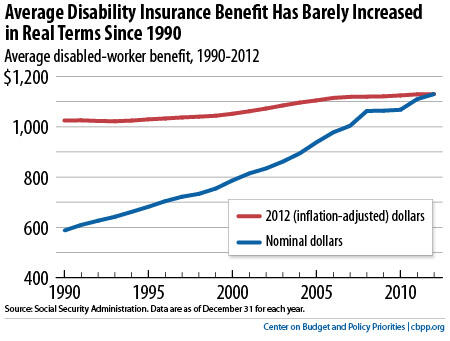
The Economist notes that the average disabled-worker benefit is about $1,130 a month, and its accompanying graph suggests that this figure has almost doubled since 1990. That’s seriously misleading. When adjusted for inflation, the average benefit has barely grown. (See graph.)
Imagen
The Economist also remarks that the number of DI recipients has roughly doubled since the mid-1990s. But that’s largely due to the aging of the population (the baby boomers have aged squarely into their high-disability years), the growth of women’s labor-force participation (which means that more of them qualify for DI if they become disabled), and the rise in Social Security’s full retirement age from 65 to 66 (which delays beneficiaries’ switch from disability to retirement benefits). As we’ve explained, adjusting for these factors reveals that the disability rolls have grown only modestly.
For CBPP’s analysis of other points that the Economist article made about the safety net, see here.