MÁS ALLÁ DE LOS NÚMEROS
Congress Should End Pass-Through Tax Break for Millionaire Business Owners, Extend Tax Credit That Helps Small Business Owners Buy Health Coverage
Republicans want to extend a 2017 tax cut in their upcoming reconciliation legislation that primarily benefits 200,000 millionaire owners of very profitable, privately-held companies. This deeply unequal tax cut gives a 20 percent deduction to owners of “pass-through” businesses, companies organized so that business income is taxed as the owners’ personal income. The pass-through tax cut has not “trickled down” to boost worker wages or business investments, as the Republican authors of the 2017 law had claimed, and it costs the U.S. government significant revenue; the deduction cost more than $400 billion in its first eight years, according to the Joint Committee on Taxation (JCT), and extending it would add another $700 billion in cost through 2034.
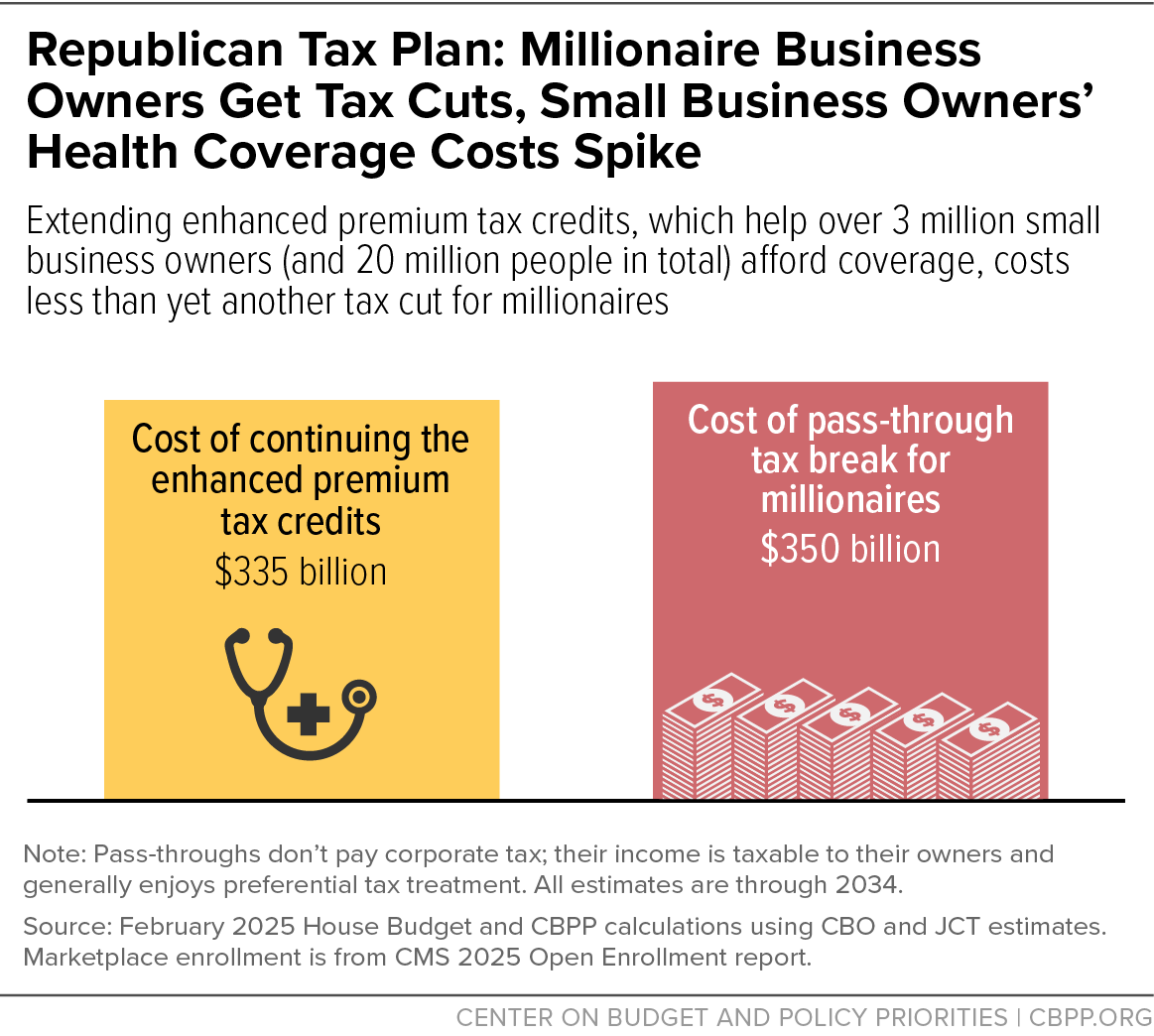
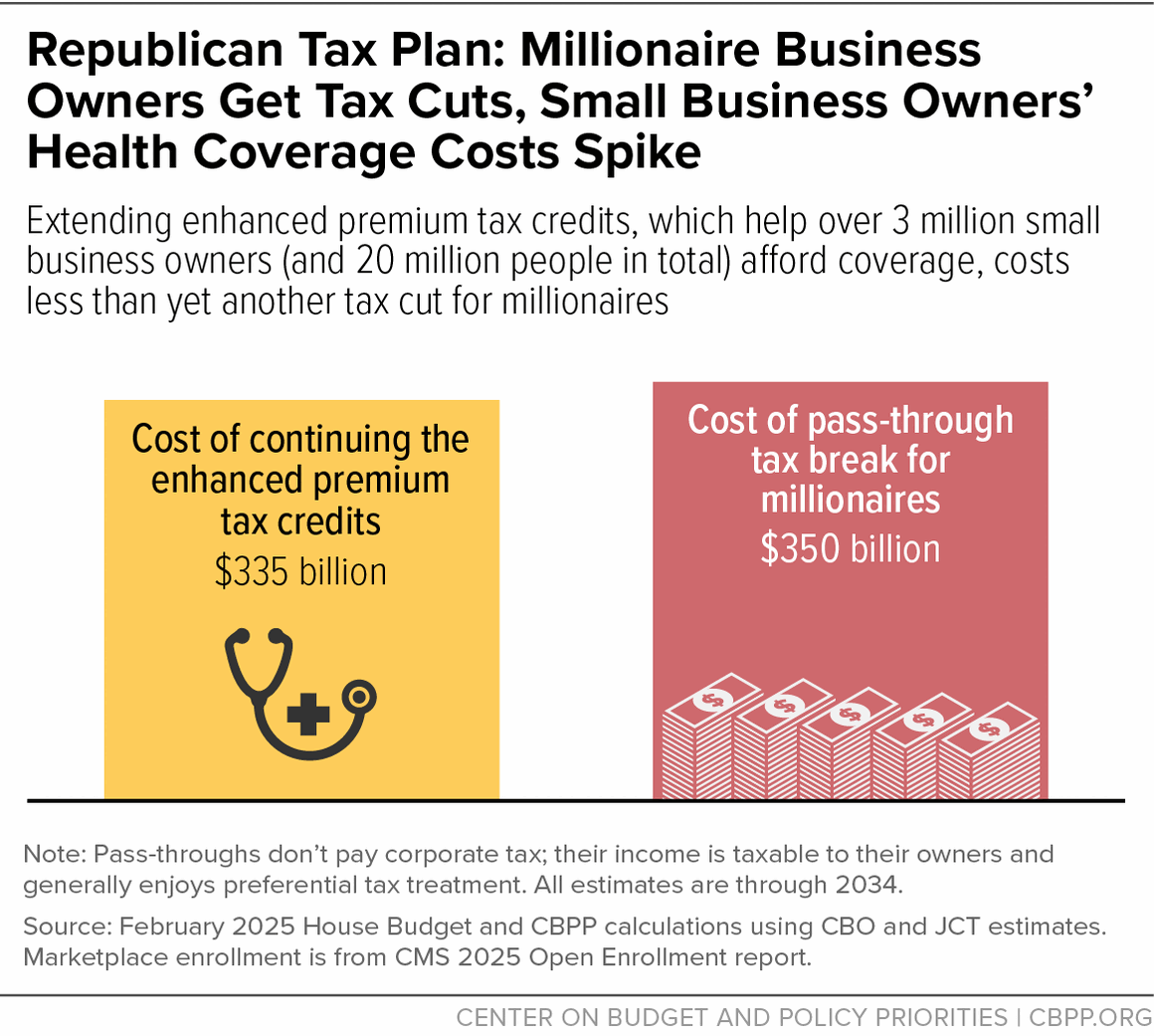
As a result of the deduction, the millionaire owner of a business faces a lower top tax rate (29.6 percent) than the business’s employees (37 percent). If Congress wants to support actual small business owners, members should focus their efforts on extending the enhanced premium tax credit, which helps 3 million business owners (and 20 million people in total) buy health insurance in the Affordable Care Act (ACA) marketplace. Enhanced premium tax credits are scheduled to expire at the end of this year — and unless Congress takes urgent action, health insurance costs will skyrocket for millions of low- and moderate-income workers, entrepreneurs, and business owners. Ending the pass-through deduction for millionaires would save around $350 billion in revenue from 2025-2034, which would more than pay for extending the enhanced premium tax credits (see chart).
How did millionaire business owners come to get a special tax cut in the 2017 tax law? More than half of business income in the United States flows to businesses organized as pass-through entities (such as partnerships, S corporations, and sole proprietorships), which are not subject to the corporate tax. Instead, their income “passes through” the business and is reported on owners’ individual tax returns. Before the 2017 tax law, this pass-through business income was generally taxed at the same rates as wage and salary income. (Under the 2017 tax law, the top rate for wage and salary income was reduced from 39.6 percent to 37 percent.)
The 2017 tax law made a steep, permanent cut in the corporate tax rate from 35 percent to 21 percent, at a cost of $1.3 trillion to national revenue over a decade. Lobbyists for pass-through business owners argued that their clients needed a special tax break to pay a similarly low tax rate as corporations. In reality, pass-through business owners had a large tax advantage relative to corporations before the 2017 law, and though the reduction in the corporate rate may have shrunk this tax advantage, it did not eliminate it. In short, the corporate rate cut did not place pass-through businesses at a tax disadvantage that required a special tax break to address. Regardless, as a result of these lobbying efforts, Congress passed the 20 percent deduction that reduced the top tax rate (37 percent) on qualifying pass-through income to 29.6 percent.
The pass-through tax break gives a significant advantage to owners of many very large, profitable businesses. For example, ProPublica reported in 2021 that Michael Bloomberg, who owns the Bloomberg media company, claimed a $68 million tax cut that year from the deduction. An owner of the Bechtel engineering conglomerate, which lobbied heavily for engineering companies to qualify for the deduction, received a $24 million tax cut from the deduction in 2018. IRS data show that the 1,000 tax filers with incomes over $85 million who claimed the pass-through deduction in 2022 (the latest year data are available) received an average tax cut of more than $3.5 million from the deduction that year.
Millionaire business owners don’t need another tax break. But millions of middle-income small business owners, self-employed workers, and people who don’t get health coverage through their work need help affording health insurance. That is what enhanced premium tax credits do: additional help paying for premiums has spurred record enrollment in ACA marketplace insurance and contributed to record high rates of health insurance coverage. But these enhanced tax credits are set to expire at the end of this year.
Absent an extension, more than 3 million small business owners will face a steep hike in health coverage costs. Consider a small business owner with $50,000 in income who is eligible for the pass-through deduction and who currently purchases health insurance through ACA marketplaces. They would receive a tax benefit of about $800 from extending the pass-through deduction (assuming a single filer with no dependents), but if the enhanced premium tax credits expire, they would face a $925 annual increase in the cost of health insurance, wiping out the deduction’s benefit. Policymakers who want to help small businesses manage rising costs should focus on making permanent the premium tax credit enhancements, and let a costly, unequal deduction that primarily benefits the wealthiest business owners expire.