Budgets
Results per page: 50 | 100
Results by year: 2009 | 2008 | 2007 | 2006
-
An Update on State Budget Cuts
Updated November 19, 2009
With tax revenue declining as a result of the recession and budget reserves largely drained, the vast majority of states are making spending cuts that hurt families and reduce necessary services. These cuts, in turn, will make the recession worse because families and businesses have less to spend in their local economies. … -
Policy Points: Recession Still Causing Trouble for States
Updated November 19, 2009
The weak economy continues to cause great fiscal distress among states. New budget gaps have opened up in many states for the current fiscal year (July 1 marked the start of 2010 for most states). The budget gaps for this year and next year combined are estimated to total more than $350 … -
Recession Continues to Batter State Budgets; State Responses Could Slow Recovery
Updated November 19, 2009
The worst recession since the 1930s has caused the steepest decline in state tax receipts on record. As a result, even after making very deep cuts, states continue to face large budget gaps. New shortfalls have opened up in the budgets of at least 35 states for the current fiscal year (FY 2010, which began July 1 in … -
Amazon’s Arguments Against Collecting Sales Taxes Do Not Withstand Scrutiny
November 16, 2009
The Internet retailer Amazon.com has offered two primary justifications for opposing efforts of a growing number of states to require the company and other online retailers to charge sales tax. Amazon officials have argued that collecting sales taxes would be administratively burdensome. They have also claimed that the … -
Video: CNN cites CBPP on Potential Job Losses Due to State Budget Cuts
November 12, 2009
-
Raising State Income Taxes on High-Income Taxpayers
Revised November 11, 2009
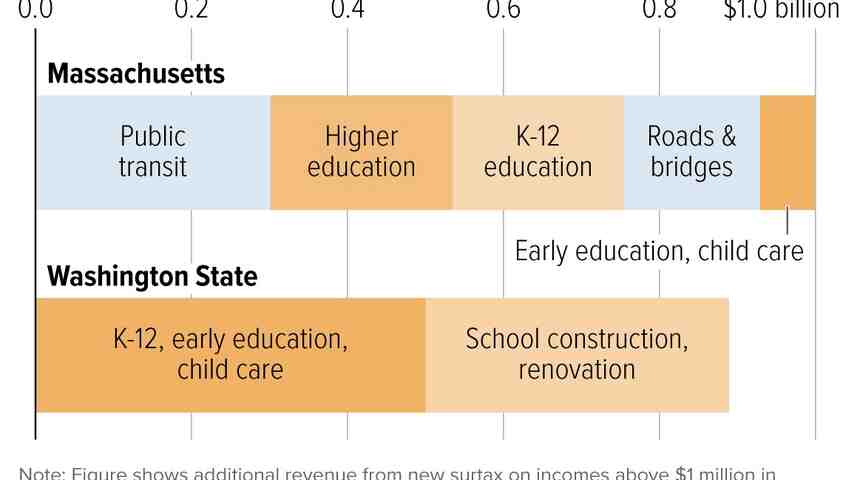
As states face increasingly difficult choices for closing the gap between available resources and the cost of needed programs and services, one potential revenue source can be found at the high end of the income tax spectrum. The personal income tax, a major source of revenue for 41 states, can yield a significant amount of money from small rate increases … -
Video: Michael Mazerov Discusses Closing Pennsylvania Corporate Tax Loopholes on WGAL TV
November 2, 2009
Duration: 3:32
-
Video: Nick Johnson Discusses State Budgets Problems on Fox News
October 10, 2009
Iowa is just one of many states with serious budget problems. Steve Brown reports on expected job loss and cuts in 2010 and 2011; commentary by Nick Johnson.
Duration: 1:54
-
New York’s “Amazon Law”: An Important Tool for Collecting Taxes Owed on Internet Purchases
July 23, 2009
The inability to collect all sales taxes that are legally due on purchases made over the Internet costs states billions of dollars a year in lost revenue. In 2008, New York State enacted an innovative law that helps to address this problem. Rhode Island adopted a similar measure this year. All states with sales taxes should … -
Video: CNN cites CBPP on State Budget Cuts
July 5, 2009
-
Video: Jon Shure Talks About the State Budget Crisis on CSPAN's Washington Journal
July 2, 2009
-
Audio Clip: Bloomberg Radio Interviews Iris Lav on the State Budget Crisis
July 1, 2009
-
Video: CNN Interviews Jon Shure on the State Budget Crisis
July 1, 2009
-
Federal Fiscal Relief Is Working As Intended
Updated June 29, 2009
As dire as the states’ fiscal condition is — with dramatic revenue downturns leading in some cases to unprecedented service cuts — evidence shows this bad situation would be substantially worse if not for federal recovery assistance. The $787 billion American Recovery and Reinvestment Act package enacted in February included about $140 billion for states … -
Press Release: New Fiscal Year Brings Painful Spending Cuts, Continued Budget Gaps In Almost Every State
June 29, 2009
The 2010 fiscal year begins for most states July 1. It brings an austere continuation of recession-driven cuts in essential services and poor prospects for improvement through 2011, according to a series of updated reports on state budget conditions issued today by the Center on Budget … -
Audio Clip: Nick Johnson, Director of the State Fiscal Project, Discusses State Budgets on NPR’s The Diane Rehm Show
June 25, 2009
-
Video: Fox Business Interviews Jon Shure on State Budget Problems
June 22, 2009
-
Video: CNN cites CBPP on States Balancing Budgets with Tax Measures
May 22, 2009
“The Center on Budget and Policy Priorities argues, ‘Listen, cutting services is even more painful for lower-income families than raising taxes.’ They also say those tax increases can target the wealthy. And that’s exactly what we’re seeing…” -
Video: Fox News Channel Interviews Elizabeth McNichol on State Budget Troubles
May 22, 2009
“…A study from the Center on Budget and Policy Priorities reveals 47 of the 50 states are facing substantial budget gaps this year…. All told, the states are nearly $60 billion in the hole for 2009. Next year, the gap will grow to $133 billion. Experts say it won't … -
Video: NBC Nightly News Cites CBPP on State Budget Troubles
May 22, 2009
“The Center on Budget estimates that in 2010 47 states will face deficits totaling $145 billion.” -
Podcast: Where Do Our State Tax Dollars Go?
May 6, 2009
Given the budget problems states face due to the recession, policymakers will confront important choices about how to pay for important government services and programs. To inform this crucial decision making, it is useful to examine where state tax dollars go as well as changing trends over time.
Duration: 5:35
-
Policy Basics: Where Do Our State Tax Dollars Go?
April 13, 2009
Given the budget problems states face due to the recession, policymakers will confront important choices about how to pay for important government services and programs. To inform this crucial decision making, it is useful to examine where state tax dollars go … -
Promoting State Budget Accountability Through Tax Expenditure Reporting
April 9, 2009
Executive Summary Each year states spend tens, maybe hundreds, of billions of dollars on “tax expenditures.” Tax expenditures are tax credits, deductions, and exemptions that reduce state revenue. They can include everything from poverty-reducing tax credits, to middle-class benefits, to corporate subsidies. Tax expenditures cost state treasuries money in … -
Funding For States in Economic Recovery Package Will Close Less Than Half of State Deficits
February 20, 2009
The state fiscal situation is dire. Revenues are declining, and the need for services such as Medicaid is rising as people lose income and jobs. Before passage of the economic stimulus package, state deficits were projected to equal $350 billion over the next 30 months. Because nearly all states are required to balance their budgets, states have begun to cut … -
Video: NBC Nightly News interviews Nick Johnson on State Budget Problems and the California Budget Crisis
February 17, 2009
-
Recovery Act Provides Much-Needed, Targeted Medicaid Assistance To States
February 13, 2009
The American Recovery and Reinvestment Act includes an $87 billion temporary increase in the share of Medicaid that the federal government would pay over nine calendar quarters (October 1, 2008, through December 31, 2010). It would provide three elements of Medicaid fiscal relief assistance to states, as outlined below.… -
Senate's Cuts to "Fiscal Stabilization Fund" Weaken Stimulus Value of the Economic Recovery Bill
February 10, 2009
Overview and Summary The House economic recovery bill includes a $79-billion “State Fiscal Stabilization Fund” to help state and local governments fund education and other key services. However, the Senate — as a result of the Collins-Nelson amendment — has reduced the amount of funding to $39 billion and … -
Video: Iris Lav, Deputy Director, on State Tax Revenues, NBC Nightly News
November 9, 2008
-
Video: Nicholas Johnson, Director of the Center's State Fiscal Project, speaks about state budget problems, and answers questions from call-ins on C-SPAN's Washington Journal Program
October 18, 2008
-
States Face Two Immediate Financial Issues: Short-Term Borrowing and Big Budget Deficits
Updated October 10, 2008
States face two distinct financial problems right now. First, California and Massachusetts officials last week raised concerns about their states’ ability to access credit markets for short-term borrowing. Second, most states have been facing budget deficits that have forced, or … -
Video: Nicholas Johnson, Director of the Center's State Fiscal Project, speaks about state budget on CNN's Lou Dobbs
October 3, 2008
-
Video: CNN Reports on the Center's Income Inequality Analysis
April 9, 2008
-
Policy Points: Four Helpful Hints for States Dealing With Deficits
March 12, 2008
States, facing their worst fiscal problems in five years, should consider the following four policy options when dealing with deficits: (1) protect their revenues from the effects of federal tax changes, (2) tap their "rainy day funds," (3) don't rule out revenue increases, and (4) avoid "stimulus" tax cuts. At least 25 states, including several of the … -
Accounting for the Cost of Retiree Health and Other Benefits (GASB 45)
March 11, 2008
New rules issued by the Governmental Accounting Standards Board (GASB) that change the way states account for the future cost of health and other non-pension benefits for retirees will force states to make some hard choices. For the first time, state and local governments must treat the costs of health and other non-pension … -
Is It Raining Yet? Yes, and It’s Time for Many States To Use Their Rainy Day Funds
February 21, 2008
Executive Summary After they emerged from the fiscal crisis earlier in the decade, many states began preparing for the next economic downturn by setting aside “rainy day funds,” or reserve accounts designed for use when revenues decline or expenditures increase unexpectedly because of downturns, natural disasters, or other events. A rainy day fund serves … -
29 States Faced Total Budget Shortfall of at Least $48 Billion in 2009
January 15, 2008
For the most up-to-date information on state budget shortfalls, please view our newer analysis: "State Budget Problems Worsen: 13 States Face New Shortfalls" At least 29 states plus the District of Columbia, including several of the nation’s largest states, faced … -
13 States Face Total Budget Shortfall of at Least $23 Billion in 2009; 11 Others Expect Budget Problems
December 18, 2007
For updated data on states facing budget gaps, please see: New Fiscal Year Brings No Relief From Unprecedented State Budget Problems Summary Thirteen states, including several of the nation’s largest, face a combined budget shortfall of at least $23 billion for fiscal 2009. Another 11 states expect budget problems next year or the year … -
Statement by Nicholas Johnson, Director of the State Fiscal Project, Center on Budget and Policy Priorities, on the National Conference of State Legislatures’ Survey of Fiscal Conditions
August 9, 2007
Today’s NCSL budget update should serve as a yellow flag to any states considering new tax cuts, which a number of states have enacted in recent months. State tax revenues aren’t keeping pace with the cost of providing services. Instead, many states are relying on past years’ surplus funds to balance their budgets, a sign of … -
State Expenditure Growth Slowing
July 31, 2007
State expenditure growth is projected to slow significantly for fiscal year 2008, which is the 12-month period that began July 1, 2007 in most states. During May, June, and early July, the Center on Budget and Policy Priorities conducted a phone and email survey of state legislative and executive budget officials to learn states’ actual General … -
How Strong Are State Budgets?
April 20, 2007
A new report from the National Conference of State Legislatures finds some improvement in state budget conditions for the current fiscal year (FY 2007), which in most states ends June 30, 2007, and for the upcoming fiscal year.[1] But the improvements that have occurred since budgets’ enactment last spring have been, at best, modest in … -
Rainy Day Funds: Opportunities for Reform
April 16, 2007
States are in considerably better fiscal shape than they have been since 2001. State revenues have grown rapidly over the last few years, in marked contrast to the sluggish growth or declines in revenues between 2001 and 2004. This is good news. However, a return to budget deficits is inevitable at some point.… -
The Administration Again Proposes to Shift Federal Medicaid Costs to States
February 14, 2007
In its new budget, the Administration proposes cuts in federal Medicaid funding that total $24.7 billion over the next five years and $60.9 billion over ten years through a combination of legislative changes and regulatory action. [1] These reductions are more than five times as large over the next five years as the federal Medicaid cuts enacted by the Congress last year … -
Improving State Fiscal Policies in The 2007 Legislative Sessions
Revised January 26, 2007
State policymakers can make substantial improvements to their state fiscal systems in 2007 legislative sessions. This paper is a guide to relevant Center on Budget and Policy Priorities analyses that describe some opportunities for improvement as well as challenges that states may face this year. Each of these analyses … -
The Current Services Baseline: A Tool for Making Sensible Budget Choices
December 14, 2006
The single most important document produced by a state government each year, and one that receives close public scrutiny, is the state budget. It is both a financial plan for the state and a description of the policies the state intends to pursue in the future. Often the first question asked by budget decision-makers and budget watchers … -
State Budgets: On the Edge?
Revised November 8, 2006
States are in considerably better fiscal shape than they have been since 2001. State revenues have grown rapidly over the last year, in marked contrast to the sluggish growth or declines in revenues between 2001 and 2004. For many states, however, a return to budget deficits may not be long in coming. Fiscal conditions appear unstable in at least 24 … -
Tax Cuts on Layaway
October 10, 2006
State governments face major fiscal challenges in the next few years. They will need adequate revenue bases to tackle those challenges. But a number of states in 2006 cut taxes deeply without identifying how the tax cuts will be financed. They could do this, despite balanced budget requirements, because they … -
States Still Playing "Catch-Up" in New Budgets
August 2, 2006
A new survey by the Center on Budget and Policy Priorities of recently adopted state budgets provides the first 50-state data on spending for fiscal year (FY) 2007, which began July 1 in most states. The survey shows: For the second year in a row, state spending will grow at above-average rates. This recent growth, … -
The Administration’s Medicaid Proposals Would Shift Federal Costs To States
February 14, 2006
In its new budget, the Administration proposes net federal Medicaid funding cuts equal to $14 billion over the next five years and $35.5 billion over ten years through a combination of legislative changes and regulatory action. [1] These reductions follow on the heels of significant federal Medicaid cuts ($4.9 billion over five … -
State Revenues and Services Remain Below Pre-Recession Levels
December 6, 2005
Despite recent reports of rapid state revenue growth and surpluses in some states, most states continue to feel the after-effects of the fiscal crisis. The spurt of current growth is occurring following several years of falling or stagnant revenues. During those years, states cut back on services, drew down rainy day funds, enacted temporary … -
Faulty Foundations: State Structural Budget Problems and How to Fix Them
May 17, 2005
Executive Summary Many critical government services in this country rely on the ability of states and localities to raise sufficient revenues to provide them. Highways and public transportation, schools and universities, health care for children and elderly individuals, environmental protection, recreational facilities, and … -
Rainy Day Funds: Opportunities for Reform
Revised March 9, 2005
As states slowly emerge from the fiscal crisis, policymakers can evaluate how well their state reserve funds worked to cushion deficits during the downturn. This is an opportune time to strengthen state reserve policies and to begin to rebuild depleted state reserve funds. Since 2001, states have used about $30 billion in reserve funds … -
Deep Cuts in Federal Grants in FY 2006 Budget Will Squeeze States and Localities
Revised February 9, 2005
Some of the spending austerity in the President’s budget is accomplished by passing down costs to other levels of government. This leaves states and localities the option of either curtailing services or increasing their own taxes to compensate for declining federal funds. … -
Tax Cuts and Consequences: The States That Cut Taxes the Most During the 1990s Have Suffered Lately
Revised January 12, 2005
Between the mid-1990s and 2001, states enacted a wave of tax cuts. Some 44 states enacted tax cuts that ultimately reduced state revenue by an average of 7.6 percent. Sixteen states reduced revenue by more than seven percent, and six states reduced revenue by more than 10 percent. Those big tax cuts do not seem … -
State Policies to Assist Working-Poor Families
December 10, 2004
Introduction For a large and growing number of Americans, having a job is not enough to lift them out of poverty. This report presents a menu of practical policy options that states can adopt to help working-poor families meet their basic needs and improve their lives. The number of people in working-poor families has grown significantly in the last two decades. In 2003, 13.1 … -
State Fiscal Crisis Lingers: Cuts Still Loom
December 8, 2004
For information on the state budget shortfalls states are currently facing, see: http://www.cbpp.org/cms/index.cfm?fa=view&id=711 As state legislatures write their budgets for the 2005-06 fiscal year, many are considering cutting services or raising new revenues in order to bring their budgets into balance. At least 26 states now project … -
State-Level Ballot Measures in November 2004 With Significant Fiscal Implications
Revised October 13, 2004
A number of states will have measures on the November 2, 2004 ballot that have potentially significant implications for state budgets. What follows is a listing of some such measures. There appears to be no particular trend across states in the types of ballot measures being proposed; ballot measures this year reflect local … -
Will Taxing Additional Services Hurt Iowa’s Economy?
January 29, 2004
The Governor’s proposal to expand the base of Iowa’s sales tax to include more business and professional services has drawn fire from some who claim that the expansion would harm businesses and economic growth in the state. Three states, however, have for many years fully taxed services, and evidence from those …