Tax — Federal Archive
Results per page: 50 | 100
Results by year: 2013 | 2012 | 2011 | 2010 | 2009 | 2008 | 2007 | 2006 | 2005 | 2004 | 2003 | 2002 | 2001 | 2000 | 1999 - 1991
-
Contrary to Claims, Allowing Estate Tax to Expire Would Make Family Farms and Small Businesses Worse off Overall
December 17, 2009
While estate-tax opponents have held up family-owned farms and small businesses as “poster children” for the benefits of repealing the tax, such estates would be worse off, on balance, if Congress allows estate tax repeal and related tax changes to take effect on January 1, as now seems likely. The estate tax is irrelevant to the … -
Statement: Chuck Marr, Director of Federal Tax Policy, on the Senate Debate on the Federal Estate Tax
December 16, 2009
Today’s Senate debate over whether to extend the federal estate tax or let it expire for next year is a study in irony. Under current law, the estate tax, which has been reduced very significantly since 2001 and now only affects the biggest 1 of every 500 estates in America, will expire next … -
Senate Should Reject Proposed “Cap on Excess Medical Inflation,” Retain Its Excise Tax on High-Cost Insurance Plans
December 10, 2009
The Senate may consider an amendment to its pending health care bill that would replace its excise tax on high-cost health insurance plans – a key proposal to slow the growth in health care costs – with a “cap on excess medical inflation.” Such a policy change would be ill-advised — the proposed medical inflation cap … -
With Fully Offset Tax Extender Bill, House Advances Important Fiscal Principle; Senate Should Follow
December 9, 2009
The House tax extender bill represents a step forward in the important effort to reinstate a pay-as-you-go norm to federal legislation — a norm that played a key role in enabling the White House and Congress to turn large deficits into substantial surpluses in the 1990s The nation is on an unsustainable fiscal path, and … -
Statement: Chuck Marr, Director of Federal Tax Policy, on House Consideration of the Estate Tax
December 3, 2009
In recent years Congress has greatly reduced the federal estate tax, which affects only the nation’s very largest estates, and the House should reject any effort this week to reduce it beyond its current parameters. The country is suffering from the worst economic crisis since the Great Depression, with more than one in ten … -
Congress Should Not Weaken the Estate Tax Beyond 2009 Parameters
December 2, 2009
The House of Representatives this week is expected to consider permanently extending the current estate tax, under which only 1 in 500 estates face the tax and those that do pay, on average, an effective rate of less than 20 percent. The House will vote on the Permanent Estate Tax Relief for Families, Farmers, and Small Businesses Act … -
House Health Bill’s High-Income Surcharge is Sound and Well Targeted
Updated November 23, 2009
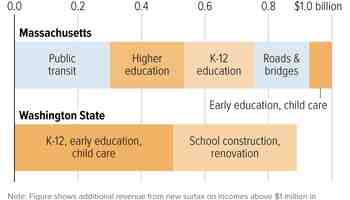
A 5.4 percent surcharge on couples with incomes over $1 million, a key financing feature of the House health reform bill, is sound and well targeted. It would affect just a fraction of 1 percent of taxpayers, a group whose incomes have soared and tax burdens have fallen in recent years, and would have only a modest impact on small businesses. … -
Increasing Medicare Tax on High-Wage Earners Could Help Pay for Health Reform and Strengthen Medicare’s Finances
November 13, 2009
Increasing the Medicare payroll tax on high-wage earners would represent a sound and well-targeted way of paying for health reform. It would also improve the solvency of Medicare’s Hospital Insurance (HI) trust fund and thereby strengthen this critical program, which provides health coverage for 46 million seniors and persons with disabilities. … -
Excise Tax on Very High-Cost Health Plans Is a Sound Element of Health Reform
Revised November 10, 2009
An excise tax on very high-cost health plans, which the Senate Finance Committee included in its health reform bill, represents a sound way to help pay for health reform. The excise tax finances nearly a quarter of the costs of the Finance Committee bill over the first ten years ($201 billion out of $829 billion) and makes a major contribution to the … -
Berkley Estate Tax Bill Would Add Billions to Deficit While Benefiting Only Wealthiest 1 in 500 Estates
Revised November 9, 2009
A new estate tax bill introduced by Representative Shelley Berkley (D-NV) and others would cost $91 billion more over the first decade (2012-2021) than extending the tax under its current rules as the President has proposed, yet would benefit only the nation’s wealthiest 0.2 percent of estates since they are the only ones … -
Proposed Expansions of Homebuyer Tax Credit Would Be Highly Inefficient and Squander Federal Resources
October 27, 2009
Executive Summary Members of Congress are considering extending — and possibly substantially expanding — the $8,000 homebuyer tax credit enacted as part of the American Recovery and Reinvestment Act (ARRA) of 2009. The credit, which is available to first-time homebuyers with incomes up to $150,000 (up to $75,000 for … -
Presentation for the President’s Economic Recovery Advisory Board Subcommittee on Tax Reform
October 16, 2009
-
Coalition Makes Flawed Arguments Against Proposal to Help Finance Health Reform by Maintaining Current Value of Itemized Deductions for Wealthy Households
Revised October 13, 2009
A coalition consisting of several trade associations for foundations and some nonprofit organizations along with a number of large charities has raised objections to a proposal that would help finance improved health coverage for low- and moderate-income people by maintaining the value of itemized deductions for wealthy Americans at its current … -
Senate Finance Committee Health Reform Bill Is Fiscally Responsible
Revised October 13, 2009
A fundamental principle of the bill that the Senate Finance Committee approved today is that it is budget neutral — that is, its costs are fully offset. It pays for the costs of expanding health coverage to the uninsured by redirecting spending and tax subsidies from less productive uses elsewhere in the health sector. Several of the offsets are … -
Podcast: The Deficit, Debt, and Interest
September 22, 2009
In this podcast, the federal government deficit, debt, and interest is explained by Director of Federal Fiscal Policy, Jim Horney.
Duration: 5:45
-
Tax Offsets in Baucus Health Plan Are Sound But Can Be Improved
September 18, 2009
The health reform proposal by Senate Finance Committee Chairman Max Baucus would place a 35-percent excise tax on the value of health plans in excess of $8,000 for singles and $21,000 for families, starting in 2013; these thresholds would be indexed for inflation in later years. The excise tax is a sound way to help pay for health reform, but it … -
Banning Taxation of Online Hotel Reservations Is Unwarranted and Could Cost States and Localities Billions of Dollars
Revised September 18, 2009
For the past two years, online travel companies like Expedia and Priceline have been seeking enactment of federal legislation that would ban state and local taxation of hotel room rentals when booked by such a company or by a conventional travel agent. Most recently, the legislation was circulated as a potential amendment to … -
Podcast: High-Income Surcharge Can Help Pay for Health Reform
August 25, 2009
Chuck Marr, director of federal tax policy, discusses the need for health reform and one option to help pay for it: a surcharge on high-income households under consideration by the House of Representatives.
Duration: 4:43
-
An Excise Tax on Insurers Offering High-Cost Plans Can Help Pay for Health Reform
August 7, 2009
The federal government provides substantial tax subsidies for health insurance, especially for high-cost insurance plans for people with high incomes. The Senate Finance Committee is considering placing an excise tax on insurance companies that offer very high-cost health insurance plans. This proposal would help achieve two important objectives: … -
House Health Bill’s High-Income Surcharge: A Reasonable Approach
Revised July 30, 2009
Reforming the health care system to provide universal health coverage is an urgent priority. But, facing huge projected budget deficits that have the nation on an unsustainable fiscal path, the White House and Congress must enact a health reform plan that is also fully financed and that reduces the growth rate of health care … -
Podcast: The Estate Tax
July 14, 2009
Director of Federal Tax Policy, Chuck Marr, discusses the basics of the estate tax and the debate about it in Congress.
Duration: 5:04
-
Reports Calling for Estate Tax Repeal Seriously Flawed
July 7, 2009
Despite questionable reports to the contrary, repealing the estate tax would weaken the economy by adding nearly $800 billion to budget deficits over 10 years, thus reducing national saving and leaving fewer funds for investment that leads to higher productivity in the long run. Two recent reports from the American Family Business … -
Curbing Flexible Spending Accounts Could Help Pay For Health Care Reform
Revised June 10, 2009
Congress should consider scaling back or eliminating health care flexible spending accounts (FSAs) [1] as part of its effort to pay for health care reform. This paper, which is part of a series of papers on proposals to help pay for health reform, outlines several ways in which Congress could curtail FSAs. FSAs are designed to allow employees to pay … -
Maintaining Current Value of Itemized Deductions For High-Income Taxpayers Could Help Pay For Health Care Reform
June 10, 2009
If Congress rejects the President’s proposal to help pay for health care reform by limiting the value of itemized deductions for high-income filers, it should at least prevent those subsidies from expanding in 2011, as they would under current law. Simply keeping the value of itemized deductions for filers in the top two brackets at … -
Limiting the Tax Exclusion for Employer-Sponsored Insurance Can Help Pay for Health Reform
Revised June 4, 2009
Limiting the tax exclusion for employer-sponsored health insurance could provide significant revenues for health reform without eroding employer-sponsored insurance or causing other undesirable side effects — if the cap and the rest of the health reform legislation are well designed and contain several key features that past proposals have lacked. … -
Taxing High-Sugar Soft Drinks Could Help Pay For Health Care Reform
May 27, 2009
By establishing a tax on high-sugar soft drinks, Congress could help finance health care reform that extends health insurance to all Americans and slows the growth of health care costs, while also improving Americans’ health. This paper, which is part of a series of papers on proposals to help pay for health … -
Reversing the Erosion in Alcohol Taxes Could Help Pay for Health Care Reform
May 27, 2009
To help pay for health care legislation that extends health insurance to all Americans and slows the growth of health care costs, Congress should consider reversing the substantial real decline in recent decades in federal excise taxes on alcohol. This paper, which is part of a series of papers on proposals to help pay for health reform, outlines three options … -
Video: Robert Greenstein Discusses the President's Budget on Washington Journal
May 8, 2009
-
A Brief Analysis of the Congressional Budget Plan
May 4, 2009
The budget resolution Congress adopted last week for fiscal year 2010[1] largely reflects the proposals in the preliminary budget President Obama submitted to Congress in February. Under the budget resolution: Deficits will be very high by historical standards in the next several years … -
Statement: Chuck Marr, Director of Federal Tax Policy, on the Administration’s International Tax Proposal
May 4, 2009
The Administration’s proposal is a welcome step forward in tax policy because it would make the tax code more balanced, support research and development, and promote fiscal responsibility. Specifically, it would tighten lax international tax rules and … -
The Senate and the Estate Tax: Cutting Through the Fog
April 16, 2009
View more up to date information about the estate tax:: Policy Basics: The Estate Tax June 14, 2010 Earlier this month, the Senate voted on an amendment to the budget resolution, offered by Senators Jon Kyl and Blanche Lincoln, to shrink the estate tax in various ways. A number of major newspapers, including the New York Times and Washington … -
Federal Tax Burdens for Most Near Their Lowest Levels in Decades
Updated April 14, 2009
With April 15 approaching and many people focusing on what they owe in taxes, Americans may be surprised to learn that federal tax burdens for most income groups, particularly middle-income households, are near their lowest levels in decades — and were low by historical standards even before the 2001 and 2003 tax cuts. Most income … -
Huffington Post Op-Ed: Senate to Uber-Rich: “Help Is on the Way”
April 13, 2009
"...Is this the time to spend about $90 billion over the next decade to give the nation's wealthiest households a new, multi-million-dollar tax cut? The U.S. Senate apparently thinks so." Read more -
Lincoln-Kyl Estate Tax Amendment is Both Unnecessary and Unaffordable
Revised April 10, 2009
On April 2 the Senate narrowly adopted (by a 51-48 vote) an amendment to the budget resolution by Senators Blanche Lincoln and Jon Kyl that would substantially weaken the estate tax. This proposal is both fiscally irresponsible — it would pave the way for a significant increase in … -
House Republican Budget Would Aid Wealthy Individuals and Corporations, Cut Public Services, Slow Economic Recovery
April 2, 2009
The House Republican budget, introduced April 1 by Rep. Paul Ryan (R-WI), calls for a massive transfer of resources from the broad majority of Americans to the nation’s wealthiest individuals and corporations.[1] It provides the richest households with a new round of very costly tax reductions by extending the Bush high-income tax cuts and adding another set of tax cuts that … -
An Analysis of the House and Senate Budget Plans
April 1, 2009
The congressional budget resolutions that the House and Senate are considering this week are essentially consistent with the budget blueprint that President Obama submitted to the Congress in February.[1] The President’s budget and the House and Senate plans (which their … -
Tax Foundation Figures Do Not Represent Typical Households’ Tax Burdens
March 31, 2009
Each year, the Tax Foundation releases a report projecting “Tax Freedom Day,” which it describes as the day when Americans will have “earned enough money to pay this year’s tax obligations at the federal, state, and local levels.” [1] The Tax Foundation’s “Tax … -
Two Key Tests for House and Senate Action on Congressional Budget Resolution
March 31, 2009
As Congress prepares a budget resolution for fiscal year 2010, it should apply two key tests to any proposed change in the plans approved by the House and Senate Budget Committees: Would the proposal support economic recovery in the near term? Would … -
High-Income Households Would Face Lower Tax Burden under Obama Budget than In Clinton Years, When Economy Performed Well
March 26, 2009
Despite claims that President Obama would impose a massive, damaging tax increase on wealthy Americans, the top 1 percent of Americans would actually pay a slightly smaller share of their income in federal taxes under the President’s proposals than during the Clinton Administration, when the economy grew strongly. Specifically, the top … -
History Contradicts Claim That President’s Budget Would Harm Small Business Job Creation
March 26, 2009
Critics have claimed that President Obama’s proposal to roll back tax cuts for families with incomes above $250,000 would kill job growth in the small business sector. But under the Clinton Administration, when the tax treatment of high-income families was very similar to what President Obama has proposed, small businesses … -
Testimony: Robert Greenstein on Tax Proposals in the President's Budget before the Senate Committee on Finance
March 26, 2009
I appreciate the invitation to appear before the Committee today. I am Robert Greenstein, Executive Director of the Center on Budget and Policy Priorities, a policy institute that focuses on fiscal policy issues and issues affecting low- and moderate-income families. This testimony makes the following points: As the Congressional … -
Limiting Itemized Deductions for Upper-Income Taxpayers Would Have Little Effect on Small Business, Charities, Housing
March 12, 2009
Despite persistent claims to the contrary, the President’s proposal to cap the value of itemized deductions at 28 percent would have only small effects on small business, charitable giving, and homeownership. That’s because the proposal, which would save $318 billion over the next ten years to help finance health care reform, would affect only those tax … -
Congress Should Not Weaken Estate Tax Beyond 2009 Parameters
Revised March 11, 2009
The Administration’s recently-released budget proposes to make permanent key features of the estate tax that are in place in 2009. This will launch a major congressional debate. Under current law, the tax has been phasing down for several years and is scheduled to end entirely in 2010, only to return in 2011 under the parameters that were in place in … -
Policy Basics: The 2001 and 2003 Tax Cuts
March 5, 2009
Note: This Policy Basics does not reflect tax changes made in the American Taxpayers Relief Act, or ATRA, passed in January 2013. The biggest changes in tax policy enacted under President George W. Bush were the 2001 and 2003 tax cuts, often referred to as the “Bush tax cuts” but … -
Very Few Small Business Owners Would Face Tax Increases Under President's Budget
February 28, 2009
Some critics of the President’s budget charge that his proposals to roll back tax breaks for taxpayers with incomes over $250,000 would harm small businesses. In fact, only 8.9 percent of people with any small business income have incomes of over $250,000 and, thus, would even potentially be affected by these provisions. (See … -
Podcast: Examining the Administration's 2010 Budget
February 27, 2009
This podcast discusses the President’s budget outline for fiscal year 2010.
Robert Greenstein discusses the priorities in the budget, as well as specific initiatives in major areas such as health care, taxes, and climate change. They also examine the budget’s implications for the federal deficit and debt and fiscal responsibility, and evaluate whether the budget’s numbers are honest or rely on gimmicks.
Duration: 20:54
-
Economic Recovery Package Would Give 3.8 Million Low- and Moderate-Income Students — Thousands in Every State —Access to Higher-Education Tax Credit
Revised February 26, 2009
The “Hope Credit,” which provides a tax subsidy for college tuition costs, was established in 1997. Its goal, in part, was to enable students who could not otherwise afford to attend college to do so. Yet until now, 3.8 million prospective college students — more than a fifth of all high-school-age children nationwide … -
Tax Aid in Recovery Package Would Reach Large Numbers of Workers in Every State
Updated February 26, 2009
Tax credits in the economic recovery package provide tax relief to most workers. The centerpiece of the tax relief is a new Making Work Pay Credit of up to $400 per worker. The credit phases in at the same rate as Social Security taxes and is available to all workers (except those claimed as another taxpayer's dependent) earning up to $95,000 and … -
American Recovery and Reinvestment Act of 2009: State-By-State Estimates of Key Provisions Affecting Low- and Moderate-Income Individuals
Updated February 25, 2009
The American Recovery and Reinvestment Act of 2009 is designed to boost employment and the economy. It contains a number of spending and tax measures crafted to inject more aggregate demand into the sagging economy. This paper provides state-by-state estimates for a number of the major spending and tax provisions that will affect low- and … -
Impact of Estate Tax on Small Businesses and Farms Is Minimal
February 23, 2009
Congress is expected to debate permanent changes in the estate tax in coming months. A key issue in that policy debate is likely to be the effect of the estate tax on estates containing small businesses and family-owned farms.[1] Some proponents of repealing or weakening the estate tax beyond its current form claim that doing is so is necessary because of the impact of the tax on small business and …